I love the celebration of Character Day: September 22, 2016. It is an opportunity to teach young people the exemplar’s of character. The Let It Ripple website offers inspirational films, periodic table of character traits, and other teaching tools. The social media campaign invites you to recognize people for their positive character attributes.
We are all a complex mix of positive and negative character traits. When we are young our parents, teachers and extended family help us to learn and shape our character–strengthening our positives and learning to control our negatives.
We can also learn from literature. The Lutheran Ladies Literary Club selected The Sympathizer, a novel by Viet Thanh Nguyen, for August discussion. The main character is the Captain and as he explains it his only talent is being able to sympathize with both sides. He uses this talent to be a spy for the Viet Cong, appearing to be a loyal attache to a General in the National Army/secret police. The author is a genius because by telling the story in the Captain’s voice we also learn that he is willing to die for two childhood friends, is a loving son, and very intelligent. The novel challenges the idea that people are either bad ‘uns or good ‘uns. After all, the mark of a truly mature person is the self-awareness to know that we are all capable of great acts of love and despicable acts of selfishness. This awareness allows us to make the right choices and to have compassion for ourselves and others when they fall short.
Wishing you a happy September 22, full of great character. If you use Twitter, join the trend today: recognize a character strength in someone you know and include #CharacterDay2016.
I was cycling down 18th Street–a quiet, leafy street in Midtown–when I saw another cyclist riding on the sidewalk. This always makes me angry because I feel it gives cyclists a black eye with pedestrians and motorists. Yet I am practicing staying curious instead of rushing to judgement. So when I pulled even with him I called out in as friendly a voice as I could muster, “Hey, why do you ride on the sidewalk?” Equally friendly he replied, “I feel safer.” This led to a dialogue where I shared that I actually feel less visible on the sidewalk, but that I do use them occasionally when I have to go the wrong way on a one-way street for a block. He shared that he often rides on the street too and he joined me on the street until we reached K Street and I turned off to the right. We wished each other a good day.
This was a civil exchange and much more pleasant experience than my fuming silently in anger. This is a very quick exchange and I may never see this neighbor again; however, it is good practice that helps me to continue to stay in this open place.
Listening to Ezra Klein’s interview with sociologist Arlie Hochschild on the Ezra Klein Show podcast (September 13, 2016), I realize that I can stretch to another level. She spent 5 years embedded in Louisiana culture to interview 60 individuals deeply and understand how they think and feel. She wanted to make sense of the gulf in values that are polarizing the USA today.
She intentionally acknowledged the deep stories and therefore her study subjects’ identities with the hope of building an empathy bridge. In her research she is seeking to understand but not necessarily to be understood. She turned off her own alarm system and set aside her own values with the purpose of learning, not convincing.
I have only just downloaded her new book Strangers in Their Own Land. I am curious how you build an empathy bridge and not lose your own moral center. I am sure the woman from Lake Charles, LA that she interviewed is a lovely person with many fine qualities. I had similar experiences when I made friends with conservation colleagues from Louisiana, Arkansas and Mississippi. Their hospitality is memorable; yet, I still found it very uncomfortable to visit their hometowns and witness the segregation that remains in their communities and the dominant attitudes that people of color are less than white people that some of them tried to defend.
On a different podcast, Stuff You Missed in History Class, they discussed John Brown’s civil action in Harper’s Ferry and how it influenced the Civil War. Taken together, these podcasts reinforce the idea that we are living through a non-military civil war. Our first civil war was a byproduct of the industrial revolution and the South’s economic dependence on agricultural plantations that could only function with slavery. Now we are going through a similar disruption where the two Coasts are transforming from manufacturing to service and knowledge economies, and the middle and south are being left largely behind.
What then shall be done? Practice patience. Stay curious. Extend compassion and empathy. Respect one another.
Nature provides ample evidence of abundance. Consider the lilies of the field..
My church St John’s Lutheran is helping to bring Lynne Twist, author of the Soul of Money to Sacramento on October 5. I attended a dinner and musical evening to raise the funds for her fee. It piqued my interest in her book. I may have read it before a few years ago but it resonated in a much deeper way this time. Sometimes the timing is finally right to think about a subject more deeply. I am at a bit of a crossroads as to the ways I am earning a living. I was ready to be inspired by the idea of sufficiency.
I am all too familiar with the idea of scarcity. Our western economy depends on the idea that we live in a zero-sum game where only the most competitive win. “This mantra of not enough carries the day and becomes a kind of default setting for our thinking about everything, from the cash in our project to the people we love or the value of our own lives.”
“In the mind-set of scarcity, our relationship with money is an expression of fear; a fear that drives us in an endless and unfulfilling chase for more, or into compromises that promise a way out of the chase or discomfort around money.”
“Scarcity is a lie. Independent of any actual amount of resources. It is an unexamined and false system of assumptions, opinions, and beliefs from which we view the world as a place where we are in constant danger of having our needs unmet.”
I have been caught up in these 3 toxic myths: 1) There’s not enough. 2) More is better. 3) That’s just the way it is. It is exhausting. I have had glimpses my whole life of another way but I have not been able to completely embrace it. I did not have a vocabulary for the other way. The way of sufficiency.
“Sufficiency isn’t an amount at all. It is an experience, a context we generate, a declaration, a knowing that there is enough, and that we are enough… When we live in the context of sufficiency, we find a natural freedom and integrity. We engage in life from a sense of our own wholeness rather than a desperate longing to be complete.”
“I suggest that if you are willing to let go, let go of the chase to acquire or accumulate always more and let go of that way of perceiving the world, then you can take all that energy and attention and invest it in what you have. When you do that you will find unimagined treasures, and wealth of surprising and even stunning depth and diversity.”
“Enough is a place you can arrive at and dwell in.”
“True abundance does exist; it flows from sufficiency, in an experience of the beauty and wholeness of what is. Abundance is a fact of nature. It is a fundamental law of nature, that there is enough and it is finite. Its finiteness is no threat; it creates a more accurate relationship that commands respect, reverence, and managing those resources with the knowledge that they are precious and in ways that do the most good for the most people.”
The book is long on concept and short on practical steps. I look forward to attending the Impact Foundry’s conference on October 5 to learn more.
“When your attention is on what’s lacking and scarce–in our life, in your work, in your family, in your town–then that becomes what you’re about. That’s the song you sing, the vision you generate. You engage in lack and longing and what’s missing, and you call others to that same experience. If your attention is on the problems and breakdowns with money, or scarcity thinking that says there isn’t enough, more is better or that’s just the way it is, then that is where your consciousness resides. Those thoughts and fears grow from the attention you give them and can take over your life. No matter how much money you have, it won’t be enough. No amount of money will buy you genuine peace of mind. You expand the presence and the power of scarcity and tighten its grip on your world.
“If your attention is on the our capacity you have to sustain yourself and your family, and contribute in a meaningful way to the well-being of others, then your experience of what you have is nourished and it grows. Even in adversity, if you can appreciate your capacity to meet it, learn, and grow from it, then you create value where no one would have imagined it possible. in the light of your appreciation, your experience of prosperity grows.”
CTI Leadership instilled in me a belief in collaboration and cooperation based on the 10 month program experience. “A you-and-me world is full of collaborators, partners, sharing and reciprocity… Respected evolutionary biologist Elisabet Sahtouris notes that Nature fosters collaboration and reciprocity. Competition in Nature exists, she says, but it has limits, and the true law of survival is ultimately cooperation.” This is the reality I know exists and now I want to lean into it more fully.
I have felt like the world was off kilter before, but perhaps not as much as in 2016. Reading news articles increasingly feels like there are two alternate realities competing in this election. Of course I am convinced that mine is the realest reality and when I read news stories about the “crazy” things others are saying it is upsetting.
There are two narratives competing and if it wasn’t blatantly obvious before, there was no denying it after the national party conventions. Lots of column inches are being written calling us to choose either a white-dominated isolationist worldview or a more inclusive global view. In fact I counted over a dozen distinct stories on Facebook and Twitter that I could read just this morning alone. The question is how to stay tuned in until November 8 without wearing out.
This morning I read a very helpful op ed in the Los Angeles Times by Christopher Cokinos, “How to stay sane in the time of Trump.” After almost falling off a ladder reacting to another of Trump’s whoppers, he set limits on his consumption of television news. He listens to Miranda Lambert when Trump comes on the radio. The best advice is his 5/5 rule: consume only 5 election stories a day and no news after 5 p.m.
A little while later I finished reading Lynne Twist’s The Soul of Money and she had further helpful advice. After the 1987 stock market crash, she and her husband faced a familiar choice: “We could go into that whole swirl, the swirl that was everywhere we were looking that day, but we looked at each other and made a vow, a little deal, that we wouldn’t do that. We would use the situation with the stock market to as an opportunity to count our blessings and reconnect with the nonmaterial assets that were the foundation and core of our true wealth, our life, and our joy.”
This faith restoring conversation helps us to disconnect from the fear and the anger and reconnect with our true values. As Twist points out, “The conversation we have with ourselves and with others–the thoughts that grip our attention–has enormous power over how we feel, what we experience, and how we see the world in that moment.” Let’s not cede that power to someone else.
There is a profound choice to make this election: what conversation are we going to be a part of? Are we going to feed the conversation of scarcity and us or them? Or shall we be a part of the conversation of enough and them and us? Are we going to press “angry face” to dozens of stories a day on social media, or head out the door to help build a house with Habitat for Humanity or register someone to vote? Are we going to yell at the television or radio, or turn it off and listen to uplifting music that helps us to see that right now, right here, everything is all right.
I was a freshman in college when the 1980 adaptation of Pride and Prejudice aired on Masterpiece Theater. After two episodes I couldn’t wait to find out what happened so I found a copy of Jane Austen’s masterpiece and read it almost in one swallow. I was thrilled to discover she wrote other books. No comment on the quality of my high school education, yet I am glad I discovered Jane Austen outside the classroom because I liked the freedom of experiencing it without the taint or tedium of high school discussions. I learned so much about life and myself from reading her books. I am a rebel that way.
What I also learned is that not very many people in college actually read Austen. And fewer are enthusiasts. Whereas I was so excited I began celebrating her birthday in December, to which most people reacted with a quizzical brow.
Fast forward 30+ years and imagine my thrill at finding the Jane Austen Reading Group that meets monthly at the Ella McClatchy public library. We are all enthusiasts. At last I have found a Jane loving tribe. Our most recent book for discussion was A Jane Austen Education by William Deresiewicz (WD). WD is a brilliant writer and captivated us all with his memoir based on what he learned about life while studying Austen’s work as a graduate student at Columbia University.
WD was 26 when he picked up Emma as part of a class assignment. He was enthralled with modern literature and had assiduously avoided 19th century literature. The timing was perfect as he discovered one of the best storyteller moralists just as he was ready to grow up.
“Learning that my feelings mattered–learning to figure out what my feelings were in the first place–was extremely liberating as I got older. I needed to realize that I could do what I wanted with my life and that I could do it just because I wanted to. Accepting that my emotions were valid and important and morally significant–they they should have a bearing on how I act–was a crucial part, at that point, of growing up.” (p 68)
Reading Jane Austen helped him realize that there was a better way to value people. “Not as fun or not fun, or stylish or not stylish, but as warm or cold, generous or selfish. People who think about others and people who don’t. People who know how to listen, and people who only know how to talk.” (p 161) Austen created characters who on the surface were recognizable and tedious, but also kind and tenderhearted (Mr. Woodhouse) or loving and cheerful (Miss Bates). Austen taught WD to appreciate the finer human qualities.
She prized people with character above people with an aristocratic title or cold hearted family members. In her early books she gave her heroines a happy ending with husband of good character, oh yeah, and bags of money. As she grew older her stories focused more on the value of friendship and she examined the differences between superficial relationships and true friendship. “Putting your friend’s welfare before your own, that was Austen’s idea of true friendship. That means admitting when you’re wrong, but even more importantly, it means being willing to tell your friend when they are… True friends do not shield you from your mistakes, they tell you about them: even at the risk of losing your friendship–which means, even at the risk of being unhappy themselves.” (p 194)
WD had a mentor professor who taught him many things about life and Jane Austen. He shared in a conversation one day, “Austen is saying that it’s important to spend time with extraordinary people,’ he said with a twinkle in his eye. ‘So that’s what I advise you to do: spend time with extraordinary people.” (p 110)
Sharing an email I received (and reprinted here with permission) from one of my life mentors Kathleen Kraft.
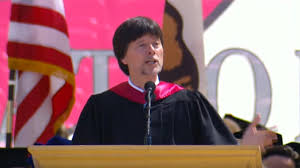
I found some of my most valuable insights come from Stanford University Commencement talks. This year Stanford invited historian Ken Burns to address the June 12 graduates. His comments are surprising…and chilling. In part, he said…
“For 216 years, our elections, though bitterly contested, have featured the philosophies and character of candidates who were clearly qualified. That is not the case this year. One is glaringly not qualified. So before you do anything with your well-earned degree, you must do everything you can to defeat the retrograde forces that have invaded our democratic process, divided our house, to fight against, no matter your political persuasion, the dictatorial tendencies of the candidate with zero experience in the much maligned but subtle art of governance; who is against lots of things, but doesn’t seem to be for anything, offering only bombastic and contradictory promises, and terrifying Orwellian statements; a person who easily lies, creating an environment where the truth doesn’t seem to matter; who has never demonstrated any interest in anyone or anything but himself and his own enrichment; who insults veterans, threatens a free press, mocks the handicapped, denigrates women, immigrants and all Muslims; a man who took more than a day to remember to disavow a supporter who advocates white supremacy and the Ku Klux Klan; an infantile, bullying man who, depending on his mood, is willing to discard old and established alliances, treaties and long-standing relationships. I feel genuine sorrow for the understandably scared and – they feel – powerless people who have flocked to his campaign in the mistaken belief that – as often happens on TV – a wand can be waved and every complicated problem can be solved with the simplest of solutions. They can’t. It is a political Ponzi scheme. And asking this man to assume the highest office in the land would be like asking a newly minted car driver to fly a 747.
As a student of history, I recognize this type. He emerges everywhere and in all eras. We see nurtured in his campaign an incipient proto-fascism, a nativist anti-immigrant Know Nothing-ism, a disrespect for the judiciary, the prospect of women losing authority over their own bodies, African Americans again asked to go to the back of the line, voter suppression gleefully promoted, jingoistic saber rattling, a total lack of historical awareness, a political paranoia that, predictably, points fingers, always making the other wrong. These are all virulent strains that have at times infected us in the past. But they now loom in front of us again – all happening at once. We know from our history books that these are the diseases of ancient and now fallen empires. The sense of commonwealth, of shared sacrifice, of trust, so much a part of American life, is eroding fast, spurred along and amplified by an amoral Internet that permits a lie to circle the globe three times before the truth can get started.
We no longer have the luxury of neutrality or “balance,” or even of bemused disdain. Many of our media institutions have largely failed to expose this charlatan, torn between a nagging responsibility to good journalism and the big ratings a media circus always delivers. In fact, they have given him the abundant airtime he so desperately craves, so much so that it has actually worn down our natural human revulsion to this kind of behavior. Hey, he’s rich; he must be doing something right. He is not. Edward R. Murrow would have exposed this naked emperor months ago. He is an insult to our history. Do not be deceived by his momentary “good behavior.” It is only a spoiled, misbehaving child hoping somehow to still have dessert.
And do not think that the tragedy in Orlando underscores his points. It does not. We must “disenthrall ourselves,” as Abraham Lincoln said, from the culture of violence and guns. And then “we shall save our country.”
This is not a liberal or conservative issue, a red state, blue state divide. This is an American issue. Many honorable people, including the last two Republican presidents, members of the party of Abraham Lincoln, have declined to support him. And I implore those “Vichy Republicans” who have endorsed him to please, please reconsider. We must remain committed to the kindness and community that are the hallmarks of civilization and reject the troubling, unfiltered Tourette’s of his tribalism.
The next few months of your “commencement,” that is to say, your future, will be critical to the survival of our Republic. “The occasion is piled high with difficulty.” Let us pledge here today that we will not let this happen to the exquisite, yet deeply flawed, land we all love and cherish – and hope to leave intact to our posterity. Let us “nobly save,” not “meanly lose, the last best hope of earth.”
In A Jane Austen Education, a memoir by William Deresiewicz, he quotes his mentor professor: “Answers are easy,” he would later say. “You can go out to the street and any fool will give you answers. The trick is to ask the right questions.” (Karl Kroeber)
This resonated with me because I learned the importance of powerful questions in my executive coach training with CTI. The training provides you with examples of powerful questions; however, the key is to let your intuition take the lead.
In this graduation season there have been many videos of speeches posted, and this one by Dean James is a keeper:
Here are the five questions and bonus question listed for future reference:
Wait, what?
2. I wonder why/if?
3. Couldn’t we at least?
4. How can I help?
5. What truly matters?
Bonus: And did you get what you wanted out of life, even so?
I read Don Richardson’s post on Facebook: Pearlie S. Reed died. Funeral arrangements were made. As I numbly read about the hotel with a room block in West Memphis a wave of sadness mixed with gratitude overwhelmed me.
Pearlie S. Reed’s official USDA photo
I was a 28 year extremely green Executive Director of the California Association of Resource Conservation Districts and Pearlie was the State Conservationist for the USDA Soil Conservation Service. He had to be Senior Executive Service to get the job in the nation’s biggest agricultural state. I just had to be willing to accept the woefully small salary.
He was infinitely patient and immediately began coaching me in every way I was willing to learn. I already had many terrific role models as teachers and employers. Pearlie towered over all of them in many ways. Without a doubt, he has had the biggest impact on me as a leader.
He taught me empathy before Brene Brown coined the phrase. I remember when I first started as Executive Director I was attending all of the Area Meetings and meeting all of the Directors. The current President and Vice President of the Board were also participating in these meetings. At one particular meeting I was seated at the head table with the President and with Pearlie but the Vice President Helen was not. Helen was a hard working officer who had a particularly fragile pride in her position. She was clearly hurt by the oversight. I felt awkward but I did not know how to handle it. Afterward I mentioned to Pearlie that Helen’s nose was bent out of shape and she was angry with me. He gently suggested I look at it from her point of view and then helped me think of several other ways I could have handled it. He did not make the case that it was her due, he just matter of factly calculated that a little effort would avoid a tempest that was a waste of everyone’s energy.
Watching Pearlie in action was a Master’s Degree in leadership. He had the superpower of listening. He could not speak even when the silence was very uncomfortable. I realized that he did this because unlike me he rarely spoke unless his thoughts were fully formed. Silence also worked to his advantage. Others in the meeting, in their nervousness, would often babble and share all kinds of information, which was especially useful in negotiations.
This is more how I remember Pearlie–sharing an idea with a little smile.
Some people found Pearlie intimidating. He was the hardest working, most ethical, wisest person in the room. I believe that his integrity often triggered the gremlins in others–like being around a priest and suddenly you start to think of all the times you cut corners or left early. And of course, there were still plenty of people who resented his talent because he was a black man.
He was the first person I had known from the South. Pearlie grew up in rural Arkansas before school desegregation. He was one of 18 children and his parents instilled a work ethic in him. He told me once that he could either work or study when he got home from school, so he studied as much as possible. He and his siblings more than succeeded in their fields because they had a drive for a better life and the discipline to make it so.
Pearlie was not a person who shared a lot about his personal life. He did not ask about your personal life either. This made the good ol’ boys in the USDA who liked to chew up half of every meeting with small talk about sports and family crazy. I loved it because I had a lot of shame around my dysfunctional family. It was lovely to just concentrate on work issues. I learned over time to temper this somewhat as a manager. Because Pearlie shared so little about his personal life, everything he shared I scooped up and treasured like it was a pearl of wisdom.
Working alongside Pearlie I observed prejudice in action. This was also an important education. I experienced some additional obstacles as a woman, but nothing like the vitriol I saw aimed at Pearlie. He may have been angry in private, but I believe he was usually able to turn it to his advantage and put his energies toward his vision of a more inclusive USDA. He achieved his vision of transforming the Soil Conservation Service into the Natural Resources Conservation Service when he was Chief and he tackled the systemic discrimination in farm policy while serving as Assistant Secretary of the USDA.
I could go on because the memories are rolling back to me. Adversity makes people stronger. As a parent I am torn between wanting my children to gain strength through overcoming challenges AND protecting them from any unnecessary pain. Pearlie’s example reminds me that leadership is 20% perspiration and 80% the attitudes we choose. Circumstances do not necessarily make as big a difference as we think. Strength of character matters more.
Pearlie S. Reed was an extraordinary human being and leader. Some people make ripples; Pearlie made waves.
Rest in peace Pearlie.
The family has asked that donations be made to the Pearlie S. Reed Scholarship fund in lieu of flowers. If you are interested: send donations to University of Arkansas, Pine Bluff Alumni Scholarship Endowment Fund, Office of Alumni Affairs, 1200 N. University Drive, Mail Slot 4929, Pine Bluff, AR 71601.
How do you give to others without overextending yourself? I have struggled with this question since I left my job as Executive Director of Housing California and moved to New Zealand to redesign my life. I liked my choices to work for an important cause and to give to friends and family with love and service. This extended to my church family and to others in the world. The cumulative impact over time was stress and burnout. I started listening to Krista Tippett’s podcast On Being at my friend Gigi Johnson’s recommendation. I just recently went back into the archives to hear her interview with Adam Grant.
Adam Grant is an organizational psychologist and teaches at Wharton School of Business. His research is on the givers, the takers, and the matchers of this world and he has learned that we find meaning in any kind of work if we feel that we can be of service. Furthermore, failed givers help anyone; successful givers are more intentional and keep good boundaries.
Ah boundaries. I have been taking Brene Brown’s on-line classes at Courageworks.com and watching various interviews with Professor Brown. This video from the Work of the People website is a great summary of the importance of boundaries.
My challenge is converting my head knowledge to practice. In fact, this is true in almost every area of my life: eating, finances, exercises, work/life balance. I know what is in my long term interest and yet I make choices based on short term emotional needs. Boundaries–established and practiced–could make this all much less fraught. The “knowing-doing gap” is great in this area of my life and leadership.
This is my new practice. I feel a sense of urgency because I get great joy from giving and I do not want to be stingy out of some misguided sense of fear that I cannot maintain healthy boundaries. I want to be living into each day with joy and anticipation, knowing I can begin again tomorrow if I blow it and that balance is an ongoing act (not a static state).
I am going to check out Adam Grant’s book Give and Take and see if I can learn any more good ideas for avoiding burnout.
To be a leader you must know yourself. Or as they say today: Know your personal narrative. President Barack Obama’s Dreams of My Father did more to secure my vote than all of the campaign messaging combined because I knew from reading his biography that he had done of the work of understanding himself and his relationship to others in the world.
This month for the Lutheran Ladies Literary Club we read Dreams of My Mothers by Joel L. A. Peterson. Mr. Peterson fictionalizes his biography but my guess is that it is mostly understood first hand. For a first effort, it was quite good. And as an exercise in coming to terms with his personal narrative, it is an exemplar.
It also gives us a peek into what it was like for poor women in Korea during the war and then near the American military bases as they had to make hard choices about their hearts and bodies. In the story Hee Ae works as a maid with benefits for an American soldier and becomes pregnant. The shame of giving birth to a half-American baby in a society bound by familial ties and racial purity seals her fate as a poor woman. Then the baby is accidentally scalded badly and has the further stigma of being a cripple. Babies born to American soldiers overseas have neither the rights of American citizenship, and in the case of Korea, nor the rights of Korean citizenship. Her son Nam would not be able to get an education or easily find work in South Korea in the 1960-70s.
The woman struggles with her inner demons and eventually decides that the best hope for her son is to give him up for adoption to an agency with ties to churches in America. And half-way across the world, the Holy Spirit was nudging a woman Ellen Lindquist in Minnesota to adopt a boy from South Korea. And so Nam becomes Noah Lindquist and has all of the opportunity and privilege that being an American gives in this world.
He did face prejudice for his crippled hand and for being “Oriental,” however the love of his family—mother, father and four siblings—helped him achieve great worldly success. Indeed, his parents especially instilled in him many fine values both through their teaching and mainly through their example.
The climax of the book occurs when Noah is in Japan as a Rotary scholar and has the opportunity to travel to South Korea and meet up with his first mother. This is when he fully embraces his identity as American Noah Lindquist.
My favorite passage is when an ex-pat in Japan tells him, “Being American isn’t being white or Western. It is about freely embracing a set of ideals and beliefs. And it is these shared ideals and beliefs, which are not coerced, and the shared efforts in striving to perfect their realization that binds us as a people and as a nation.” (p. 237)
My journey to know my story has been less about race and more about gender and what it means to be a daughter of the West. Wallace Stegner’s books had a profound impact on me as did Virginia Woolf’s essay A Room of One’s Own. I still feel I am learning who I am as I live my 53rd year and become a grandmother. To be a strong leader I need to know what is the bedrock that I am standing on for my values and my beliefs.

 I love the celebration of Character Day: September 22, 2016. It is an opportunity to teach young people the exemplar’s of character. The Let It Ripple website offers inspirational films, periodic table of character traits, and other teaching tools. The social media campaign invites you to recognize people for their positive character attributes.




 I was a freshman in college when the 1980 adaptation of Pride and Prejudice aired on Masterpiece Theater. After two episodes I couldn’t wait to find out what happened so I found a copy of Jane Austen’s masterpiece and read it almost in one swallow. I was thrilled to discover she wrote other books. No comment on the quality of my high school education, yet I am glad I discovered Jane Austen outside the classroom because I liked the freedom of experiencing it without the taint or tedium of high school discussions. I learned so much about life and myself from reading her books. I am a rebel that way.

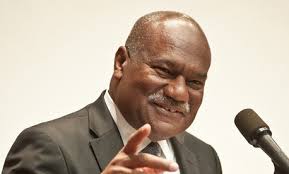
 How do you give to others without overextending yourself? I have struggled with this question since I left my job as Executive Director of Housing California and moved to New Zealand to redesign my life. I liked my choices to work for an important cause and to give to friends and family with love and service. This extended to my church family and to others in the world. The cumulative impact over time was stress and burnout. I started listening to Krista Tippett’s podcast On Being at my friend Gigi Johnson’s recommendation. I just recently went back into the archives to hear her interview with
  My challenge is converting my head knowledge to practice. In fact, this is true in almost every area of my life: eating, finances, exercises, work/life balance. I know what is in my long term interest and yet I make choices based on short term emotional needs. Boundaries–established and practiced–could make this all much less fraught. The “knowing-doing gap” is great in this area of my life and leadership.
 To be a leader you must know yourself. Or as they say today: Know your personal narrative. President Barack Obama’s Dreams of My Father did more to secure my vote than all of the campaign messaging combined because I knew from reading his biography that he had done of the work of understanding himself and his relationship to others in the world.
 leader's compass