Practical Wisdom on Trust

marbles
The marble jar is a key metaphor for trust…

I have been grappling with how to create a culture of trust in the workplace for the last 3 years. I have led one team in discussions about Stephen M.R.Covey’s book The Speed of Trust and Charles Feltman’s The Slim Book of Trust.

There is another solid contribution on trust now available. Brene Brown, who broke into the public consciousness with her research on shame and vulnerability, is hosting a website called Courageworks.com. Here you can find massive open online courses (MOOCs) based on her research. The first course is The Anatomy of Trust.

Without tromping all over Brene Brown’s copyright, she provides a handy acronym for remembering the basic elements of building trust: BRAVING. The first three are Boundaries, Reliability, and Accountability. You will have to take the class to learn the rest. There are exercises tailored to individuals, teams and groups and organizations.

boundariesThe Anatomy of Trust is available free of charge at http://www.courageworks.com. As with most MOOC’s you work at your own pace, so if you want to you can watch all of the videos at midnight and do the exercises at 2:00 a.m. There are two instructional videos for a total of about 27 minutes. The five exercises took me a couple of hours to complete, and your time of completion will depend on how much you want to think about the questions or discuss them with others. This is also a 27 minute Q&A session recorded in January that is optional but recommended. As with all learning, you get out of it commensurate with what you put into it.

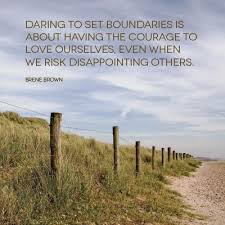
BB Boundaries quote

I am still “rumbling with trust”. Like all of Brene Brown’s teaching, you have to be prepared for some messy middle stuff before you experience the reward of transformation. I am grappling with really getting boundaries in my bones. I definitely recommend the investment of your time in this course.

Wishing Lent Would Not End

I realize most people are counting the days until Easter when they can eat chocolate again or have a glass of wine. I am wishing that it could go on through Pentecost.

foot washingI read a couple of blog posts from Christians suggesting that instead of giving up food or alcohol for Lent, to set aside time for to prepare your heart for Easter. It is my first real Lenten season. The other churches I have attended have not given as much time and attention to Lent. I am now attending St John’s Lutheran church and they go all out for Lent. It is like Advent only better because the rest of society is ignoring it for the most part. It is personal without the social obligations.

The last time I attended a Maundy Thursday service was so long ago I cannot remember. Tonight was especially moving. They had three elements that I have never experienced together in a service. First there was a pastoral laying on of hands to individuals for the forgiveness of sins. It was an emotional experience. Then about half of the congregation elected to go forward for foot washing. This was also the topic of the sermon and a wonderful reminder of how humble our faith is meant to help us become. And then we celebrated communion as it is the night of the Last Supper in Holy Week.

The end of the service was especially moving as the pastors stripped the altar of all decoration and the entire front of the church became dark and the crucifix was draped in black. We all filed out in silence.

I have been enjoying the Lent devotions provided on-line by the Auckland Anglican Diocese. It has been really helpful to stay focused for the full 40 days. Sometimes the devotion is a call to service or action, sometimes a meditation on scripture or music. It also occasionally provided links to videos.

I also discovered an artist who lived in England in the Victorian era who dedicate her life to taking the gospel to the Arab people in Algeria. I watched the video Many Beautiful Things: The Life and Vision of Lilias Trotter with the Sacramento Friends and then began reading her biography A Passion for the Impossible by Miriam Huffman Rockness.

There is no reason to stop the reading after Easter. And I can look for a similar devotion. And at the same time it is good to have a season set apart for spiritual focus.

Happy Easter.


How to Give Without Burnout

On BeingHow do you give to others without overextending yourself? I have struggled with this question since I left my job as Executive Director of Housing California and moved to New Zealand to redesign my life. I liked my choices to work for an important cause and to give to friends and family with love and service. This extended to my church family and to others in the world. The cumulative impact over time was stress and burnout. I started listening to Krista Tippett’s podcast On Being at my friend Gigi Johnson’s recommendation. I just recently went back into the archives to hear her interview with Adam Grant.

Adam Grant is an organizational psychologist and teaches at Wharton School of Business. His research is on the givers, the takers, and the matchers of this world and he has learned that we find meaning in any kind of work if we feel that we can be of service. Furthermore, failed givers help anyone; successful givers are more intentional and keep good boundaries.

Ah boundaries. I have been taking Brene Brown’s on-line classes at Courageworks.com and watching various interviews with Professor Brown. This video from the Work of the People website is a great summary of the importance of boundaries.

Give and Take book thumbnailMy challenge is converting my head knowledge to practice. In fact, this is true in almost every area of my life: eating, finances, exercises, work/life balance. I know what is in my long term interest and yet I make choices based on short term emotional needs. Boundaries–established and practiced–could make this all much less fraught. The “knowing-doing gap” is great in this area of my life and leadership.

This is my new practice. I feel a sense of urgency because I get great joy from giving and I do not want to be stingy out of some misguided sense of fear that I cannot maintain healthy boundaries. I want to be living into each day with joy and anticipation, knowing I can begin again tomorrow if I blow it and that balance is an ongoing act (not a static state).

I am going to check out Adam Grant’s book Give and Take and see if I can learn any more good ideas for avoiding burnout.


Leadership 101: Know Thyself

Dreams MothersTo be a leader you must know yourself. Or as they say today: Know your personal narrative. President Barack Obama’s Dreams of My Father did more to secure my vote than all of the campaign messaging combined because I knew from reading his biography that he had done of the work of understanding himself and his relationship to others in the world.

This month for the Lutheran Ladies Literary Club we read Dreams of My Mothers by Joel L. A. Peterson. Mr. Peterson fictionalizes his biography but my guess is that it is mostly understood first hand. For a first effort, it was quite good. And as an exercise in coming to terms with his personal narrative, it is an exemplar.

It also gives us a peek into what it was like for poor women in Korea during the war and then near the American military bases as they had to make hard choices about their hearts and bodies. In the story Hee Ae works as a maid with benefits for an American soldier and becomes pregnant. The shame of giving birth to a half-American baby in a society bound by familial ties and racial purity seals her fate as a poor woman. Then the baby is accidentally scalded badly and has the further stigma of being a cripple. Babies born to American soldiers overseas have neither the rights of American citizenship, and in the case of Korea, nor the rights of Korean citizenship. Her son Nam would not be able to get an education or easily find work in South Korea in the 1960-70s.

The woman struggles with her inner demons and eventually decides that the best hope for her son is to give him up for adoption to an agency with ties to churches in America. And half-way across the world, the Holy Spirit was nudging a woman Ellen Lindquist in Minnesota to adopt a boy from South Korea. And so Nam becomes Noah Lindquist and has all of the opportunity and privilege that being an American gives in this world.

He did face prejudice for his crippled hand and for being “Oriental,” however the love of his family—mother, father and four siblings—helped him achieve great worldly success. Indeed, his parents especially instilled in him many fine values both through their teaching and mainly through their example.

The climax of the book occurs when Noah is in Japan as a Rotary scholar and has the opportunity to travel to South Korea and meet up with his first mother. This is when he fully embraces his identity as American Noah Lindquist.

My favorite passage is when an ex-pat in Japan tells him, “Being American isn’t being white or Western. It is about freely embracing a set of ideals and beliefs. And it is these shared ideals and beliefs, which are not coerced, and the shared efforts in striving to perfect their realization that binds us as a people and as a nation.” (p. 237)

My journey to know my story has been less about race and more about gender and what it means to be a daughter of the West. Wallace Stegner’s books had a profound impact on me as did Virginia Woolf’s essay A Room of One’s Own. I still feel I am learning who I am as I live my 53rd year and become a grandmother. To be a strong leader I need to know what is the bedrock that I am standing on for my values and my beliefs.

Predicting Surprises

jack popped

My colleague recommended reading Predictable Surprises, a book by Max H. Bazerman and Michael D. Watkins, and then it was discussed in the Human-Centered Design course. And finally another colleague learned about it in his management short course at Harvard. So I read the book.

Predictable surprises are disasters you should have seen coming–events or a set of events that take an individual or group by surprise, despite prior awareness of all the information necessary to anticipate the events and their consequences. (p 1)

The book focuses on three themes: cognitive failures, organizational failures, and political failures. There are 6 general characteristics to predictable surprises:

  1. Leaders know a problem existed and that the problem would not solve itself.
  2. Predictable surprises can be expected when organization members recognize that a problem is getting worse over time.
  3. Fixing the problem would incur significant costs in the present, while the benefits of action would be delayed.
  4. Addressing the predictable surprise typically requires incurring costs, while the reward is avoiding a cost that is uncertain but likely to be much larger. And perhaps more importantly, leaders know they can expect little credit for preventing them.
  5. Decision makers, organizations and nations often fail to prepare for predictable surprises because of the natural tendency to maintain the status quo.
  6. A small, vocal minority benefits from inaction and is motivated to subvert the actions of leaders for their own private benefit.

jack in the box popped

I can think of many predictable surprises that challenges me as a leader and our society at large. Working on Delta solutions is a case study in predictable surprises. They offer up examples such as Hurricane Katrina and the aftermath. They also mention the meltdown of the financial system in 2007-8. If you want to skip reading the book, then please go see The Big Short. This movie does a terrific job of explaining what happened. Just do not believe the hype–it is a tragedy not a comedy.

If you are involved in trying to solve a problem such as climate change or even something narrower such as leading a change initiative in a company, I recommend Predictable Surprises.

The book does not offer many solutions to avoiding predictable surprises–although recognizing them is a management advantage. My conclusion is that it is another strong reason to create and actively maintain a risk register and to make managing risk a discipline.


Just Mercy for the Mentally Ill

Just Mercy

Bryan Stevenson’s TED talk (see below) is like a teaser for his excellent book, Just Mercy. I was especially interested in the chapter “Mitigation” about the mental health crisis and how our jails became substitute mental hospitals. Deinstitutionalization (the closing of mental health hospitals and the release of patients without replacement treatment and housing) occurred at the same time as the ramp of mass incarceration. Mentally ill people became victims of society’s appetite for imprisonment, often for drug and alcohol abuse and sometimes for behaviors their communities would not tolerate.

“Today, over 50 percent of prison and jail inmates in the United States have a diagnosed mental illness, a rate nearly five times greater than that of the general population. Nearly one in five prison and jail inmates has a serious mental illness. In fact, there are more than three times the number of seriously mentally ill individuals in jail or prison is a terrible place for someone with mental illness or a neurological disorder that prison guards are not trained to understand.” (p. 188)

He mentioned working with Pete Earley to raise the profile of prisoners on death row. Earley was one of the most popular speakers of all time at Housing California’s annual conference. So I pulled my signed copy of his book Crazy.  He tells the story of trying to get help for his son suffering with a mental illness and his year long investigation of a Miami-Dade County jail. I skimmed the book again but did not read it because I can only take so much learning about how screwed up our justice and mental health systems are in one week.

It makes me appreciate “stonecatchers” all the more. Bryan explains the term in the last pages of Just Mercy reminding readers of the New Testament story of Jesus stopping a stoning of a adulterous woman by challenging the Pharisees: those without sin, cast the first stone.

The Equal Justice Initiative law project helps people on death row and works to end the death penalty; working to end excessive punishment and improve prison conditions; Free people who’ve been wrongly convicted and stop racial bias in the justice system; help the mentally ill; and stop putting children in adult jails and prisons. (p. 293) I applaud EJI’s leadership on these issues.

“You can’t effectively fight abusive power, poverty, inequality, illness, oppression or injustice and not be broken by it. We are all broken by something… We have a choice. We can embrace our humanness, which means embracing our broken natures and the compassion that remains is our best hope for healing. Or we can deny our brokenness, forswear compassion, and, as a result, deny our own humanity.” (p. 289)


Why Black Lives Matter to this White Chick

Between the World

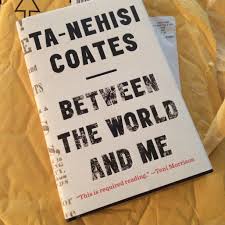
Recently finished reading Between the World and Me by Ta-Nehisi Coates and pondering his perspective of reality and what it means to me. The beauty of reading a book is, if you let it, it can expand your view of the world and your experience. I can travel to Antarctica and vicariously experience the long dark cold winter with the scientists living on isolated outposts. In Between the World and Me Coates takes us on an inward journey to live as a person with dark-hued skin in America.

I have often thought that moving through life as a woman was an approximation of what it is like to be a person of color. It may be on the same spectrum of fear and lack of control or power in society. As a woman, people project all sorts of judgements and assumptions based on my sex, regardless of what I do, say or wear. After reading Coates I realize that being a woman is a 2 or 3 on the spectrum, being gay is probably a 5 or 6 and being black is an 8.

This need to have an group to scapegoat or villify is a chronic problem for humankind. At different times Irish people, Italian people, or Japanese people have been others in our “American Dream”–the one we tell ourselves about who we are as a nation and as a society. Today Mexicans or Muslims fill that role in the story. Unfortunately for black people and for our nation as a whole, they have been a constant “them” in the us vs. them since our country began: first as slaves, then as expendable workers and disenfranchised citizens and now as convicts.

Cradling

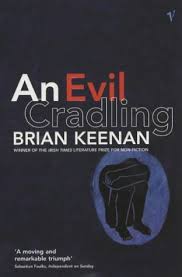
I thought of Brian Keenan‘s brilliant book An Evil Cradling. He chronicled his long captivity as a hostage of the conflict in Lebanon. He observed so much about what it means to be human and wisely observed that his jailors were really the captives–captured by an ideology and a false reality. By knowing this he experienced freedom in spite of his chains. I read this book in 1999 after it was recommended in a Dublin pub crawl and it has impacted me profoundly. I thought about it again after reading Between the World and Me and realized that in this drama none of us is free.

By believing in a false reality about the American Dream–one that increasingly does not match the facts or people’s experience and that requires that a large swath of the population be made Other or as Trump likes to say, losers–I am actually a captive too. But I want true freedom. I want to be myself and for every other person to be the person God created them to be regardless of constructs like race or sex or national or religious identity.

I do not think this a Dream: American or Martin Luther King Junior’s or any other kind. What it requires is to awaken. “Perhaps that was, is, the hope of the movement to awaken the Dreamers, to rouse them to the facts of what their need to be white, to talk like they are white, to think that they are white, which is to think that they are beyond the design flaws of humanity, has done to the world.” (Coates, p 7)

The world you and I live in will not know peace or ecological healing until we find a way to face reality, to accept some sacrifice and suffering, and to feel pain without numbing agents, and to know that we are not special and yet, that each of us is a reflection of the divine.


Responsible Communication: Choosing Our Words

Our choices make up the sum of our leadership. A mature person realizes they are always “in choice.” This includes responsible speech.

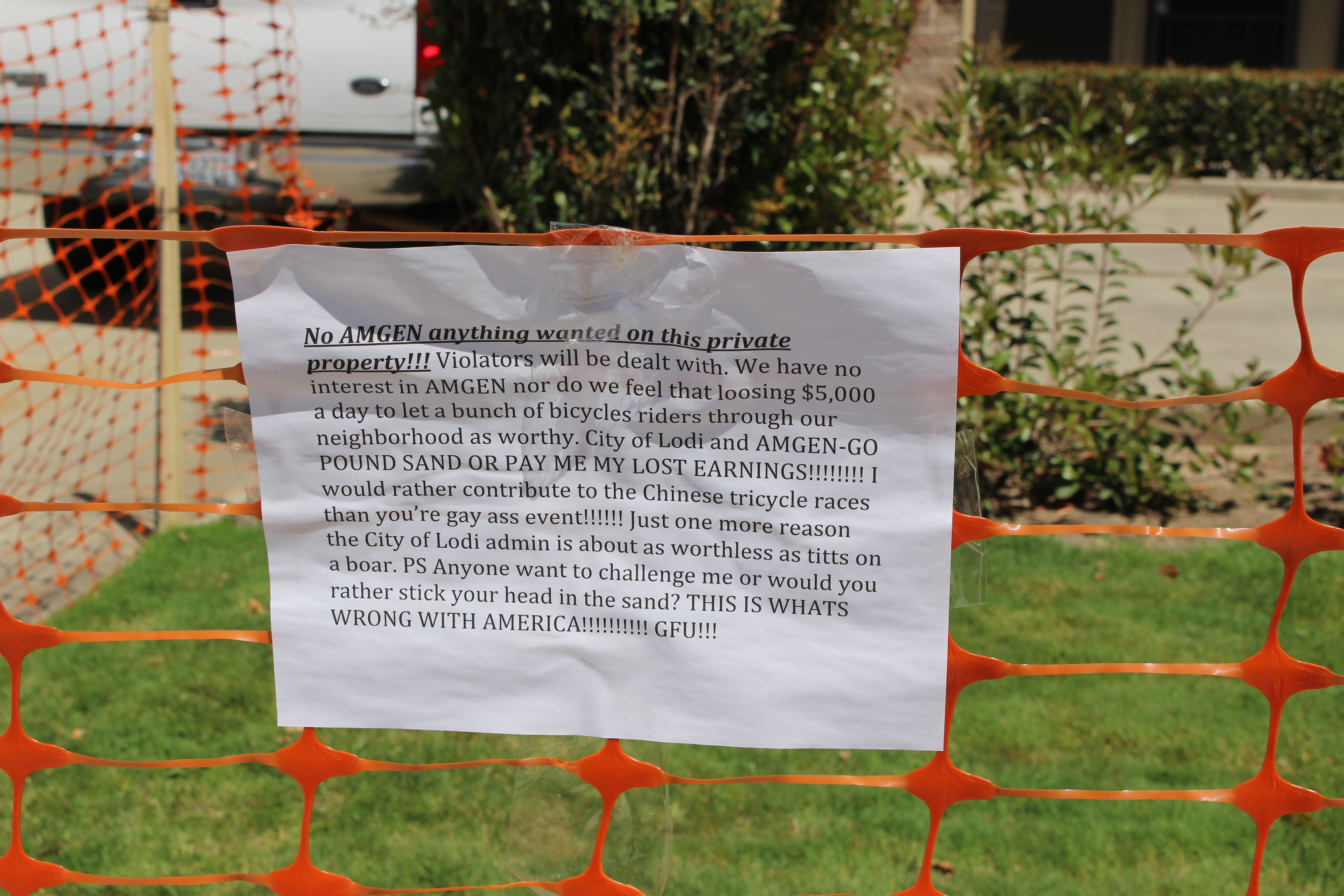
Snarky business owner's sign.
Snarky business owner’s sign at the AMGEN Tour of California 2015 City of Lodi finish.

There is much confusion about free speech in the USA, especially during this election cycle, what with money being called speech and lies that would have ended campaigns drawing nothing but headlines. Leaders usually are held to a higher standard than the entitlement to say whatever they like. Leaders exercise responsibility when they act and are careful with their words. Oh where are the leaders today?

Marilyn Chandler McEntyre’s thesis in her excellent book, Caring for Words in a Culture of Lies, is “if language is to retain its power to nourish and sustain our common life, we have to care for it in something like the way good farmers care for the soil.” (p 3) Years of hyperbolic advertising, yellow journalism, misrepresentations in political speech and fraud in business has depleted and polluted the English language. As English is the dominant language of the internet (80% of information is in English) and business, it is urgent to address the decline in literacy and commitment to truth.

She makes the case that to be good stewards of our language we need to do three things: 1) deepen and sharpen our reading skills; 2) cultivate habits of speaking and listening that foster precision and clarity; and 3) practice poesis–be makers and doers of the word. (p 9-10)

McEntyre gives 12 strategies to steward the English language:

  1. Love words.
  2. Tell the truth.
  3. Don’t tolerate lies.
  4. Read well.
  5. Stay in conversation.
  6. Share stories.
  7. Love the long sentence.
  8. Practice poetry.
  9. Attend to translation.
  10. Play.
  11. Pray.
  12. Cherish silence.

It has inspired me to make my word for the year: truth. I intend to focus on reducing my own tendency to hyperbolic enthusiasm, to take a Great Course on crafting better sentences, and to memorize poetry. It is a start.

There is an urgency that I hope you share with me. I just watched The Big Short at the movie theater. It can only be described as a comedy if you like black humor. High levels of deceit (and greed) in the world’s banking system led to a complete meltdown in 2008. The complicity of the regulatory and government agencies resulted in no one being held accountable and nothing enacted to avoid a repetition of the same calamity. The stakes are high on so many fronts.

A Dose of Much Needed Hope

Rob Bell's Everything is Spiritual
Rob Bell’s special white board for Everything is Spiritual with Rob seated for after performance Q&A.

You all lived through this past November and December (2015), so I do not need to tell you that a bunch of shit was going down. Between mass shootings, everyday violence against poor and colored people, and hate toward Muslims and refugees, it was a bleak holiday season.

I bought the tickets to Everything is Spiritual a performance by Rob Bell months earlier, so the timing was serendipitous.

If you are not familiar with Rob Bell’s work. He was a pastor of a postmodern church in Michigan breaking all kinds of new ground in how he communicated the gospel, when he started down a different path. At first it seemed like he was going on a parallel path, but his theology eventually broke from the Evangelical mainstream and for some fundamentalist Christians he is a heretic. Ultimately, his writing books like Love Wins led him to quit his pastoral job to move to Laguna Beach and focus on creating stuff. He is also part of the Oprah entourage, appearing on Super Soul Sunday on OWN.

I appreciate Rob Bell’s blog and podcast. I had seen an earlier version of Everything is Spiritual on YouTube, so when I read that he was taping it one evening in a Santa Monica theater, I thought it would make a fun adventure for my daughter and me.

The taping will be made into a movie within a few months so please wait and watch the better quality, more advanced-in-his-thinking version when it comes out. I will give you a sneak peek.

Rob Bell, like great comedians, has a unique way of seeing the world and is very smart and articulate. He created this presentation to help people make sense of our world. He does not answer all questions (even with the concluding Q&A); instead, he presents a framework for continuing the exploration.

He begins at the beginning of the universe an estimated 13.8 billion years ago when a big bang set off a creation process that resulted in the world as we know it. If you stand at this beginning point and look forward you begin to see that creation is moving toward greater complexity, depth and unity. However, if you look at the creation from today and look backward, you may see the world as fundamentalists do, that is, the world is going to hell in a handbasket.

Rob Bell’s presentation gave me a much needed shot of hope because it reminded me that God’s love is pulling the whole of creation forward. S/he invites us to join in the creation. We have to ignore the “resistance” and persist in joyful creation: An epiphany* for the New Year.

*Some Christians celebrate the Epiphany on January 6 when tradition says the three wise men came to worship baby Jesus.


Leadership Lessons from Chef’s Table

Chef's Table

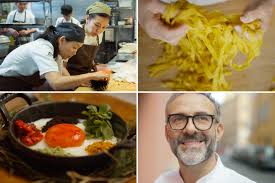
The original Netflix series Chef’s Table is six delectable leadership lessons. It starts with a profile of Mossimo Bottura, a three Michelin star chef in Modena, Italy. He is so full of life and creative energy. He is also generous and orientates his life around his family. His family includes his restaurant employees. As he shares, “If you live an incredible moment of happiness, the happiness is much more deep and big if you share with others. And you get to the point together—the happiness, the feeling is exploding. It’s doubled.”

As a chef, Bottura transcends mere cookery and creates art. He also demonstrates how an artist’s best work often emerges from mistakes. One day he and his sous chef broke one of the two remaining lemon tarts on the counter and in that moment he began his postmodern departure from traditional Italian presentation. He created “Oops I Dropped the Lemon Tart.” His sous chef Takahiko Kondo said, “That day I learned something. That in life, to move forward you learn from mistakes. Maybe I did something wrong, but you learn from it.” I suspect that this lesson was shared with more laughter than cursing.

Bottura’s restaurant is Osterio Francescano.

Dan Barber, chef of Blue Hill restaurant in New York City, is the focus of the second profile. He is an innovator in the farm to table movement. I appreciate his leadership in reforming our overly industrialized food “system”. His temper was off-putting and I mentally crossed Blue Hill off my list as a result. Even though I completely agree with his belief that taste or flavor is dependent on quality ingredients, which is dependent on healthy soil.

Blue Hill restaurant sources much of its ingredients from Blue Hill Farm in the Berkshires in Massachusetts.

The third profile focuses on the Jeremiah Johnson of cooking. Francis Mallman does wild, open-fire cooking. He lives on an island in Patagonia, but he and his crew fly around the world doing extreme barbeque. Watching his team work together made a big impression. Mallman said, “I love the joy of working with all the team. I need to be happy with them. There has to be a festive feeling about the hard work we are doing.” His team is learning from their leader, as one member said, “Francis has an energy to materialize—a person with ideas that also accomplishes what he dreams.” Mallman owns multiple restaurants and has written multiple books.
Chef's montage

I was relieved when the fourth profile considered a female chef. Niki Nakayama overcame the sexism in professional kitchens AND the low expectations for women in Japanese culture to become the renowned chef of N/Naka in Los Angeles, California. I loved her description of “flow” when she is creating great food. If I liked Japanese food I would make the effort to eat at her restaurant because I admired Chef Nakayama so much.

After Bottura, my next favorite chef is Ben Shewry, the focus of the fifth profile. He is a Kiwi relocated to Melbourne, Australia. I love the photos of New Zealand and Australia. I will be there in a few weeks and I can hardly wait. Like many of the other chefs, Chef Shewry struggled for a few years before his food was appreciated. He is humble and hard-working and places a high priority on time for his family. At Attica on Tuesday nights you can enjoy Chef’s Table for $140 per person and take your chances on the chef’s experiments. Wednesday through Saturday you can partake in the Tasting Menu for $220 per person plus $145 for wine (or $75 for non-alcoholic beverages).

The final profile is of Swedish chef (no relation to the muppet) Magnus Nilsson. His 12 seat restaurant Faviken in Jarpen, Sweden is in the middle of nowhere. He demonstrates how it is possible to create from nothing. I found the community that has grown up around Faviken to be very appealing. It takes some commitment to make it part of your tour of Sweden. The good news is you can stay over and you can hunt with Nilsson’s colleagues.

I have tried to remember if I have ever eaten at a restaurant with a Michelin star and I do not think I have yet. I am going to be in Melbourne, so I looked up Attica to find out what it costs to eat there. I do not normally budget so much for a meal. I might bust out and spend $50-75 per person (includes wine) once or twice in an adventure. I am not an adventurous eater and I am always concerned that I will fail to appreciate the effort. For me the company makes the meal.