Habits Help You Become Better Than Before

The author Gretchen Rubin writes about happiness and she asked questions like “How can I make myself happier?” She realized that certain actions increased her happiness, so by making these actions a habit and removing the decision-making, she could greatly increase her happiness. She began reviewing the habit-making literature and discovered that she has a relatively easy time making and keeping habits but that most people do not.

Better than Before

Rubin sees a strong connection between a person’s tendency toward dealing with expectations and their ability to establish and maintain good habits. This helps to explain why some habit strategies work really well for some people and fail others’ depending on the person’s tendencies. These concepts are helpful to understand ourselves and to more effectively manage others.

The author is an Upholder, which makes it much easier to keep habits, because she is motivated to meet external expectations as well as her own internal expectations. Rubin is likely to meet a deadline from her publisher and keep a personal commitment to work out at the gym twice a week. Upholders are a small part of the population, hence the popularity of books on habits.
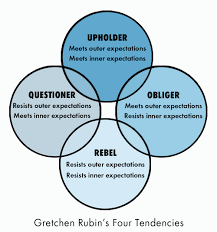
Rubin's tendencies

Most of the population is either a Questioner or an Obliger. I reared a Questioner daughter and I could try to assert a good habit in her life—like brushing her teeth every morning and evening—and she would ask questions about why she should. I learned that if I didn’t lose my patience and say “because I said so,” she would usually establish some internal reasons that benefitted her and happily settle into the habit.

Obligers are also good at making habits with the help of outward accountability. They can be terrific employees if managed with clear expectations and regular reporting. Since a large part of the population are Obligers, it is very important to have clear accountability. These same people can also be taken advantage of because they will overextend themselves to meet others’ expectations.

Other types also benefit from accountability; however, you have to include other processes to engage them in the habits. Questioners and Rebels both need to be engaged in establishing the standards, such as everyday we will have a safety meeting before starting work, and then the habit is more likely to be supported.

As a manager, Rebel employees sound like a bad employee. Rebels like choice and freedom and resist internal and external expectations. This does not mean they cannot establish habits, but they are likely to have fewer regular habits and prefer to find their own way of doing things. True confessions: I am a Rebel. I highly value keeping commitments so I am able to get along in the workplace. To get the most from a Rebel employee you have to provide some flexibility in how tasks get accomplished.

Rebel

Rubin has developed a short quiz to help figure out your tendency.

Better Than Before is organized around the pillars of habit: monitoring, scheduling, accountability and habit foundations. The latter consists of sleep, move, eat & drink, and unclutter.

There are other tendencies that need consideration when forming good habits or breaking bad habits:

  • Are you a Lark (early bird) or a (night) Owl?
  • Are you a marathoner or a sprinter?
  • Do you tend to overbuy or underbuy? (love to spend vs. hate to spend)
  • Do you love simplicity or prefer abundance?
  • Do you finishing projects or opening/starting projects?
  • Do you prefer familiarity or novelty?
  • Do you take small steps or big steps to reach a goal?
  • Do you find it easier to abstain altogether or does moderation work for you?

Rubin includes observations and strategies for habit-forming depending on your tendencies.

As we consider our workplace environment, it is easier to change our surroundings than ourselves. Rubin questions free snacks at work and promotes the treadmill desk. Essentially, we do better when we make good behavior convenient and bad behavior inconvenient. And everything is more fun when we make it a game.

Better Than Before: What I Learned About Making an Breaking Habits—to Sleep More, Quit Sugar, Procrastinate Less, and Generally Build a Happier Life by Gretchen Rubin (author of The Happiness Project, co-host of Happier with Gretchen Rubin podcast, and a blog at GretchenRubin.com)
Leadership Lessons from the Tour de France

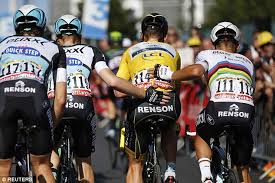
I have been setting my alarm at 6:00 a.m. everyday since June 2nd to watch the Tour de France stage before I have to get going.  There are always leadership lessons if you pay careful attention.

barrier down
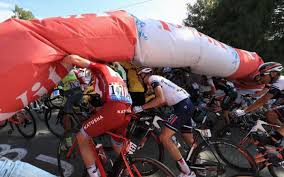
1 K barrier collapsed due to fan interference; photo Telegraph.co.uk

Sometimes the lessons are learned from others’ mistakes. The race organization ASO has much egg on its face for a series of logistical catastrophes. On Stage 7, the inflatable red 1 kilometer marker collapsed and caused a crash. When the race entered the Pyrenees it was clear that the ASO was not investing enough in safety as many spectators interfered in the race. Then on Mont Ventoux, the ASO moved the race short of the mountaintop because of severe winds but didn’t move the fan barriers. At 1 kilometer to the new finish the crowd closed in resulting in an accident, a broken bike and Chris Froome, the race leader (yellow jersey), dashing up the road.

https://www.youtube.com/watch?v=SaNh5wNdGt0

Could this have been avoided? Absolutely. The ASO decided to move the finish line the day before, so they had time to move the barriers. The ASO excuses just grated on everyone’s nerves. It might have caused more angst, but the tragedy in Nice shifted the focus.

Teamwork really matters in cycling. When the race announcers Matt Keenan and Robbie McEwan talked about the Kiwi cyclist George Bennett, they listed “10 Requirements Besides Talent to be Successful.” I sat up and paid attention. They are: 1) be on time, 2) work ethic, 3) body language, 4) effort, 5) energy, 6) attitude, 7) passion, 8) doing a little extra, 9) be prepared, 10) coachable. This is a good list to use for choosing members of any kind of team.

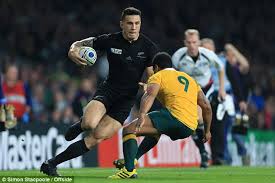
Robbie McEwan added a 11th requirement: stay upright. He was referring to George Bennett’s run in with a spectator on Stage 9. For some crazy reason a spectator decided to cross the road as the cyclists came roaring around the corner. Bennett put out his arm and she fell backward out of the road. Asked about it later and the New Zealander said he “Sonny Billed” her. (Sonny Bill is a fantastic rugby player for the All Blacks.)

daily mail Sonny Bill
All Black Sonny Bill Williams; photo Irish Times

Preparedness brings luck. This has been illustrated again and again by Peter Sagan, Chris Froome, Tom Dumoulin, and Mark Cavendish. Their preparedness has enabled them to take chances and advantage of situations resulting in stage wins and more.

Almost every year I am reminded of this lesson: Never give up! This year on Stage 4, the race commissioners had to review a photo finish before deciding that Marcel Kittel edged out Bryan Coquard by mere millimeters.

Irish times photo finish
Stage 4 Photo Finish; photo Daily Mail

Disenthrall Ourselves Now

Sharing an email I received (and reprinted here with permission) from one of my life mentors Kathleen Kraft.

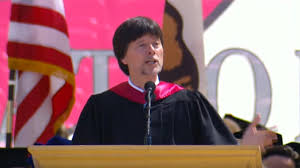
Ken Burns

I found some of my most valuable insights come from Stanford University Commencement talks.  This year Stanford invited historian Ken Burns to address the June 12 graduates.  His comments are surprising…and chilling.  In part, he said…

“For 216 years, our elections, though bitterly contested, have featured the philosophies and character of candidates who were clearly qualified. That is not the case this year. One is glaringly not qualified. So before you do anything with your well-earned degree, you must do everything you can to defeat the retrograde forces that have invaded our democratic process, divided our house, to fight against, no matter your political persuasion, the dictatorial tendencies of the candidate with zero experience in the much maligned but subtle art of governance; who is against lots of things, but doesn’t seem to be for anything, offering only bombastic and contradictory promises, and terrifying Orwellian statements; a person who easily lies, creating an environment where the truth doesn’t seem to matter; who has never demonstrated any interest in anyone or anything but himself and his own enrichment; who insults veterans, threatens a free press, mocks the handicapped, denigrates women, immigrants and all Muslims; a man who took more than a day to remember to disavow a supporter who advocates white supremacy and the Ku Klux Klan; an infantile, bullying man who, depending on his mood, is willing to discard old and established alliances, treaties and long-standing relationships. I feel genuine sorrow for the understandably scared and – they feel – powerless people who have flocked to his campaign in the mistaken belief that – as often happens on TV – a wand can be waved and every complicated problem can be solved with the simplest of solutions. They can’t. It is a political Ponzi scheme. And asking this man to assume the highest office in the land would be like asking a newly minted car driver to fly a 747.

As a student of history, I recognize this type. He emerges everywhere and in all eras. We see nurtured in his campaign an incipient proto-fascism, a nativist anti-immigrant Know Nothing-ism, a disrespect for the judiciary, the prospect of women losing authority over their own bodies, African Americans again asked to go to the back of the line, voter suppression gleefully promoted, jingoistic saber rattling, a total lack of historical awareness, a political paranoia that, predictably, points fingers, always making the other wrong. These are all virulent strains that have at times infected us in the past. But they now loom in front of us again – all happening at once. We know from our history books that these are the diseases of ancient and now fallen empires. The sense of commonwealth, of shared sacrifice, of trust, so much a part of American life, is eroding fast, spurred along and amplified by an amoral Internet that permits a lie to circle the globe three times before the truth can get started.

We no longer have the luxury of neutrality or “balance,” or even of bemused disdain. Many of our media institutions have largely failed to expose this charlatan, torn between a nagging responsibility to good journalism and the big ratings a media circus always delivers. In fact, they have given him the abundant airtime he so desperately craves, so much so that it has actually worn down our natural human revulsion to this kind of behavior. Hey, he’s rich; he must be doing something right. He is not. Edward R. Murrow would have exposed this naked emperor months ago. He is an insult to our history. Do not be deceived by his momentary “good behavior.” It is only a spoiled, misbehaving child hoping somehow to still have dessert.

And do not think that the tragedy in Orlando underscores his points. It does not. We must “disenthrall ourselves,” as Abraham Lincoln said, from the culture of violence and guns. And then “we shall save our country.”

This is not a liberal or conservative issue, a red state, blue state divide. This is an American issue. Many honorable people, including the last two Republican presidents, members of the party of Abraham Lincoln, have declined to support him. And I implore those “Vichy Republicans” who have endorsed him to please, please reconsider. We must remain committed to the kindness and community that are the hallmarks of civilization and reject the troubling, unfiltered Tourette’s of his tribalism.

The next few months of your “commencement,” that is to say, your future, will be critical to the survival of our Republic. “The occasion is piled high with difficulty.” Let us pledge here today that we will not let this happen to the exquisite, yet deeply flawed, land we all love and cherish – and hope to leave intact to our posterity. Let us “nobly save,” not “meanly lose, the last best hope of earth.”

Begin Again, Again

The last post I wrote was so hopeful. I really thought I would be able to jump start some better habits with a blitz and a better understanding of my own story around habits. I went for a bike ride and I felt great, so I went for a slightly longer one two days later. Later that same day I felt like I had the flu–my body ached in my joints and lower back. My fuzzy thinking also came back with a vengeance. I felt betrayed by my body.

slack_imgs.com_670Then the world went nuts: two police shootings and a sniper killing police. I knew my resilience was low when I over reacted while watching the Stage 12 of the Tour de France. The ASO (Tour de France organizer) did not move the barriers lower on the slopes of Mt Ventoux when they shortened the race and, not surprisingly, spectators interfered in the race and caused a crash. I stewed about it all day. Then tragedy struck Nice and I really had something to be upset about.

All these days I continued to experience pain, long after my more vigorous bike ride. I continued to ride my cruiser bike around town. But now even long walks or a lot of standing leaves my back so stiff I cannot sleep comfortably. I finally broke down and make a doctor’s appointment. I had low expectations though, for sometime now every symptom I have is attributed to menopause, followed by “there’s no treatment”.

I had two days before my doctor’s appointment and no pain relief. I began imagining all kinds of crazy, life threatening circumstances. Fortunately my Kaiser doctor had reviewed my chart before our appointment and when I told her what I was experiencing, she said “menopause can reactivate your fibromyalgia.” And just making sense of what was going on made all the difference. She gave me some ideas of things I could do to manage the pain, continue to exercise and be able to manage the symptoms.

Today I begin again, again. With less pressure and with renewed energy. With all the crazy stuff happening in the USA and the world, I want to use this space to emanate light in the darkness.

Habits for Happiness

20160630_082603
This morning on the American River Parkway in Sacramento.

I am reading Gretchen Rubin‘s book, Better Than Before, to share strategies for making and keeping good habits and break bad habits. She find making and keeping habits easier than most people. She is among the small percentage of people who are “upholders”. These are people who are motivated by both internal and external expectations. Thankfully she is empathetic to the ways different people approach habits and she provides a multitude of strategies that make success more likely.

Reading this book is giving me an opportunity to rewrite my story around habits. I woke up this morning and thought about what I have to do today and for the holiday weekend. I realized that I have about six super flexible days. I can make it an at-home writer’s retreat. I am calling it my Freedom Writing Retreat.

The Tour de France also begins on Saturday and this is the first time since 2013 that I will be home and able to watch on television for the entire race (July 2-24). This is exciting because I will be able to immerse myself in an event I truly love. I will also be able to frequently hit the open bike trail and enjoy cycling, which reinforces how much I enjoy watching the professionals ride.

These are not habits that I am trying to form for life. I am just focusing on a blitz of behaviors that will make me happy for the next six days, and some other behaviors that will also make me happy through July 24. My questions include: will this increase my overall happiness and energy for daily life, will these habits be easier to uphold because I have reframed them based on my own tendencies and personalities? I will let you know.

Asking the Right Questions

In A Jane Austen Education, a memoir by William Deresiewicz, he quotes his mentor professor: “Answers are easy,” he would later say. “You can go out to the street and any fool will give you answers. The trick is to ask the right questions.” (Karl Kroeber)

This resonated with me because I learned the importance of powerful questions in my executive coach training with CTI. The training provides you with examples of powerful questions; however, the key is to let your intuition take the lead.

In this graduation season there have been many videos of speeches posted, and this one by Dean James is a keeper:

Here are the five questions and bonus question listed for future reference:

  1. Wait, what?

2. I wonder why/if?

3. Couldn’t we at least?

4. How can I help?

5. What truly matters?

Bonus: And did you get what you wanted out of life, even so?

In Remembrance: Orlando Innocents

20160619_090201I arrived at St John’s Lutheran a few minutes into the processional hymn. Usually there are about 80 people worshipping but today all I could see was a sea of black suits as the entire Sacramento Gay Men’s Chorus was sitting in the last 3 rows on each side of the sanctuary.
I took my pew seat and looked at the order of service. I immediately began to look for a kleenex in my purse because the service was dedicated to remembering and honoring the victims of the Orlando massacre in the Pulse nightclub. Their names were printed in the bulletin and I was already tearing up.

Pastors Frank and Leslie led us through a beautiful, emotional morning of worship. Jesus was among us, offering comfort, inviting us to express our sorrow at such a tremendous loss of life. Prayer is an act of love and we prayed a lot this morning.

The Gospel lesson was Luke 8: 26-39, the story of Jesus healing the man with many demons. Jesus asks the possessed man’s name and he answers Legion. Pastor Frank asked us to treat evil seriously and to name it: bigotry, and hatred. Jesus meets us here in this mess and helps us to expel the darkness and replace it with love.

It is disheartening to have to remember the innocents slain in another mass murder with a semi-automatic. It is salt in the wound to know that some “Christian” Pastors incite more violence with their vitriolic and hate-filled responses. It was wonderfully healing and a comfort to join with members of the St John’s community and ring a bell for each one murdered while their photo, name and age was shown on a large screen. We rang a bell for Omar Mir Seddique Matteen but did not show his photo in recognition that violence affects all involved. His family lost a son and have to live with this tragedy too.

Community can come in all forms. Worshipping together is one way of bringing diverse people together: strangers become the family of God. As Dorothy Day says in The Long Loneliness, “The only answer in this life, to the loneliness we are all bound to feel, is community. The living together, working together, sharing together, loving God and loving our brother, and living close to him in community so we can show our love for Him.” (p 243)

We gathered this morning and the Sacramento Gay Men’s Chorus sang:

No never, never will we have that first time, or this last time, or just this time.

Never get to live our lives all over. Never. Ever.

Oh! Life will take us where it will. New beginnings. Ends.

Take each moment as a gift. Give it back again.


Born for This, and This, and This

Today I had a reward day. After a rough start with some weird office politics, I had the joy of meeting up with two of my former colleagues (separately). They are both women I hired at Housing California who did amazing work and continue to grow as people and in their careers. They both took a moment to thank me for being myself. They cited specific things I did to make work fun and fulfilling. It was a better reward than a paycheck.

Tony Martin with better teammate photoIt made me think about my values and why I believe how we do things is as important as what we do. Many career counselors focus on the what.  We ask children, “WHAT do you want to be when you grow up?” I have had many roles in several fields and for me the common thread is HOW I go through the world. Do I treat people with respect? Am I encouraging people to reach their full potential? Am I limiting time wasting tasks and avoiding petty concerns and instead helping people to focus on the bigger questions the more strategic actions?
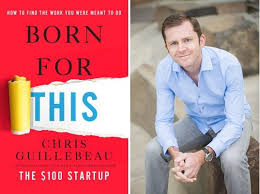
Born for ThisChris Guillebeau has a new book, Born For This. I started reading it with enthusiasm. I am thrashing around again to find real meaning and satisfaction in my work. I had great hope that it would help me gain clarity around what I should really be doing.  This book certainly has some good ideas about how to get unstuck if you are in a job you hate. It takes the romantic idea that we are born for a certain career and says that career satisfaction is not limited to people who have always known what they want to do. Guillebeau suggests that if you pay attention each of your jobs will give you important clues about what you were born to do.

While the second part of the book has some great life hacks for how to help the process of self-discovery along, I lost momentum. Today I realized why I lost interest. I was getting distracted by the search for the ideal field or role. Whereas in my life I find that I can work towards any number of goals and find meaning. Instead I am looking for the environment where my skills and talents can best be used in service of something larger. Today I was reminded the who and the how is more important to me than the what.

I have always had to earn a living and so I have done some pretty weird jobs from assistant director of the Cavalcade of Horses, cleaning toilets at a Christian camp, to a nonprofit Executive Director. The places I found the most work satisfaction did not always match up with what others were most impressed by. As I think about deep job satisfaction, I am asking: When was the last time I really shared a laugh with people at work? When did I last make a deep friendship at work?

Yes we are “born for this” at work: we are each endowed with a unique set of gifts and a something to offer our teammates. We do our best work when we are able to be ourselves.

It is time to search for the right work environment with a team who appreciates me.


Evening of Dancing Words

Billy Collins
Billy Collins reading a poem as Aimee Mann looks on.

Tonight was a evening to celebrate language. The full house in Zellerbach Hall on the UC Berkeley campus were gathered because they were fans of the poet Billy Collins or the singer/songwriter Aimee Mann, or both. People are drawn to these artists because they respect language and are committed craftsmen. Or in the case of Billy Collins, I love his dry wit and the humor in his poetry. I can relate to poems such as “Forgetfulness”:

The name of the author is the first to go

followed obediently by the title, the plot,

the heartbreaking conclusion, the entire novel

which suddenly becomes one you have never read, never even heard of,

as if, one by one, the memories you used to harbor

decided to retire to the southern hemisphere of your brain,

to a little fishing village where there are no phones.

First two stanzas from “Forgetfulness” from Billy Collins’ Sailing Alone Around the Room

I have one album by Aimee Mann. She has a beautiful voice, but her songs are all a little too melancholy for a steady diet. She was joined by a bass guitarist who also sang backup. She introduced him and then I forgot his name and he is not in the program. It made for a nice tryptic on stage.

Aimee Mann
Aimee Mann performs as poet Billy Collins looks on.

Aimee Mann and Billy Collins took turns performing and in between they bantered about their experience participating in a workshop for young poets at the White House. It is where they met and where they started what appears to be an on-going discussion of poetry and art.

Are song lyrics poetry? Sometimes they can be, although Aimee admitted that her job is easier because she has the music or melody to help her. Billy only has blank pages.

I bought the tickets for this performance in August. I thought the book Caring for Words in a Culture of Lies prompted me to buy the tickets. In my January 11 blog post, I committed to memorizing poetry. Apparently I was already thinking about poetry because I bought these tickets in the summer. Until recently I did not realize it was Billy Collins performing with Aimee Mann. I was all about the poetry. Aimee was a definite bonus.

Billy Collins shared with the students at the White House workshop the importance of form in poetry. It is not enough to express yourself. There needs to be some discipline and structure. Form pushes back at you and does not allow you to get away with everything.

Collins also told the students (and us) a good poet also has to tell a little lie: that you care more about poetry than yourself. Then you can create a poem that intrigues the reader and can serve something other than the author’s ego. Aimee agreed and said her husband (Michael Penn) says, “you have to give a shit.”

Truth for all meaningful work.


Remembering a Powerful Mentor Pearlie S. Reed

I read Don Richardson’s post on Facebook: Pearlie S. Reed died. Funeral arrangements were made. As I numbly read about the hotel with a room block in West Memphis a wave of sadness mixed with gratitude overwhelmed me.

Pearlie official
Pearlie S. Reed’s official USDA photo

I was a 28 year extremely green Executive Director of the California Association of Resource Conservation Districts and Pearlie was the State Conservationist for the USDA Soil Conservation Service. He had to be Senior Executive Service to get the job in the nation’s biggest agricultural state. I just had to be willing to accept the woefully small salary.

He was infinitely patient and immediately began coaching me in every way I was willing to learn. I already had many terrific role models as teachers and employers. Pearlie towered over all of them in many ways. Without a doubt, he has had the biggest impact on me as a leader.

He taught me empathy before Brene Brown coined the phrase. I remember when I first started as Executive Director I was attending all of the Area Meetings and meeting all of the Directors. The current President and Vice President of the Board were also participating in these meetings. At one particular meeting I was seated at the head table with the President and with Pearlie but the Vice President Helen was not. Helen was a hard working officer who had a particularly fragile pride in her position. She was clearly hurt by the oversight. I felt awkward but I did not know how to handle it. Afterward I mentioned to Pearlie that Helen’s nose was bent out of shape and she was angry with me. He gently suggested I look at it from her point of view and then helped me think of several other ways I could have handled it. He did not make the case that it was her due, he just matter of factly calculated that a little effort would avoid a tempest that was a waste of everyone’s energy.

Watching Pearlie in action was a Master’s Degree in leadership. He had the superpower of listening. He could not speak even when the silence was very uncomfortable. I realized that he did this because unlike me he rarely spoke unless his thoughts were fully formed. Silence also worked to his advantage. Others in the meeting, in their nervousness, would often babble and share all kinds of information, which was especially useful in negotiations.

Pearlie talking
This is more how I remember Pearlie–sharing an idea with a little smile.

Some people found Pearlie intimidating. He was the hardest working, most ethical, wisest person in the room. I believe that his integrity often triggered the gremlins in others–like being around a priest and suddenly you start to think of all the times you cut corners or left early. And of course, there were still plenty of people who resented his talent because he was a black man.

He was the first person I had known from the South. Pearlie grew up in rural Arkansas before school desegregation. He was one of 18 children and his parents instilled a work ethic in him. He told me once that he could either work or study when he got home from school, so he studied as much as possible. He and his siblings more than succeeded in their fields because they had a drive for a better life and the discipline to make it so.

Pearlie was not a person who shared a lot about his personal life. He did not ask about your personal life either. This made the good ol’ boys in the USDA who liked to chew up half of every meeting with small talk about sports and family crazy. I loved it because I had  a lot of shame around my dysfunctional family. It was lovely to just concentrate on work issues. I learned over time to temper this somewhat as a manager. Because Pearlie shared so little about his personal life, everything he shared I scooped up and treasured like it was a pearl of wisdom.

Working alongside Pearlie I observed prejudice in action. This was also an important education. I experienced some additional obstacles as a woman, but nothing like the vitriol I saw aimed at Pearlie. He may have been angry in private, but I believe he was usually able to turn it to his advantage and put his energies toward his vision of a more inclusive USDA. He achieved his vision of transforming the Soil Conservation Service into the Natural Resources Conservation Service when he was Chief and he tackled the systemic discrimination in farm policy while serving as Assistant Secretary of the USDA.

I could go on because the memories are rolling back to me. Adversity makes people stronger. As a parent I am torn between wanting my children to gain strength through overcoming challenges AND protecting them from any unnecessary pain. Pearlie’s example reminds me that leadership is 20% perspiration and 80% the attitudes we choose. Circumstances do not necessarily make as big a difference as we think. Strength of character matters more.

Pearlie S. Reed was an extraordinary human being and leader. Some people make ripples; Pearlie made waves.

Rest in peace Pearlie.

The family has asked that donations be made to the Pearlie S. Reed Scholarship fund in lieu of flowers. If you are interested: send donations to University of Arkansas, Pine Bluff Alumni Scholarship Endowment Fund, Office of Alumni Affairs, 1200 N. University Drive, Mail Slot 4929, Pine Bluff, AR 71601.