Get Happy: How to Use Your Mind to Change Your Brain

This photo triggers a great experience for me when I got up super early and went out to a hide on a South Island NZ beach and waited patiently for a yellow eyed penguin to walk across. You may not see him/her in the photo but I know I did. Positive experience savored.

Lewis Howes interviewed Dr. Rick Hanson on episode 207 of the podcast The School of Greatness and I listened when I woke up unusually early this morning. I found this to be super practical advice on dealing with negative, self-defeating thoughts. Especially because I am suspicious of positive thinking techniques that feel like psyching myself up (or out). Rick Hanson distinguishes between positive thinking and his work, “I believe in realistic thinking and positive experiencing.”

I do believe I am basically a good person and am capable of greatness, but somehow my brain did not get the memo. It replays lots of negative memories and thoughts that undermine my basic sense of wellbeing and sap my energy. UC Berkeley professor Rick Hanson’s research and teaching in neuropsychology suggests that we can rewire our brain in short 20-second sessions throughout the day.

I do not want to give your detailed notes on the interview because my hope is you will listen to the entire 55-minute interview. Here are a few teasers.

“The brain is like Velcro for the bad, but Teflon for the good because that’s what helped our ancestors survive in harsh conditions.” So it is harder to learn from good experiences. We have to do it consciously in 20-30 second increments using HEAL. Have the experience. Enrich the experience by savoring it for just a little longer. Absorb the experience. Link the experience and ultimately replace negative experiences with positive. (Hanson explains this in much more detail in his NYT bestseller, Hardwiring Happiness.)

When asked what are 3 truths about the world, your life, that your learning boils down to and Hanson told a story about Froggie similar to a fairy tale in many world traditions. A bunch of frogs fall into a vat of cream. The slick sides of the metal vat kept them from climbing out. They all continued to struggle and eventually they each began to drown. But Froggie is determined and keeps swimming, and keeps kicking and didn’t give up. Eventually the cream turned into butter and became solid enough for him to jump out of the vat. So keep churning.

P.S. I discovered Lewis Howes at World Domination Summit. And my friend Carole shared her favorite podcasts with me and recommended the Stitcher app for easier listening. I made The School of Greatness one of my favorites.

Getting Started on the Journey: World Domination Summit Part 2

The second day of #WDS2015 opened with the photographer Jeremy Cowart’s multimedia presentation. He explained his journey from an average student who frequently told his parents, “I can’t.” His dad’s refrain was the bible verse “I can do all things through Christ who strengthens me.” Jeremy discovered he could draw and focused on design in University. He was an early expert user of Apple computers and design software. He got a job with an ad agency and enjoyed the money but did not find creating ads for air conditioning units particularly inspiring. This ultimately led to starting his own ad firm and then becoming a digital photographer.

Dr. Lissa Rankin explains Joseph Campbell's Hero's Journey.
Dr. Lissa Rankin explains Joseph Campbell’s Hero’s Journey.

His success as a photographer has allowed him to do special projects such as his project chronically the aftermath of Haiti or creating portraits of Rwanda survivors who have forgiven each other. When his older brother died unexpectedly before age 40 Jeremy realized that none of us know the length of our lives and he was determined to share everything he knows about photography with his children. He created SeeUniversity.com hosting 120 different video lessons to pass on all of his photography expertise.

Dr. Lissa Rankin presented her story of how she discovered her life purpose or calling. She quoted Martha Beck from her book, Finding Your Way in a Wild New World, about those people who are members of the team who feel an special call to make the world a better place. She left her traditional and soul sucking ob gyn practice to create the Whole Health Medicine Institute. She has written one book, The Fear Cure, about how to overcome fear to accomplish our goals. We make fearful assumptions, such as uncertainty is unsafe; I can’t handle losing what I cherish; It’s a dangerous world; I am all alone. By changing our perspective we realize that uncertainty is a gateway to possibility; Loss is a gateway; We live in a purposeful universe; We are all one.

In between speakers WDS alumni spoke about some of their projects. Tess Vigeland, former NPR radio host, announced her forth coming book, LeaP. Another alumnae shared a new college forming to help young men and women figure out their life purpose and then go on to University or other training at Wayfinding Academy. Another gave all attendees a $150 gift certificate to classes on CreativeLive.com.

After the afternoon break we enjoyed two final speakers. They were tasked with offering practical advice on how to get started with our own journey. I especially appreciated Asha Dornfest. Her gentle humor and down to earth approach was helpful. As she said, sometimes we can hear all of these great speakers and beat ourselves up for not having a more epic life. Her presentation was called, “How to be a Grown-Up.” She shared some basic myths and truths about being an adult. Myth 1: grown-ups stick to the plan. Truth: Embrace course corrections because variables always change. Myth 2: Baby steps are for babies. Truth: small consistent steps are the surest way of reaching your goal. If you meet resistance, then go smaller. Start small and keep going. Myth 3: Grown-ups are sure of themselves. Truth: Self-confidence grows every time you keep a promise to yourself.

The final speaker Derek Sivers gave us an excellent example of how this is practically applied. He created CDBaby.Com as a hobby and created one of the first on-line music stores. He eventually sold it for $22 million, then gave his money away to support music education. He challenged us to know what we want: money, prestige, fame, legacy or freedom. Then focus and optimize for that value. Do not get distracted by your business plan. No one knows the future and your business plan is fiction. Commit to a problem you want to solve and do not get attached because no plan survives first contact with the customer. Ask instead of answer; learn instead of preach. Derek shared many stories of how CDBaby set themselves apart by simple things like answering the phone by the second ring or paying musicians weekly.

Closing questions: What have you been afraid to try? What steps will you take to get started?

Finding my Voice at World Domination Summit 2015

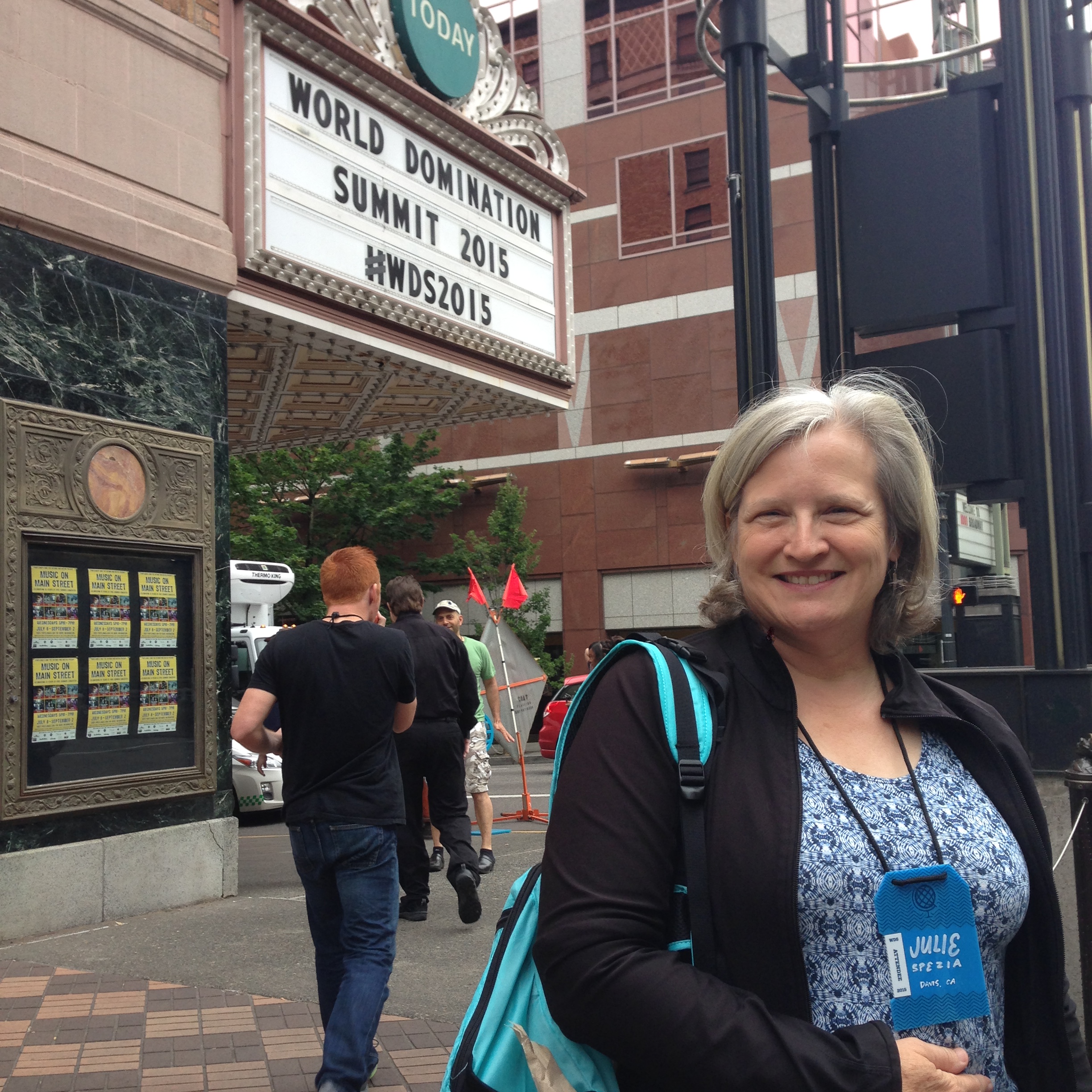
Outside the Arlene Schnitzer Concert Hall

Jon Acuff, author of several books including Do Over, anchored #WDS2015. He called us forth to rediscover our voice. He invited us to get back in touch with our 3rd grade self and ask if our 3rd grade self would be happy or full of regrets if we met him/her today. I thought back to my long drive to Arcata on Wednesday when I reconnected with an idea for a fictional story I want to write. My third grade self would say “work less and write more.” He went on to give us some inspiration and some tools (including a worksheet on DoSummer2015.com).

We were all abuzz about Kid President. Robby Novak, aka Kid President, and his uncle and producer Brad Montague taught us some dance moves. Then Brad explained how Kid President evolved into the phenomenon it is today. On the one hand Robby and Brad’s messages are simple: 1) Be nice or treat everyone like it’s their birthday; 2) You matter; your voice matters; 3) Sharing is good; 4) Invite everyone to the party; 5) Enjoy it. My favorite quote, and one that relates to the previous post on failure, “There’s always a reason to complain and always a reason to dance. Choose to dance.”

I discovered Chris Guillebeau’s blog and book Happiness of Pursuit last year. Through his website I discovered the World Domination Summit.The WDS asks participants “How will you live a remarkable life in a conventional world?” Intrigued, I tried to buy tickets last year and learned how quickly it sells out. So this year I signed up for alerts and set my calendar, then I bought tickets for me, Sarah and Marcos as soon as they were available. That was months ago, and I had to reconnect with my motivation. The speakers have made it easy.

I was especially inspired by Lewis Howes‘ moving presentation calling us to be super humans instead of super heroes. I added his podcast School of Greatness on Stitcher. There is another day of speakers and a few more world records to break.

Leaders Recover from Failure

I have been watching a lot of sports lately. There was the Women’s Soccer World Cup and now the Tour de France. Sport gives spectators the opportunity to witness the agony of defeat and to study the many ways people choose to respond to failure.

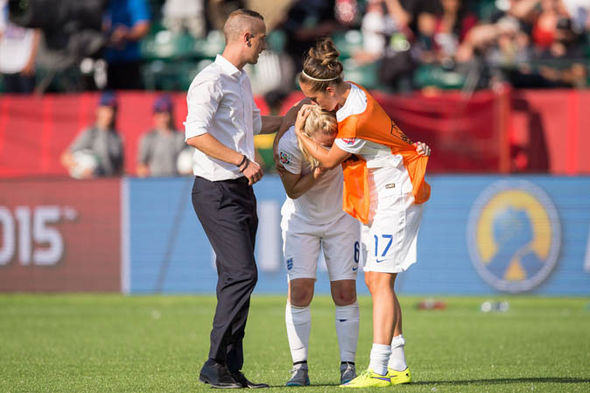
Laura Bassett reacting to own goal in England vs Japan
Laura Bassett was “heartbroken” by inadvertently scoring a point for Japan. Photo and quote source: Daily Express

Maybe you think of failure as a mistake like Laura Bassett’s own goal. Bassett had been playing terrific football in the World Cup when she did something that unfortunately could define her career. Her own-goal in stoppage time ceded the win to Japan. “I couldn’t breathe, my heart was out my chest and I wanted the ground to open up and swallow me,” she said afterward.

I use a broader fail definition. Anytime we are unable to reach our goal then it is a kind of failure. Our saboteurs can have a field day in our head (or sometimes they are living critics sniping at us in person or in the press).  The most damaging is our own self critic, even when the “short of goal” fits into the category of “stuff happens.”

For example, Tony Martin missed the yellow jersey (first place for general classification in Tour de France) in the first stage time trial by just 5 seconds. He closed the gap to one second and continued to pursue the yellow in the next 2 stages. Finally he saw his opportunity and fulfilled one of his dreams by breaking away in the last 3 km and won the stage and the yellow jersey. He took the honor of wearing yellow seriously, so when he crashed within 1 km of an uphill finish on Stage 6 he struggled to get on his bike and finish the race.

Failure may be a gift. First, what we think we want may not be what is best for us. The phrase “be careful what you wish for” often sums this up. Often a failure gives us the space to reconsider what we really want and to reevaluate our goals. Second, we learn so much more from our failures than from our successes. Generally when we succeed we spend little time examining what went well, or what went wrong. Nothing like failure to help us be more introspective.

The critical thing about failure is how you choose to look at the event and what you choose to do next. The key is to consciously choose. Alas, it is tempting and easy to default to a perspective of victimhood or to beat ourselves up because we fell short of our goal or made mistakes. We have a choice of perspective.

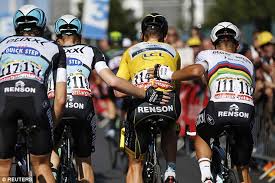
Tony Martin receives support from Etixx-Quick-Step teammates.

What did Tony Martin do after his crash? He let his team help him across the line. He had an open fracture of collarbone (piercing the skin) yet he struggled through the duties of drug testing, awards ceremonies and interviews, all the time looking like he was going to vomit from the pain. He exhausted every possibility to return to the race the next day and then when he knew he had to go to Germany for surgery that night, he stopped to say farewell to his teammates and thank them for their support. His choices after his biggest disappointment of his career has solidified his reputation as a classy guy and a leader.

I do not know how Laura Bassett is handling her public failure after all the World Cup hoopla. I believe she started for England against Germany and won the bronze medal. Not everyone is able to recover in the moment as Tony Martin did. Nor should we expect them to, so when I say it is important to choose what you do next, I actually mean next and next and next. Then one day you move to a place where you no longer play it over and over in your head and you are no longer identified with the failure.

I have had some big failures and disappointments in my life. My most recent is selling everything I own, quitting my job and putting all of my resources toward moving to New Zealand. I was only able to stay 5.5 months and had to move back to Sacramento. I was devastated and to some degree I am still trying to figure out why and what next. Externally I am better off financially and I am closer to my family, so most people probably think I have recovered. Emotionally I am still processing the failure and I feel more stuck than I look. I am still in the dance trying to figure it out.

Perspective Matters!

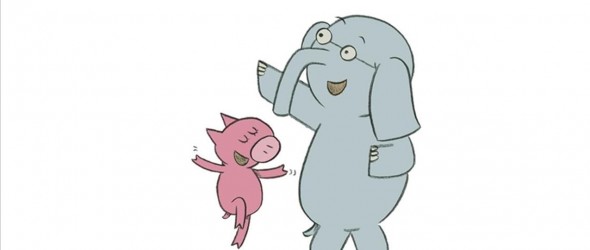
Elephant & Piggie books by Mo Willems

One of my strengths as a leader is my lack of certainty. (You may recall it also one of my weaknesses.) For many years I reveled in my ability to make snap judgments and decisions. I believed that I was right 98 percent of the time. It led to much unhappiness. It also achieved results.

One of the CTI coaching workshops is called Perspective and it changed my life and leadership. The basic premise is you start with a statement that you feel fairly certain about, but one that is unsatisfactory. For example, “I am not an athlete and I am going to suffer on RAGBRAI (upcoming 7 day ride).” Then you move physically (as simple as standing up and turning around) and make an opposite statement (even if you do not believe it). For example, “I am an athlete and I am going to kick RAGBRAI’s butt.”  Then you take on other perspectives and make other statements, each time moving physically. Ultimately you will land on a perspective that resonates and is sometimes far from where you started.

This process enables me to find a perspective that serves my goals and is actually closer to the Truth. It also helps me hold my judgments more lightly and as a result I suffer less.

Today I found a children’s book by Mo Willems from the Elephant & Piggie series, Are You Ready to Play Outside?  Gerald the elephant asks Piggie if he is ready to play outside. Piggie can hardly wait to run and jump and play outside. Then it starts to rain and Piggie’s perspective is that it is the end of the world. He cannot play outside. Then he sees two worms playing in the rain and he gains a new perspective. Just as he begins to relish playing in the rain, the rain stops. Now Piggie is again upset. Then Gerald provides rain via his trunk and Piggie is happy again. It is a perfect illustration of how easily we can get stuck and unstuck in a perspective.

It sounds so obvious, yet in my experience it is hard to practice. With the work on the Delta projects, it is easy to adopt one way of looking at issues and to stop asking good questions and get stuck in a perspective even when it no longer serves my stake or most accurately reflects the Truth.

Try it and share your discoveries with me.

Path into the Abyss or to the Summit?

The abyss is just a couple of steps away...One of my weaknesses as a leader is my lack of certainty. Oprah knows “one thing for sure” every month in her magazine. I am hard pressed to come up with anything I know for sure, and less so as I get older. I am hoping the process of writing this blog will help me sort out my thoughts. I will be as honest as I can be.

This morning I read a post by Donald Miller in the Storyline Blog, where he said, “The reality of leadership is this: the world is standing before you, curious, asking where you’d like to take them.”  Leaders are meant to be confident and certain that they are leading to a summit and not into an abyss.

I recently finished the novel The Goldfinch. I found it profoundly disturbing. It is hard to find a quote from the 771 page novel that neatly sums up Theo Decker’s nihilism. So many things in life go badly and he himself is self-medicating with pills. While I do not make as many bad choices as this fictional character does, I can relate to the pull of the whirlpool and the desire to just let go. Stop trying to make sense of it all. Stop trying to identify a mountaintop to summit.

Miller would say this disqualifies me for leadership. I do not disagree. At the same time, how many people who are confidently asking people to follow have a flippin clue where they really are or where they are really headed?

A part of me wants to put my faith in God’s purpose and another part of me is full of doubt. My ambivalence has muddled my leadership.

I just finished listening to Rob Bell’s RobCast interview of author Elizabeth Gilbert. She talked about her vow to herself made at 16 to be a writer. This resonated with me. I know in my knower I need to prioritize my writing and contemplation, including leadership.

I have been struggling with finding a meaningful life purpose since my kids are grown and my mid-life redesign is more or less complete. I got an inkling of the path forward when I was inspired to start this blog. I look forward to continuing on this path and see where it leads.

Celebrating Marriage Equality: Woop! Woop!

Tracy and Marge on Huffington Post!

The U.S. Supreme Court 5-4 decision to recognize the right of everyone to marry who they love regardless of their gender was more personal than it might have been a few years ago. Since my involvement with CTI and the leadership program I have many more gay or lesbian people in my tribe. Marj Plumb (on right in photo above) was my executive coach for several years. I knew she was in a committed relationship with her love Tracy, but I was not so close to her that I knew they were married. But then when I moved to New Zealand we became facebook friends and I followed her posts as she and Tracy moved to Omaha, Nebraska for Tracy’s job. Suddenly their marriage was not legally recognized. They were named parties on the lawsuit against the State of Nebraska and ultimately their fate was in the hands of SCOTUS. I was thrilled to see the Huffington Post celebrate them as they have been leaders on this issue.

My own thinking on marriage rights had already evolved from conversations with my Panther tribe mates in CTI Co-Active Leadership program. It was such an intense experience and we grew to love and respect one another in a very deep way. One retreat we spent two evenings telling one another about a profound experience that has shaped us. Many of my tribe members shared the pain and rejection they experienced when they came out. This was the first time I knew someone well enough that I learned these intimate details.

Panther Dale was politicized by the battle over California’s Proposition 8 at the end of 2008.  He helped me understand that there was not a compromise that worked and why. I struggled with the arguments that I had heard at church and from conservative friends. Dale’s leadership–which included getting all of the men in the program to wear gay pride underwear!–impacted my thinking and by the end of 2010 I was ready to vote for marriage equality.

Another Panther Jen and her partner Leslie also challenged my beliefs around my faith. They are committed to each other and committed to Christ. This challenged all of the teaching I had ever heard in the evangelical church. I began asking new questions and seeking the Holy Spirit’s guidance.

Ultimately these perspectives and their leadership helped me make a shift to a new way of thinking. Of course this means that I am no longer comfortable in old places. I am not sad about this because my heart is bigger and I have a new perspective and there is no going back to the old way of thinking.

It was with a full heart that I celebrated the Supreme Court’s decision. Woop! Woop!

This Leader’s Journey Takes An Inward Turn

I have been a leader all of my life. I believe all of us can lead, and some of us have a combination of personal traits and skills that means that when everyone on the line takes a step back we are often the one still standing there willing to provide leadership. Ever experience this?  I have over and over again.

reluctant leader (from Google images)I rarely say “pick me!” The one experience on USC Student Senate cured me of wanting a career in politics as an elected official. And the burnout from leading nonprofit organizations resulted in a complete redesign of my life at age 49.

Yet over the years I have honed my leadership skills. From leadership roles in 4-H, church youth group, Student Senate, nonprofit boards and organizations, Habitat for Humanity Global Village builds, Friends’ monthly meeting, and in my family, I have life experiences informing my leadership choices in the second half of life. I also have read countless books and am a fellow of the California Agricultural Leadership Program and CTI’s Co-Active Leadership Program.

Those are my credentials, and I continue to learn. You can read for yourself whether I have any wisdom to impart.

I am ready to attempt to synthesize what I have learned. I also believe the challenges we face as humanity today demands a evolution of leadership to something less ego-driven and more collaborative. I hope to engage others in a dialogue about what this looks like in real life.

In my life my leadership journey has taken a turn inward. You can join me if you dare.