I Need to Lament Right Now

rob-bellI started listening to Rob Bell’s podcast during my newscation since the election. The Lamentations mini series from May is just right for right now.

The book of Lamentations is 5 poems in the middle of the Bible that express the human experience. It was written after the devastation of Jerusalem about 500 BC.  As Rob Bell explains “When you suffer, literal language often fails you.” Lamentation poems use images to express what they are feeling.

Here are a few Bell statements from the first of five episodes:

“Lamentations is naming what is wrong–naming the pain and giving expression to the injustice.”

“If you are lamenting you are still alive. You are still in the game.”

“To lament is to refuse to be silent. Rip open your rib cage and let it out. To expose and name whatever is out of order in God’s world.”

In the US we live in a culture that denies reality. We invest in plastic surgery to deny time and aging. We keep quiet when we should blow the roof off this thing. Lamenting may disrupt things because to lament is to feel your full humanity.

In all of the people of the book faiths there are people who teach extreme quietism, that is we need not do anything but pray because God/Allah is in control. And you could interpret Lamentations as a way to pray through your anger. I respectfully disagree. Prayer is essential. And public lamentation is also important to give expression to the suffering at a societal level. This is why I support the Black Lives Matter movement, and I am spending my time and money to participate in the Women’s March on Washington to affirm women’s power.

And if you are a Christian who celebrates Advent, consider this modern Lamentation-like devotional.

Did We Overindulge in Satire?

I have heard many people say we are living in the golden age for satire. I agreed before the election, but now I am wondering if I overindulged in satire at the expense of political action. Much has been said about the echo chambers we can create for ourselves on social media. Since almost all of the satiric comedy shows are left leaning lampooners of politics, they create a similar effect. We think because John Oliver, Samantha Bee, Trevor Noah, Seth Meyers, and Stephen Colbert all made sport of presidential candidate Trump with such gusto, it was easy to think that a kind of consensus existed about his unsuitability.


Malcolm Gladwell,  in his new podcast series Revisionist History, focused on satire in Episode 10. He begins with an interview with Harry Enfield who created a character to satirize the Thatcher administration. His Loadsamoney sketch went viral and yet seemed to do little to move political opinion or effect change.

The idea of satire is an ancient one. It gives the opportunity to speak truth to power, and by couching it in humor, give the speaker a chance to keep his head (literally in some cases). Unfortunately it may also do little more than entertain. And perhaps it leaves little space to consider issues seriously.  As Gladwell points out, some political problems can be solved and deserve more than to be laughed at.

He refers to an article by Jonathan Coe, in the London Review of Books, called “Sinking Giggling into the Sea.” He writes:

“Or perhaps we should give the final, gloomiest word on this subject to William Cowper, writing in 1785:

Yet what can satire, whether grave or gay? …
What vice has it subdued? whose heart reclaimed
By rigour, or whom laughed into reform?
Alas! Leviathan is not so tamed.

Despite all this, it always seems that successive generations of entertainers, bent on laughing people out of their follies and vices, remain optimistic about the power of anti-establishment comedy at the outset of their careers: it’s only later that reality kicks in. When Humphrey Carpenter interviewed the leading lights of the 1960s satire boom for his book That Was Satire, That Was in the late 1990s, he found that what was once youthful enthusiasm had by now curdled into disillusionment. One by one, they expressed dismay at the culture of facetious cynicism their work had spawned, their complaints coalescing into a dismal litany of regret. John Bird: ‘Everything is a branch of comedy now. Everybody is a comedian. Everything is subversive. And I find that very tiresome.’ Barry Humphries: ‘Everyone is being satirical, everything is a send-up. There’s an infuriating frivolity, cynicism and finally a vacuousness.’ Christopher Booker: ‘Peter Cook once said, back in the 1960s, “Britain is in danger of sinking giggling into the sea,” and I think we really are doing that now.”

Now it appears the USA is following.

I wasn’t the only one who found it intolerable to watch comedy in the aftermath of the election. E.W. in The Economist wrote in defence of comedy, and yet acknowledged: “Now the joke (of a Trump presidency) has mutated into reality. In the immediate aftermath of Mr Trump’s victory, laughter has proved difficult. Judd Apatow, a comedy behemoth involved in such films as “Anchorman”, “Knocked Up” and “Bridesmaids”, tweeted on election night: “One thing I do not want to watch right now—comedy about any of this. That’s how terrifying and disappointing this is.”

The E.W. article asserts that satire can still influence change, but must do it as an outsider. Perhaps now that the far right is controlling everything, they will regain an edge. Gladwell would probably suggest they can regain their relevancy by becoming sharper, such as Israeli satirists have done. My concern is that when you laugh at misogyny and racism you may normalize the behavior to some degree.

Rough seas ahead. Let’s not drown giggling into them.


Exercising My Particular Superpower

img_0031

I am devastated by the election results. I am experiencing all of the stages of grief. This is so much more intense than 1980 and 2000. Because in this election an ugly spirit was unleashed to stoke fear and attract votes. One candidate gave people full permission to express misogyny, racism, and xenophobia both in words and actions. And now winning the electoral college (but not the popular vote) these same people are emboldened and we are seeing a lot of ugly.

I am still struggling with how to express my dismay without closing down the possibility of dialogue with people who didn’t vote or voted for Trump and are not racists. I attended a Stronger Together organizing meeting in Sacramento with over 200 people on Veteran’s Day.  I hope they follow through with the ideas of communications training and a clearer message about the Democrat’s vision for the economy. This will help in 2 years.

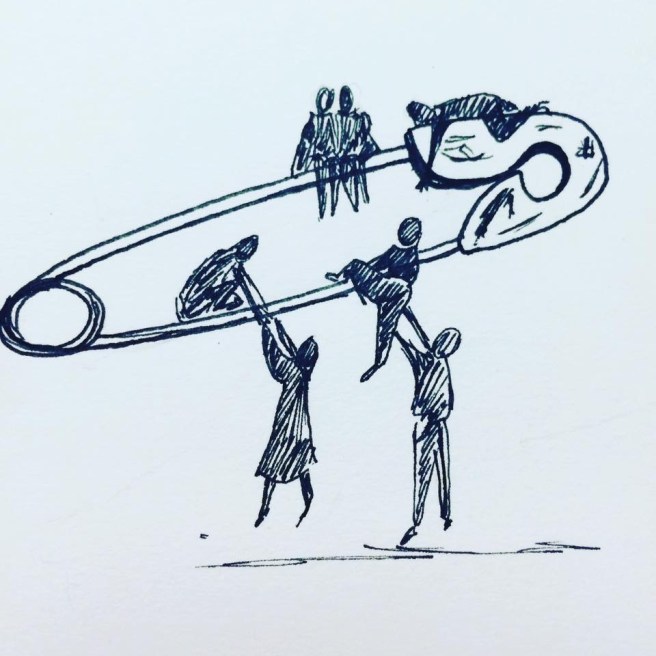
What can I do in the meanwhile, when so many people feel fearful and are experienced harassment or worse? I read a post by one of the women in Pantsuit Nation on Facebook where she introduced the idea of wearing a safety pin to let people know you are a safe person committed to standing with them against the threat. She read that this started in Britain after Brexit when they had a similar increase in racially-motivated violence.  As the writer said she is a little overweight, grey-haired and looks like someone’s grandma. She is invisible most of the time. Yet, she is also non-threatening to the fearful person and yet a formidable foe to a bully. This is me!

safe-with-meI can use my superpowers of invisibility. I look powerless and benign. However, I prepared to stand up or beside anyone who is threatened verbally or physically. I’ve been the person who needed someone to walk me to my car, or to sit with me while I wait at a scary train station. Now it is my turn to provide safety in numbers.
Some say that I am appeasing my white guilt and can keep my damn safety pin. I am not acting out of guilt. Yes I am privileged because of my lack of pigment, and my relative wealth. And I’m a woman so I know what it is to be made less than because of my sex. I know what it is like to stand up to bullies alone. And I have asked for help and received it. So I will put my safety pin on with intention and ask God to help me stay awake and alert to what is going on around me. I will  make eye contact and engage with all people in a friendly way. And if needed, I will respond to assist people to safety.

Coda: Good advice on having a plan if you do wear a safety pin: https://isobeldebrujah.wordpress.com/2016/11/12/so-you-want-to-wear-a-safety-pin/

Coda2: Sometimes it feels like this:

15016384_10211344902721326_1092088993777966316_o

The Importance of Being Humble

church-and-sky
Lake Tekapo’s Church of the Good Shepherd and the Milky Way

What would our theology be if we could see these stars every night everywhere in the world?

This is the question I asked myself and my friend Sarah after wandering out to see the stars at Lake Tekapo at midnight and then again at 4:00 a.m.

We had to wait for the clouds to break for us to enjoy this sumptuous banquet of stars. Once this was a commonplace site in all parts of the world. Now with most people living in light or air polluted places, humanity does not have this nightly reminder of our place in the universe.

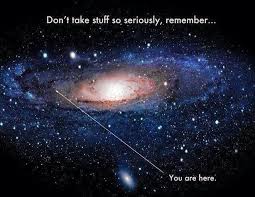
Not everyone looks at the stars and sees a creator amongst them. But even the humanist or scientist does gain humility from seeing all the possible galaxies and worlds. Maybe, just maybe, earth is not the only one that matters. And perhaps the concerns and emotions that can rule my existence may be seen in a proper perspective if I spend some time meditating on or admiring the cosmos.

you-are-here

Maybe, just maybe, the stars could be a nightly reminder of the importance of being humble.

I was going to end my ruminations here and then I thought, maybe not everyone appreciates humility as a character trait. Certainly the media gives the vast amount of attention to the braggart and the self promoter.

Micah 6:8 says: He hath shewed thee, O man, what is good; and what doth the LORD require of thee, but to do justly, and to love mercy, and to walk humbly with thy God? (King James translation)

I read an article in The Jewish Week that said humility is the difference between a professor and a sage. (Ouch!)  They also offered this definition of humility on LetItRipple.org: Thinking yourself worthless is not humility. To understand that you have gifts and blessings and yet remain modest is an achievement of character.

Sometimes it is easier to understand humility by what it is not: proud, self-willed, arrogant. Not putting ourselves ahead of others, instead the humble understand that every human matters. And if we know that every human matters, we are a long way to seeing how everyone is interconnected, and then there is no “us” and “them”. What a world that would be!


Lose Your Illusions; Save Your Life

Brilliant piece by Palmer Parker on the On Being website is a must read.

palmer-parker
Parker Palmer

“When a friend says, “I’m so disillusioned!” about this or that, why do we say, “I’m so sorry! How can I help?” We ought to say, “Congratulations! You’ve just lost an illusion! That means you’ve moved that much closer to reality, the only place where it’s safe to stand!”

P.S. Also worth a listen: Krista Tippett’s interview with EJ Dionne and David Brooks. (available on On Being podcast or the website)

Healing Our Democracy After the Election

hart2After the last 10 days of the is election season, women who’ve been assaulted are experiencing PTSD, and many more people are experiencing anxiety. People on both sides are fearful of the outcome of the other candidate succeeding. And yet, on November 9 there will be one person with the most votes/electoral college delegates and we all need to find a way to live together peaceably.
This is all the more challenging because of the large number of people who are expressing racist and misogynistic views. People are discovering that people that they planned PTA fundraisers or studied the Bible with are expressing feelings and values that repugnant: defending sexual assault, or saying that all Muslims are a threat. As Dylan Matthews at Vox news said, “What’s needed is an honest reckoning with what it means that a large segment of the US population, large enough to capture one of the two major political parties, is motivated primarily by white nationalism and an anxiety over the fast changing demographics of the country.” (Vox, “Taking Trump voters’ concerns seriously means listening to what they are actually saying,” October 15, 2016)

So I began searching for ideas for how we can begin the healing. We need to find a way to build empathy bridges over the chasm. But if you cast the other people as feminazis or racists, then this is difficult to do. Indira AR Lakshmanan’s article “Surviving an ugly campaign: Advice from the Dalai Lama and Bishop Tutu,” (October 13, 2016 The Boston Globe) offers the perspectives shared in their book, The Book of Joy. “…when people vote for candidates who promote fear and anger, it’s because they’re afraid, hurting and suffering…fear, anger, hatred exist in our own minds and hearts as well, not just ‘out there.” If we realize that we can have compassion for what’s underneath the vitriol.”

Her parting words are wise, “The key to finding our way back to civility may be to recognize that that anger is out there and face it, head on. Our political, spiritual, and media leaders have an obligation to speak, listen and find common ground–even with those that are slinging the last dregs of mud.” One way to do that is to find a softer way to think of people who hold white nationalist views. I’m not suggesting we tolerate hate speech, but unless we can find a name for what’s underneath the vitriol, we cannot be empathetic.

EJ Dionne offers a way to do this in his Washington Post column (October 14, 2016). The late Rev. Andrew Greeley called those who love the particular patch where they were raised or that they have adopted as their own as“neighborhood people.” Being “citizens of the world” is not high on their priority list, whereas it is a point of pride for “cosmopolitans”.

Dionne says, “I suspect that many of Trump’s backers are neighborhood people. Economic change, including globalization, is very hard on them. It can disrupt and empty out the places they revere, driving young people away and undermining the economic base a community needs to survive. Liberals and conservatives alike insufficiently appreciate what makes neighborhood people tick and why they deserve our respect. Liberals are instinctive cosmopolitans in the citizens-of-the-world sense. They often long for the freedom of big metropolitan areas. Free-market conservatives typically say that if a place can’t survive the rigors of market competition, if the factories close, the people left behind are best off if they find somewhere else to live.” And it doesn’t take a lot of imagination to understand how for a neighborhood person such a sentiment would feel hostile.

Finally, we are all in this democracy together. As tempting as a divorce may seem, we need to find a way to restore the respect and care for one another that makes our community at large work. I am reminded that the opposite of love is not hate it is disdain or disinterest. That is an emotion we cannot afford to indulge.


This Moral Moment

img_3930
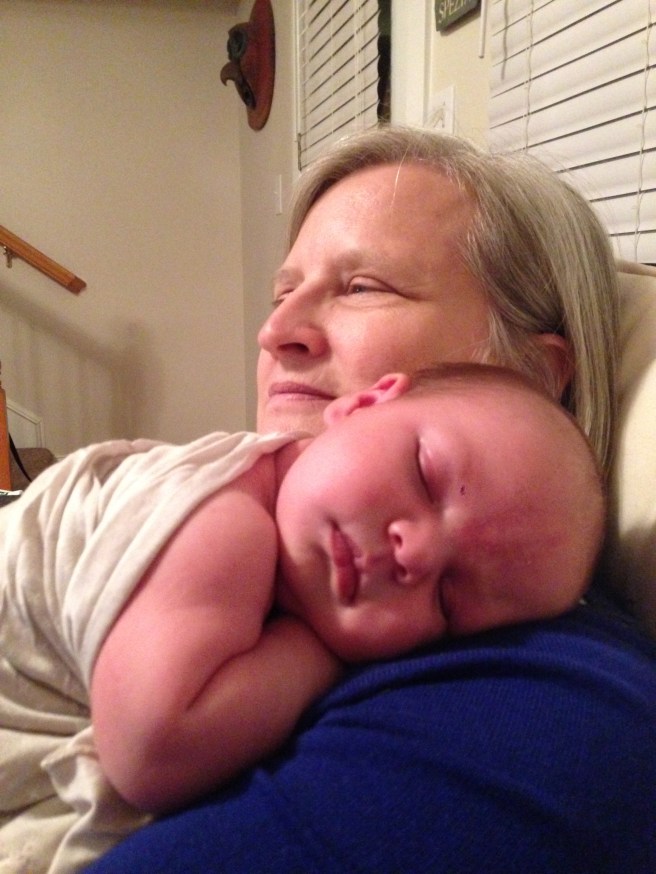
What world are we creating for my grandson Calvin?

I have been trying to process how anyone can justify voting for the Republican presidential nominee. This became even more mysterioso after the Friday tape drop. I try to “build an empathy bridge” to my Republican friends. I imagine if the Democrats had a candidate who was truly unqualified, who regularly insulted groups of people, and acted like a petulant child, and now likely committed sexual assault. Would I still vote for him/her out of party loyalty? Or because I thought the future of the supreme court was more important than the deficiencies of the candidate? It gets me part of the way (Bill Clinton springs to mind–especially the second time around) and still there is a chasm.

I marvel at both the Republicans who since Friday have claimed that are now so outraged they unendorse him, and those who, even with this latest garbage spew from the candidate, say that at least he doesn’t support abortion. (Does he or doesn’t he? Really, you believe that?) To the former I guess you can see where they might have given Trump’s public pronouncements a pass before, thinking he’s just trying to mobilize a segment of angry voters, and then once you hear that even 11 years ago (at age 59 past the point of “maturity”) he was saying vile things in private. This is a direct window into his heart. It’s ugly and it becomes the final straw.

And now I have a whole new understanding of how Germany ended up with Hitler (no I am not called the Republican nominee a Hitler–the comparison is more to their shared deep narcissism and willingness to race bait to win elections).  Especially my fellow Christians: How can you give his behavior such a complete pass just to have access to Presidential power or to maintain Anglo-Christian privilege? I continue to read on Facebook posts from Christian friends who say Trump is the only true Christian. (I guess Methodists aren’t followers of Christ??)

This is why I believe we are living in a moral moment. In her article,  “Derailed” by Kathryn Schultz in The New Yorker August 22, 2016, she suggests we do not usually recognize moral moments.

“It is to our credit if these are the Americans [Underground Railroad engineers] to whom we want to trace our moral genealogy.  But we should not confuse the fact that they took extraordinary actions with the notion that they lived in extraordinary times. One of the biases of retrospection is to believe that the moral crises of the past were clearer than our own–that, had we been alive, we would have recognized them, known what to do about them, and known when the time had come to do so. That is a fantasy. Iniquity is always coercive and insidious and intimidating, and lived reality is always a muddle, and the kind of clarity that leads to action comes from without but from within.”

I like to think that when there is a critical moment to make a choice with heavy moral portent that I will recognize it and make the right decision. It might be hard or come at a great cost personally or professionally, but I would be on the right side of history. I believe this election will shape our society’s moral compass for years to come.

Dan Rather agrees with me. As he said on the evening of the second Presidential debate:

For those of us who have lived long and eventful lives, we often are able to find calm in the crisis of the moment by invoking the perspective of time. You understand that history is always rough in the early making and the years and decades that follow will often smooth these jagged peaks into the gentle contours of a rolling landscape where big themes and movements hold sway over the details that overwhelm us in the here and now. But this is not always the case. There are some inflection points that explode with such violence and monstrous effect that any semblance of continuity is hopelessly disjointed.

Most often these moments are ones of violence – wars, civil unrest and assassinations. But make no mistake, what we have seen in the past few days is proof that we are living through such an instance. And the violence here has been in ripping asunder our self-confidence in our system of government and in the unity we share with our fellow Americans.

We have serious problems facing our nation, and our world. Our ship of state must be prepared to navigate the perilous shoals of our complicated world – and yet I feel tonight as if we have been hijacked into an alternate universe. This national nightmare will end one way or another and we will awaken to the same world from which we have been so disengaged. That is our challenge and it is a challenge from which none of us can opt out.

As citizens we must repudiate the hate, the bigotry, the vile character we have seen eating up the public space for the last year and VOTE for Hillary Clinton so there is no way the Republican nominee is allowed to win by any measure.

Why is truth so unpopular?

4-agreements

Al Gore called his mega-PowerPoint presentation on climate change An Inconvenient Truth. Seems like in this ugly season leading up to the national election that truth is more unpopular than ever.

Case in point, a family member and Facebook friend posted a picture of a baby born at 36 weeks with a caption that said “Bernie and Hillary support abortions as late as 36 weeks…” This struck me as particularly horrifying if this were true as that is considered a near term birth (full term is 39-40 weeks).  So I went to Google and Snopes.com and this story is false. At first I wrote not true, but that is not strong enough. It is misrepresenting their positions at best and I would even call it a lie.

So I messaged my relative privately instead of calling her out on Facebook. I provided her the Snopes.com link and this was her response, “I know—you don’t know what is true, I just wanted to show what a 36 week baby looked like didn’t care if either or neither said that. Be so glad when election is over!”

Uffda.

If she were a friend I might hide all of her posts from now on, but I want to see the grandkid photos and know when they are seeing other family members, so I will let it go. How many of us are having to do this with family or friends during this ugly election season?

It is easy to blame the media or the internet, but if you go back to Alexander Hamilton’s day and truth and elections were allergic to each other even then. Only then it was a printed pamphlet. And if we are honest with ourselves, truth is never popular. When it finally wins out people rewrite history and say they always knew or they are glad it came out. In fact, most of us spent energy avoiding the truth or actively denying it.

This is why it is one of The Four Agreements. All of the agreements seem simple, almost facile. Until you try to live them.

Fix or Fight?

img_0645
Fritz Durst, Board chair of Reclamation District 108, gives opening remarks at Wallace Weir

At the celebration of the construction of the new Wallace Weir, Fritz Durst called everyone to join the assembled collaborators to fix problems instead of fighting. People often refer to California “water wars” and as a result many problems remain intractable. The Northern California Water Agency and its members have been working hard to find ways to solve problems, sometimes at risk to their own interests. This project is one of over 49 identified to improve the chances for endangered salmon to return in the Sacramento River Salmon Recovery Program. They are joined by other stakeholders including local, regional and state agencies.

I have been working in the Yolo Bypass on behalf of Metropolitan Water Agency of SoCal to try to find common ground with a diverse group of stakeholders. We are seeking solutions that will allow endangered salmon fish to benefit from the floodplain in the winter whilst limiting the impact to the other land uses already in place, that is flood control, farms, waterfowl habitat and terrestrial species habitat.

It has taken a few years, but at last  we all agreed to move ahead with the fish passage projects. The Wallace Weir is one of the first to be constructed. Its purpose is to keep returning salmon from migrating up the Colusa Basin Drain where they are then lost and cannot spawn in the upper reaches of the Sacramento River. The weir has traditionally been installed each year to allow farmers above to pump water from the Ridge Cut. Then it is removed at the end of the irrigation season. This new structure will serve to control the water and catch up fish to be rescued by the California Department of Fish and Wildlife. A definite fix.

img_0657

I had the good fortune to also hear Lynn Twist, author of The Soul of Money, speak several times at What If? Conference and at St John’s Lutheran Church the day before the Wallace Weir event. She had similar advice. We can take a stand or take a position. Most people take a position, adopt a point of view ,and look to argue and fight over it. If we take a stand, say for equality as Martin Luther King Jr. did, then we must be willing to look at many perspectives and find solutions.  Fix not fight.


Energizing Leadership Discussion with Up With People

Up With People is in Sacramento this week. The program participants exercise their leadership by organizing various events including a leadership round table. Fourteen local leaders, including me, joined the 100 cast members to talk about leadership. In each group of about 6 people, we could ask each other anything, follow any aspect of leadership. We talked for about 10 minutes and then moved on to the next circle.

I was very impressed by the young people from around the world who are a part of the program. They are a terrific reminder that many 20 somethings are ready to take on leadership and make our world a better place.

They also sing and dance. If you are in the Sacramento area, please support this terrific program by attending their performance on Friday September 30 at 7:30 p.m. at Memorial Auditorium. Tickets available on-line or at the box office. $25 per person.

Postscript:  In a couple of our circles I was asked questions that led me to reflect my early leadership training was all about the externals: running a meeting, public speaking, time management, setting goals. Then midway through life the leadership tasks before me were more daunting and these externals were not enough. I found myself seeking out executive coaching, then CTI Co-Active Leadership training. This program focused on my inner life and becoming clear about my motivations and self-management to be a more effective leader.

I was reminded of this again this morning when I read Chapter 6 of Parker Palmer’s The Hidden Wholeness. He uses the story of the Woodcutter to explain how circles of trust help us to do “the work before the work”. This is a great way to describe the CTI training: the work you need to do internally before you can do the external leadership.