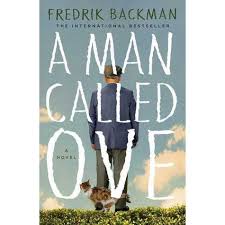
The novel, A Man Called Ove, created something of a sensation in the book club world in 2016. I mildly enjoyed the novel but found the character unbearably curmudgeonly through the first half. Though I can understand how many people were attracted to this man of seemingly forgotten values: “Since his father’s death he had begun more and more to differentiate between people who did what they should, and those who didn’t. People who did and people who just talked. Ove talked less and less and did more and more.”
Imagine if the world was mute and people only knew you for your actions.
The photographer Platon is featured on the Netflix documentary series Abstract. One focus of his work has been soldiers and military families.
I started my week with a really ugly misogynist verbal dump from a family member. It was very upsetting and the self-preservationist in me beat a retreat. I am concerned my family member is listening to so much hate radio. Still I want to be curious about what is taking so many men down this path. I looked at my pile of unread books and grabbed Sebastian Junger’s Tribe. As a reporter in many war torn countries, he has observed people coming together to help one another in a crisis. It is backed up by more rigorous research.
His definition of tribe is different than one I would have thought of: “the people you feel compelled to share the last of your food with.” What Junger has observed is that people don’t mind, and in fact, thrive on hardship. But modern society has made hardship more and more scarce. Dorothy Day touched back to her experience after the 1906 San Francisco earthquake when everyone pulled together, when the natural disaster and its destruction leveled society. A society-wide crisis–whether it is war or environmental disaster–resets community to a fundamental egalitarianism.
Humans lived with one another this way for centuries until agriculture and then industry developed and the concepts of private property and individual efforts became more important than the common good. Junger points to the three intrinsic values needed to be content: 1) feel competent at what they do; 2) feel connect to others; 3) authentic in their lives. As Junger explains, “Bluntly put, modern society seems to emphasize extrinsic values over intrinsic ones, and as a result mental health issues refuse to decline with growing wealth.”
Humans are hard-wired to help other people. Risk-taking to help others is expressed differently among men and woman. Men tend to do the majority of bystander rescues, and our definition of hero tends to encompass this kind of action that risks one’s life to save non-kin. Women tend to display the majority of moral courage. (p. 56-57) Both are needed:
“When a woman gives shelter to a family because she doesn’t want to raise her children in a world where people can be massacred because of their race or their beliefs, she is taking a large risk but also promoting the kind of moral thinking that has clearly kept hominid communities glued together for hundreds of thousands of years. It is exactly the same kind of altruistic choice–with all the attendant risks and terrors–tat a man makes when he runs into a burning building to save someone else’s children. Both are profound acts of selflessness and distinguish us from all other mammals, including the higher primates that we are so closely related to.” (p. 58-59)
When you examine the experience of soldiers after tours in Iraq or Afghanistan, you begin to see why some miss the battlefield and may become depressed when home. They are transitioning from an experience full of social ties and meaning, and return to a relatively isolated existence often without work of any kind.
In today’s The New York Times Magazine, Barbara Ehrenreich wrote one of the featured articles: “New Jobs Require New Ideas–And New Ways of Organizing.” She is focused on the change in our economy and why the labor movement is reinventing itself. As Ehrenreich states, “If the stereotype the old working class was a man in a hard hat, the new one is better represented as a woman chanting, “El pueblo unido jamas sera vencido! (The people united will never be defeated!)” If men are already feeling emasculated by a lack of work and changing roles in society, there are going to be increasingly angry at women when they read this and it may explain why the Women’s March is stirring up such strong reactions from some men.
The resistance to #45 better fits the kind of moral courage that is more often in women’s domain. Where women feel energized and inspired to run for office, men may be engineering a backlash that will make previous anger at women seem tame.
I am not sure what the solution is, but I am concerned that we’ll repeat the post-9/11 experience when men decided we should go to war. Men need an outlet for their warrior urges and their need to take life-risking action. Or at a minimum, they need good jobs that provide for their families. Without a positive way for them to express these values, what will they get up to?
President Obama presents the Medal of Freedom to Vice President Joe Biden.
This week with the president-elect’s lack of self control on full display. President Obama honored Joe Biden for his decades of public service and for his strength of character.
Here is an excerpt from his speech, “And through his life, through trial after trial, he has never once forgotten the values and the moral fiber that made him who he is. That’s what steels his faith in God, in America, and in his friends and in all of us. When Joe talks to auto workers whose livelihood he helped save, we hear the son of a man who once knew the pain of having to tell his kids that he lost his job. When Joe talks about hope and opportunity for our children, we hear the father who rode the rails home every night so he could be there to tuck his kids in bed.
When Joe sticks up for the little guy, we hear the young man standing in front of the mirror reciting Yates or Emerson, studying the muscles in his face, determined to vanquish a debilitating stutter. When Joe talks to Gold Star families who have lost a hero, we hear a kindred spirit. Another father of an American veteran, somebody whose faith has been tested and who has been forced to wander through the darkness himself and knows who to lean on to find the light. So, that’s Joe Biden, a resilient and loyal and humble servant. And a patriot, but most of all a family man.” (Time.com)
Everyday the onslaught of news and social media seems to be saying that character doesn’t matter. That there are no real consequences for selfish choices. So it is up to each of us to remind ourselves that character does matter. The fruits of the Spirit are the ones that we should be honoring: love, joy, peace, patience, kindness, generosity, faithfulness, gentleness and self-control. As Apostle Paul writes in Galatians: There is no law against such things.
Just when you think the pendulum cannot swing any further out on materialism and “I’m number one. Screw you,” it swings further out. The insults lobbed at Congressman John Lewis are another example (link to David Remnick’s article in the New Yorker).
I don’t know what kind of Inauguration is going to take place on January 20, but I hope it is dignified because it represents our country not just the newly elected President. I will not watch because I do not want to reward childish behavior with the thing the president-elect craves most–television ratings. I’ll use the time instead to stay focused on what really matters: community, family, friends, meaningful work and serving God.
If you want to learn more about character or looking for ideas for teaching character to your children or students, check out Tiffany Shlain’s excellent resources at http://www.letitripple.org/films/science-of-character/.
I am enjoying reading the lists of books, podcasts, and movies that people compile at the end of the year. People’s tastes are idiosyncratic, so I figure if I find one or two things that are new and interest me then it was worth the time reading their list. Whilst reading the New York Times Book Review survey of writers and their favorites of 2016, I found quite a few new things to read in 2017 (more on that at the end).
Three journals from 2016 and my current composition book… on my desk in winter’s light.
The challenge is always remembering what I have read in Q1 or Q2. This is why I write down the titles in my journal. Please allow me a moment to pause and say a word on behalf of journaling. I have been writing in a personal journal for most of my life. Okay, so when I was in third grade I called it a diary and it had a key that I lost somewhere over the years. Sometimes they devolve into a book of lists. Sometimes I take notes on a particularly moving podcast or documentary or copy passages from a book.
I also use composition notebooks for work. I learned this technique from Dr. Henry Vaux at the University of California. It is easier to look for notes based on the timeline of meetings and associations than to keep them in separate files by topic. When I begin a new comp book, I tear out a few of the most important pages from the old one and tuck them in the back. I hang on to the old one for about a month and then shred it because I find I rarely go back to find information. It is more important as a tool in the moment–writing helps me process information and improves my memory. I never understand the people who never write down a single word in a meeting. How can they relinquish so much power?
Back to the book list! I know a book has impacted me greatly when I give it as gifts to one or more people. So while Toni Morrison said that Ta-Nehisi Coates’ book Between the World and Me was a must read, I couldn’t stop thinking about Caring for Words in a Culture of Lies by Marilyn Chandler McEntyre. I gave it to 3 people and I have one more copy to give away.
I participated in the Jane Austen Reading Group that meets at the McClatchy library in Sacramento. I read two books that I shared with others: Paula Byrne’s The Real Jane Austen: a life in small things, and William Deresiewicz’s A Jane Austen Education. This almost made up for the other months when I had to read the muck that passes as Jane Austen tributes, mysteries, etc.
Lynne Twist came to Sacramento to speak at our church and to nonprofit leaders about The Soul of Money. I reread her book and gave several copies to others to encourage them to attend her presentations. You have to be ready to hear the message. I know I didn’t cotton to her ideas the first time I read it. I just recently watched the documentary Minimalism on Netflix, and while it touches on a lot of topics shallowly, I still found it compelling.
Thanks to the podcast On Being, I discovered some new writers including David Whyte. I shared chapters of his book with friends and colleagues and used them as the focal points of discussions. One discussion of “boids” in The Heart Aroused led to reading the 1992 book Complexity by M. Mitchell Waldrup. I found so many of the ideas about complexity theory of interest to the challenges of managing a megaproject that I shared copies with our team before we went on holiday break.
One of the books that moved me most profoundly was Carla Power’s If the Oceans Were Ink about the modern Muslim faith. It really helped me fill in a giant gap in my knowledge and to see similarities to my faith in Jesus. I want to know more.
What is in my pile to read in 2017? Waking Up White by Debby Irving; Lit by Mary Karr; Evicted by Matthew Desmond, Tribe by Sebastian Junger; Lafayette in the Somewhat United States by Sarah Vowell. There are more on my wish list: Ann Pachett’s Commonwealth, and Colson Whitehead’s Underground Railroad.
One final note, Brene Brown’s book Rising Strong had a real impact on me at the time I read it. And then the nastiness of the election overwhelmed the public space and now the world just doesn’t feel safe enough to be vulnerable except among friends and trusted colleagues. I still believe that Brown’s work on shame and vulnerability is hugely important in our world today. So if you haven’t read it yet: give yourself a New Year treat and download or pick it up today.
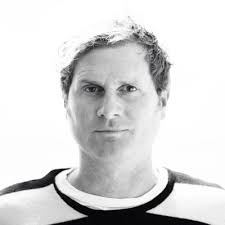
I started listening to Rob Bell’s podcast during my newscation since the election. The Lamentations mini series from May is just right for right now.
The book of Lamentations is 5 poems in the middle of the Bible that express the human experience. It was written after the devastation of Jerusalem about 500 BC. As Rob Bell explains “When you suffer, literal language often fails you.” Lamentation poems use images to express what they are feeling.
Here are a few Bell statements from the first of five episodes:
“Lamentations is naming what is wrong–naming the pain and giving expression to the injustice.”
“If you are lamenting you are still alive. You are still in the game.”
“To lament is to refuse to be silent. Rip open your rib cage and let it out. To expose and name whatever is out of order in God’s world.”
In the US we live in a culture that denies reality. We invest in plastic surgery to deny time and aging. We keep quiet when we should blow the roof off this thing. Lamenting may disrupt things because to lament is to feel your full humanity.
In all of the people of the book faiths there are people who teach extreme quietism, that is we need not do anything but pray because God/Allah is in control. And you could interpret Lamentations as a way to pray through your anger. I respectfully disagree. Prayer is essential. And public lamentation is also important to give expression to the suffering at a societal level. This is why I support the Black Lives Matter movement, and I am spending my time and money to participate in the Women’s March on Washington to affirm women’s power.
And if you are a Christian who celebrates Advent, consider this modern Lamentation-like devotional.
In David Whyte’s book, The Heart Aroused: Poetry and the Preservation of the Soul in Corporate America, he takes up the story of Beowulf to illustrate power and vulnerability in the workplace. I never read the story before. It is a fascinating tale of a warrior Beowulf asked by the King of Denmark to slay Grendel, a monster coming up from the lake and dragging people from the castle to tear them limb from limb. Grendel is also a metaphor for the inner demons that keep us from living the life we were meant to live. The fears that keep us from living wholeheartedly.
Beowulf slays Grendel, but then Grendel’s mother appears even more fierce than her son. Isn’t that how it often goes? We address some surface fears only to have more difficult demons take their place? The first was a quiz, this is the final exam.
Beowulf must enter the dark lake to reach Grendel’s mother. The dark lake is so scary that a stag pursued by hunting dogs would rather die a certain violent death than enter it and be saved. The only way for Beowulf to be powerful is to be vulnerable first. Find his voice, speak out against a bad idea or injustice.
It isn’t hard to remember a time when I’ve sunk down on our haunches like that stag at the shoreline. I am human and it is not easy to face down the demons every time. There is help available if I am willing to tap into the ancient feminine wisdom found in vulnerability and self-compassion.
This is where Brene Brown so marvelously illuminated the path to becoming more vulnerable. I have read all of her books and participated in her online courses and recommend any of her books. In her most recent, Rising Strong, she explores what happens when you take a risk or enter the arena. At some point when we risk vulnerability we will slip and fall. The key is to remain wholehearted and continue to stay open.
It is a choice to continue to put my faith in the long game or eternal story because my life is at stake. “The mythologist Joseph Campbell used to say that if you do not come to know the deeper mythic resonances that make up your life, the mythic resonances will simply rise up and take you over. If you do not live out your place in the mythic pattern consciously, the myth will simply live you, against your will.” (Whyte)
Be the hero of your own story; not a side character, as Sara in Katrina Bivald’s novel would say.
Lake Tekapo’s Church of the Good Shepherd and the Milky Way
What would our theology be if we could see these stars every night everywhere in the world?
This is the question I asked myself and my friend Sarah after wandering out to see the stars at Lake Tekapo at midnight and then again at 4:00 a.m.
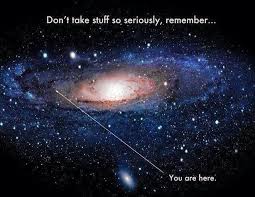
We had to wait for the clouds to break for us to enjoy this sumptuous banquet of stars. Once this was a commonplace site in all parts of the world. Now with most people living in light or air polluted places, humanity does not have this nightly reminder of our place in the universe.
Not everyone looks at the stars and sees a creator amongst them. But even the humanist or scientist does gain humility from seeing all the possible galaxies and worlds. Maybe, just maybe, earth is not the only one that matters. And perhaps the concerns and emotions that can rule my existence may be seen in a proper perspective if I spend some time meditating on or admiring the cosmos.
Maybe, just maybe, the stars could be a nightly reminder of the importance of being humble.
I was going to end my ruminations here and then I thought, maybe not everyone appreciates humility as a character trait. Certainly the media gives the vast amount of attention to the braggart and the self promoter.
Micah 6:8 says: He hath shewed thee, O man, what is good; and what doth the LORD require of thee, but to do justly, and to love mercy, and to walk humbly with thy God? (King James translation)
I read an article in The Jewish Week that said humility is the difference between a professor and a sage. (Ouch!) They also offered this definition of humility on LetItRipple.org: Thinking yourself worthless is not humility. To understand that you have gifts and blessings and yet remain modest is an achievement of character.
Sometimes it is easier to understand humility by what it is not: proud, self-willed, arrogant. Not putting ourselves ahead of others, instead the humble understand that every human matters. And if we know that every human matters, we are a long way to seeing how everyone is interconnected, and then there is no “us” and “them”. What a world that would be!
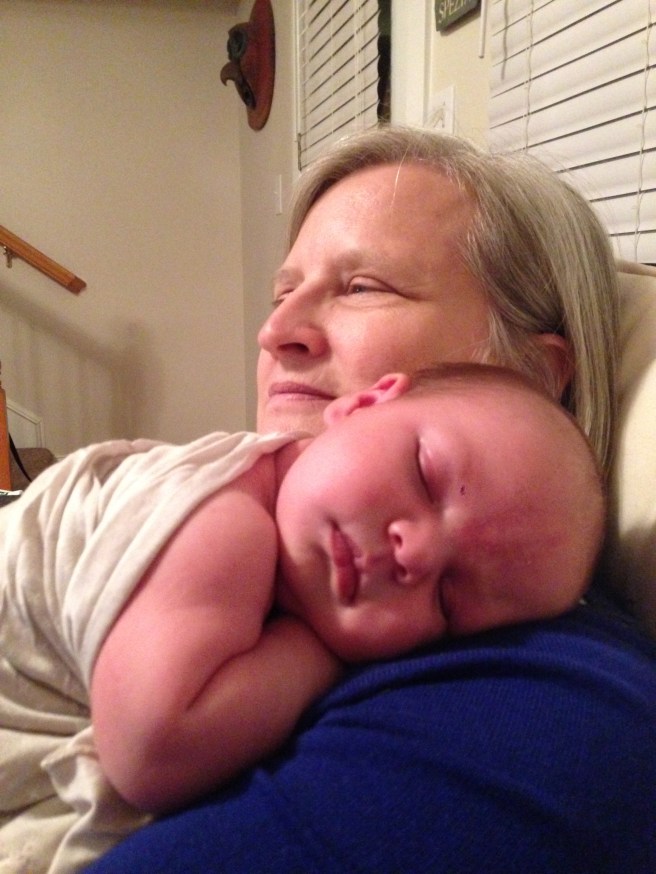
What world are we creating for my grandson Calvin?
I have been trying to process how anyone can justify voting for the Republican presidential nominee. This became even more mysterioso after the Friday tape drop. I try to “build an empathy bridge” to my Republican friends. I imagine if the Democrats had a candidate who was truly unqualified, who regularly insulted groups of people, and acted like a petulant child, and now likely committed sexual assault. Would I still vote for him/her out of party loyalty? Or because I thought the future of the supreme court was more important than the deficiencies of the candidate? It gets me part of the way (Bill Clinton springs to mind–especially the second time around) and still there is a chasm.
I marvel at both the Republicans who since Friday have claimed that are now so outraged they unendorse him, and those who, even with this latest garbage spew from the candidate, say that at least he doesn’t support abortion. (Does he or doesn’t he? Really, you believe that?) To the former I guess you can see where they might have given Trump’s public pronouncements a pass before, thinking he’s just trying to mobilize a segment of angry voters, and then once you hear that even 11 years ago (at age 59 past the point of “maturity”) he was saying vile things in private. This is a direct window into his heart. It’s ugly and it becomes the final straw.
And now I have a whole new understanding of how Germany ended up with Hitler (no I am not called the Republican nominee a Hitler–the comparison is more to their shared deep narcissism and willingness to race bait to win elections). Especially my fellow Christians: How can you give his behavior such a complete pass just to have access to Presidential power or to maintain Anglo-Christian privilege? I continue to read on Facebook posts from Christian friends who say Trump is the only true Christian. (I guess Methodists aren’t followers of Christ??)
This is why I believe we are living in a moral moment. In her article, “Derailed” by Kathryn Schultz in The New Yorker August 22, 2016, she suggests we do not usually recognize moral moments.
“It is to our credit if these are the Americans [Underground Railroad engineers] to whom we want to trace our moral genealogy. But we should not confuse the fact that they took extraordinary actions with the notion that they lived in extraordinary times. One of the biases of retrospection is to believe that the moral crises of the past were clearer than our own–that, had we been alive, we would have recognized them, known what to do about them, and known when the time had come to do so. That is a fantasy. Iniquity is always coercive and insidious and intimidating, and lived reality is always a muddle, and the kind of clarity that leads to action comes from without but from within.”
I like to think that when there is a critical moment to make a choice with heavy moral portent that I will recognize it and make the right decision. It might be hard or come at a great cost personally or professionally, but I would be on the right side of history. I believe this election will shape our society’s moral compass for years to come.
Dan Rather agrees with me. As he said on the evening of the second Presidential debate:
For those of us who have lived long and eventful lives, we often are able to find calm in the crisis of the moment by invoking the perspective of time. You understand that history is always rough in the early making and the years and decades that follow will often smooth these jagged peaks into the gentle contours of a rolling landscape where big themes and movements hold sway over the details that overwhelm us in the here and now. But this is not always the case. There are some inflection points that explode with such violence and monstrous effect that any semblance of continuity is hopelessly disjointed.
Most often these moments are ones of violence – wars, civil unrest and assassinations. But make no mistake, what we have seen in the past few days is proof that we are living through such an instance. And the violence here has been in ripping asunder our self-confidence in our system of government and in the unity we share with our fellow Americans.
We have serious problems facing our nation, and our world. Our ship of state must be prepared to navigate the perilous shoals of our complicated world – and yet I feel tonight as if we have been hijacked into an alternate universe. This national nightmare will end one way or another and we will awaken to the same world from which we have been so disengaged. That is our challenge and it is a challenge from which none of us can opt out.
As citizens we must repudiate the hate, the bigotry, the vile character we have seen eating up the public space for the last year and VOTE for Hillary Clinton so there is no way the Republican nominee is allowed to win by any measure.
Al Gore called his mega-PowerPoint presentation on climate change An Inconvenient Truth. Seems like in this ugly season leading up to the national election that truth is more unpopular than ever.
Case in point, a family member and Facebook friend posted a picture of a baby born at 36 weeks with a caption that said “Bernie and Hillary support abortions as late as 36 weeks…” This struck me as particularly horrifying if this were true as that is considered a near term birth (full term is 39-40 weeks). So I went to Google and Snopes.com and this story is false. At first I wrote not true, but that is not strong enough. It is misrepresenting their positions at best and I would even call it a lie.
So I messaged my relative privately instead of calling her out on Facebook. I provided her the Snopes.com link and this was her response, “I know—you don’t know what is true, I just wanted to show what a 36 week baby looked like didn’t care if either or neither said that. Be so glad when election is over!”
Uffda.
If she were a friend I might hide all of her posts from now on, but I want to see the grandkid photos and know when they are seeing other family members, so I will let it go. How many of us are having to do this with family or friends during this ugly election season?
It is easy to blame the media or the internet, but if you go back to Alexander Hamilton’s day and truth and elections were allergic to each other even then. Only then it was a printed pamphlet. And if we are honest with ourselves, truth is never popular. When it finally wins out people rewrite history and say they always knew or they are glad it came out. In fact, most of us spent energy avoiding the truth or actively denying it.
This is why it is one of The Four Agreements. All of the agreements seem simple, almost facile. Until you try to live them.
I know I have about as much chance of winning a lunch with President Obama in Chicago as I do winning the lottery with a ticket. I have been a sucker for this fundraising strategy since 2008. This time responding to the DCCC email, I felt a certain thrill. What if I actually won. What would I ask him? What would I say?
I would have to work so hard to ground myself and maintain my voice. What next?
First, I would thank him for withstanding so much ridiculous criticism with grace, for serving with such intelligence, and for being a great role model for leadership.
Then I would ask him how he avoided burn out working so long and hard as President.
What are some of the surprising leadership lessons he learned in the White House?
If he could go incognito anywhere in the world, where would he go? What is his idea of a perfect day?
What did he read on his vacation? What does he look forward to reading in January?
I’m not sure what I’d want to share. I believe I’d be happy to just enjoy the conversation. With my adrenaline surely pumping, how would I remember it?

 The novel, A Man Called Ove, created something of a sensation in the book club world in 2016. I mildly enjoyed the novel but found the character unbearably curmudgeonly through the first half. Though I can understand how many people were attracted to this man of seemingly forgotten values: “Since his father’s death he had begun more and more to differentiate between people who did what they should, and those who didn’t. People who did and people who just talked. Ove talked less and less and did more and more.”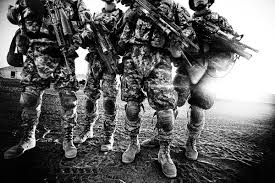


 I started listening to Rob Bell’s


 I know I have about as much chance of winning a lunch with President Obama in Chicago as I do winning the lottery with a ticket. I have been a sucker for this fundraising strategy since 2008. This time responding to the DCCC email, I felt a certain thrill. What if I actually won. What would I ask him? What would I say?
 leader's compass