
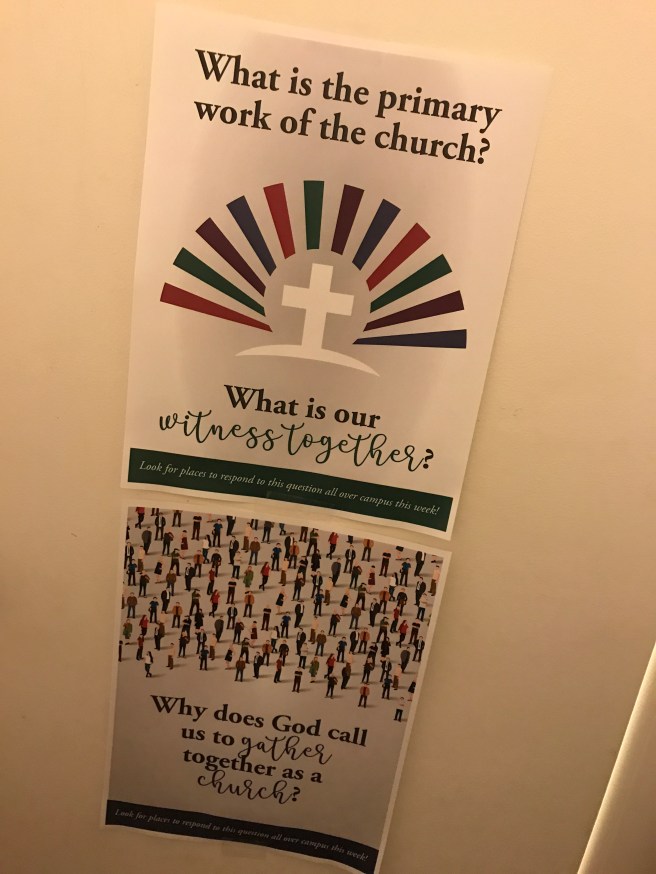
I am part of the St John’s Lutheran Church community in Sacramento. The leaders are always pushing our community to do better. This Sunday I had to laugh when I shut the stall door in the ladies’ restroom. These two questions (pictured above) were posted there. They also provided paper in the courtyard for us to share our thoughts.
I’m sure this was planned long before Hurricane Harvey hovered over Houston. However, in the light of the social media outrage over prosperity preacher Joel Osteen’s seeming indifference to the plight of neighbors flooded out of their homes, it is very timely.
Even people who don’t share our faith expect churches, synagogues and mosques to do good together. When a disaster or crisis hits a community, the public expectation is that these communities of faith will organize a response. I admit, I expect this too. I emailed my pastor to ask if St John’s was going to take a collection for the Evangelical Lutheran Church response. (yes) While the media was focused playing off Osteen’s lack of response against the muslim communities collective rescue efforts, I knew that all of the mainline denominations, World Vision and others were also on the ground with supplies and money. As I walked around the church campus on Sunday I wondered if as much water fell on Sacramento and the areas ringed by levees filled up like a bathtub, would St John’s be above flood stage? What refuge could we offer?
Everyday in Sacramento we have an on-going emergency of homelessness and our church community does a lot with other communities of faith to respond. I participate in that effort. This is not the place to boast, but I did choose this congregation to join, in part, because of their service to the whole community: LGBT, homeless, youth, and the elderly and people like me.
Could I do all of these things without the church? Of course, there are many organizations that I could give to and participate in a variety of ways to address homelessness. And in Houston we see neighbors helping neighbors without being asked. Doctors and nurses reported to hospitals to volunteer. Social workers reported to emergency shelters, and so on.
I could meditate every morning instead of reading scripture and having a quiet time. I could go on a walk along the river each Sunday morning and enjoy God’s creation. But I crave the unique experience of singing, praying, reading scripture with my community. There are many styles of worship but all for the same purpose: to praise God, confess our sins, and experience God together. Do we actually experience God? Yes, but only faintly. Yet every Sunday I participate and marvel at way the combination of ritual, music and sermon ground me again in my values and beliefs for the coming week.
I also look to the my church family to help me through life, and me them. Celebrate the marriage, food and gifts for baby, comfort and aid when sick, comfort and condolence when death comes to someone we love. Again, this can also be experienced with family and friends; however, not necessarily with the hope our faith provides.
It is true that organized religion can also hurt. I’ve experienced the incredible agape love that transports and I’ve been judged very harshly and my family shunned. Some people have been victimized by the authority given to priests and pastors. It is a community meaning it is made up of humans and sometimes the phrase “only human” applies.
The church community can also coddle its members and become another self-help vending machine. There is often very little recognition of the spiritual disciplines and the importance of an interior life in the USA church life. I want my church community to challenge me to spiritual growth.
Listening to the replay of Krista Tippett’s interview with poet and philosopher John O’Donohue, they discussed whether we are more impoverished than previous generations as to our ability to love and be a friend. He said no, we are just out of practice. This is where the church could be more active: in naming the love and friendship that Christ called us to and modeled for us. In the past the church has been a prophet in the community. The church community should wonder what they are not doing if everyone is comfortable.
Best if we show, not tell.

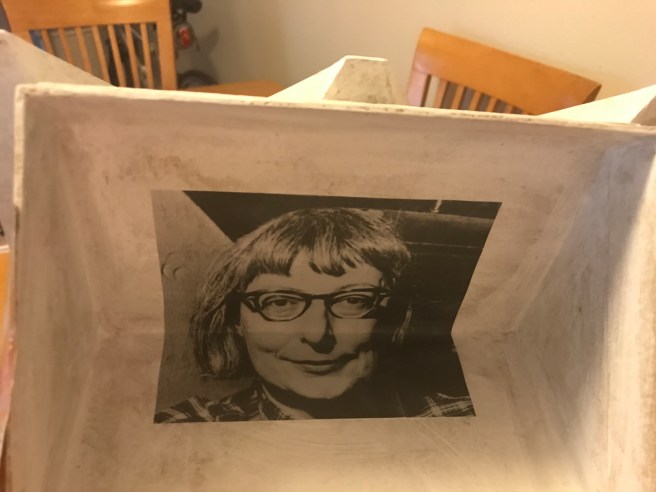 My inspiration for this artwork began with an article from City Lab by Richard Florida about Jane Jacobs. (12/20/2016) Jacobs wrote about her pessimism for the United States’ experiment with democracy. Her main question is “how and why can a people so totally discard a formerly vital culture that it becomes literally lost?” How do we dissolve to a place where facts have no meaning?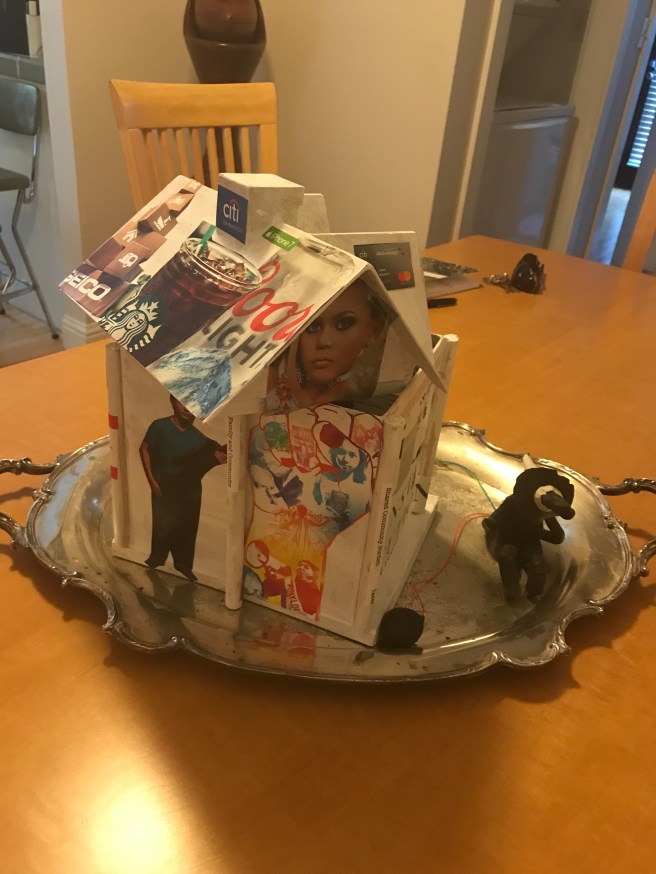


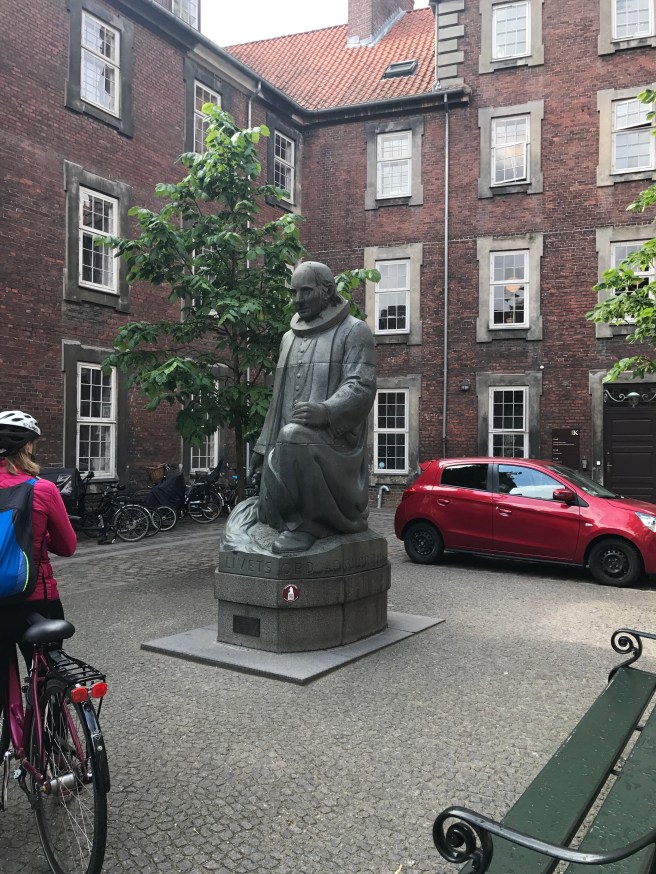 I didn’t want to make a thesis about Denmark’s political culture from one bike tour guide’s comments. So after stopping at the Father of Denmark’s statue I sought out a book that could tell me more about NFS Grundtvig.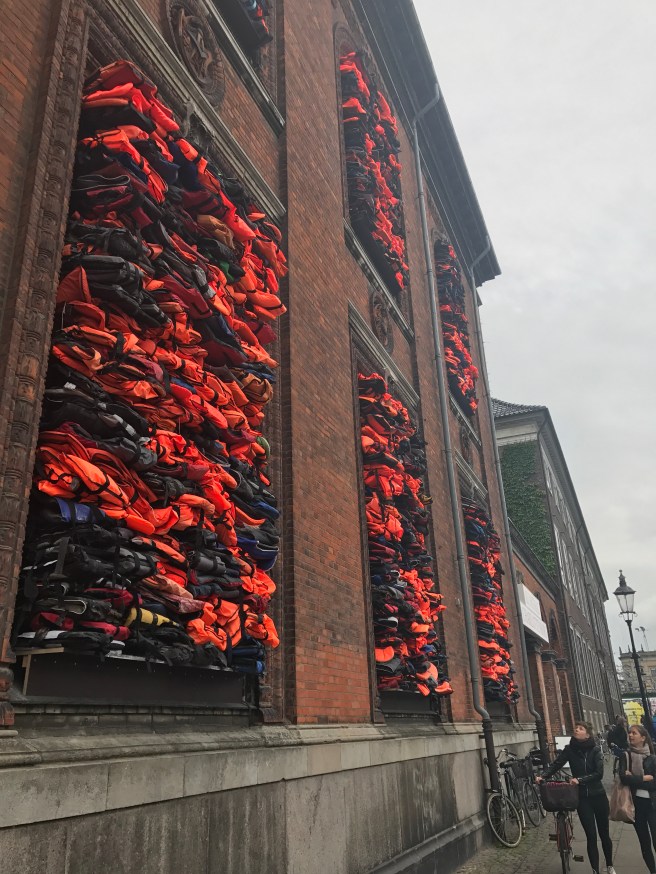


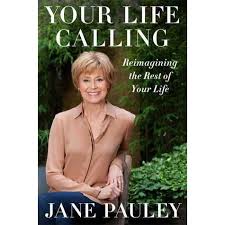 When I first started reading Your Life Calling by Jane Pauley, I had wished I read this during my life redesign in 2010-11, then I realized it is a kind of Chicken Soup for the Mid-Life Crises. It feels good while reading but is forgettable when you put it down.
 When you do decide to redesign then the advice from the hiker Joe/Braid: “Moving into uncertainty involves managing risks–planning, preparing, and practicing–like Joe did before he took his first step on the [Appalachian] trail. But even then, as Joe put it, ‘Nothing can prepare you for the trail like getting out on the trail and just doing it.” (p 162)


 leader's compass