
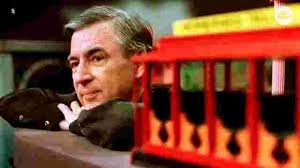
 My mom and I went to see the documentary Won’t You Be My Neighbor? about Fred Rogers and his children’s program Mister Rogers’ Neighborhood. I believe the creators wanted to give us inspiration and call us forth to remember what we learned from Mr. Rogers about treating every person with love and respect. It had the opposite effect as we watched protestors at his funeral object to his acceptance of the actor who played Mr. McFeely and happened to be gay. WTF? And the world hasn’t become more civil since then.
Fred Rogers chose to create a his show in a neighborhood. I believe as a Presbyterian minister he understood that we relate to people and show our love to people at the neighborhood level. He wanted to teach children how to love their neighbor by example, albeit in a make believe world. He modeled civility.
The neighborhood is where I try to find my balance in today’s crazy troll-filled world. I have only lived in my new neighborhood for 8 months and I already know more than 10 neighbors fairly well. We look out for one another. And I look out for the individuals experience homelessness that are passing through. From here I work to expand my influence to make the world a better place.
 The book Beautiful Souls by Eyal Press tells four main stories of people who are exemplars of four different types of resistance to immoral authority. The third example explores the role of conscience in refusing to go along with something that is immoral. The chapter opens with the kind of passive resistance that Henry David Thoreau is celebrated for–refusing to pay taxes to a government that allows slavery and invades Mexico. And points out, as did Hannah Arendt, that his conscience didn’t urge him to actively seek change. His was a resistance in retreat.
Whereas the hero of Chapter 3, Avner Wishnitzer, is a refusenik in the Israeli Defense Forces who pays a price for his resistance and ultimately became a founding member of Combatants for Peace. His conscience was pricked by seeing up close the suffering inflicted on Palestinians whose only crime was living on land that Israeli settlers wanted to occupy. He could no longer participate in the armed forces forced evictions of Palestinians and other actions in the occupied territories.
This is the hope that Fred Rogers has for humanity. If we see our neighbor, get to know our neighbor, our conscience will be pricked and we will do what is right by our neighbor. Maybe we will even go above and beyond like the Good Samaritan.
This is why I find the Walgreens story of the pharmacist who refused to fill a prescription for a drug that is sometimes used for aborting a fetus to honor his conscience. Yet in his zeal to not dirty his hands, he failed to be curious about his neighbor and evaluate what does loving his neighbor require in this instance. He might have found out that a husband was picking up the prescription for his wife who had miscarried her baby and was recovering at home. That her doctor prescribed the medicine so her body would expel all of the tissue that might become septic if not flushed. And even if then his conscience still nagged him, he could have asked another pharmacist to fill the order according to Walgreens’ policy.
Our neighborhood drugstore (in my case Rite Aid) offers the possibility of being able to discern what is love in this moment. But if you fail to see others as people with the same rights as you have, with the same God-endowed dignity as you, then you can slavishly follow a rule you’ve created to protect your conscience. Or you can exercise your moral imagination and see that there isn’t a black and white rule that should govern your behavior.
We can only hope that the generations that were reared watching Mr. Roger’s Neighborhood will be able to activate their imagination and see multiple perspectives and follow his example. Then whatever the Supreme Court or the President and his administration do, our neighborhoods will thrive until we can vote the people who hate into electoral oblivion.


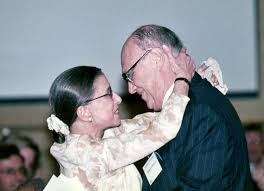 I was conscious of her role and opinions on the Supreme Court but largely unfamiliar with her history as a litigator for women’s rights. So much of the freedom I enjoy is thanks to her work as a lawyer. Watching the documentary,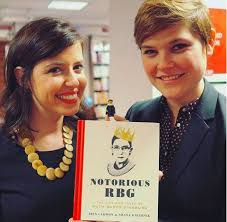
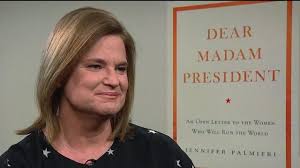
 The first assumption is re-enforced every time I get a prescription for antibiotics: you must take every pill even long after you are feeling better. It is the idea of counseling or therapy: you must work through every issue–there are no shortcuts. I have “done the work” in my life. No liquid diet fasts for me. Just exercise and lots-of-work diets.
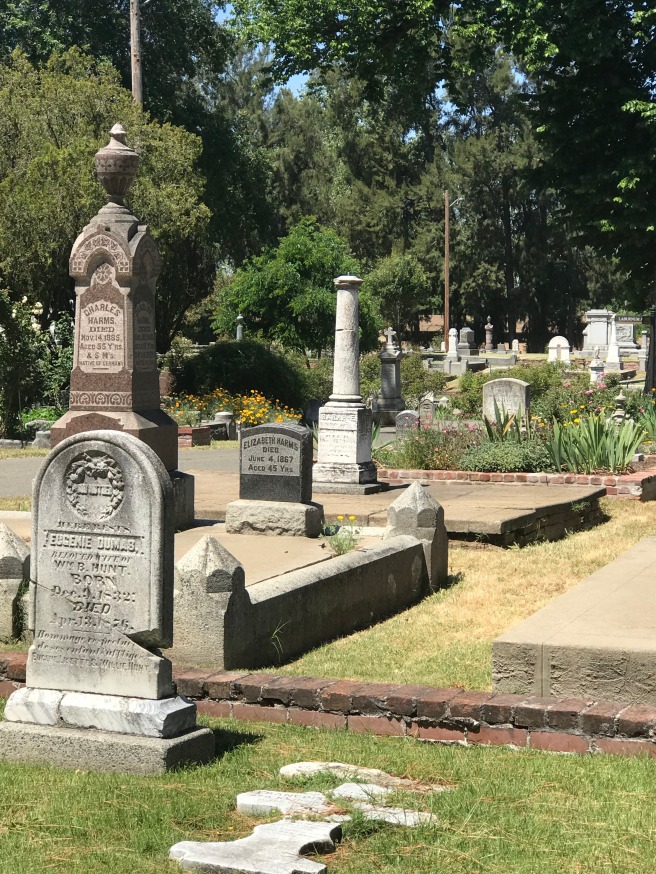 My qualms about the afterlife is the American Christian culture’s complete fixation with it to the exclusion of asking “how should we live today?” I have been reading
 It has taken me a long time to shake off the socialization of my first 3 decades of life and begin to keep commitments to myself. Until my forties (and still it is a struggle), I put others first. Before I ate, I fed my family. Before I had time to read or relax, I made sure the laundry was whirring and the fridge was stocked. Now that I have fewer demands on my time from children, I can still find myself taking care of friends, or parents or co-workers’ needs before my own.
 Journalists and commentators covering the 2016 presidential election seemed at a loss to explain how Trump’s supporters could jeer at “Lyin'” Hillary Clinton and cheer a man a man whose speeches were filled with easy to recognize falsehoods. I scratched my head until I read
 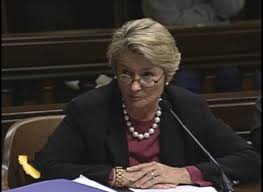 #ShePersisted became a viral hashtag when Senators shushed their colleagues. My hero is Laura King Moon. She persisted her entire career, most persistently at the California Department of Water Resources seeking solutions to intractable problems. It took cancer to take her out. Even then she persisted to the end.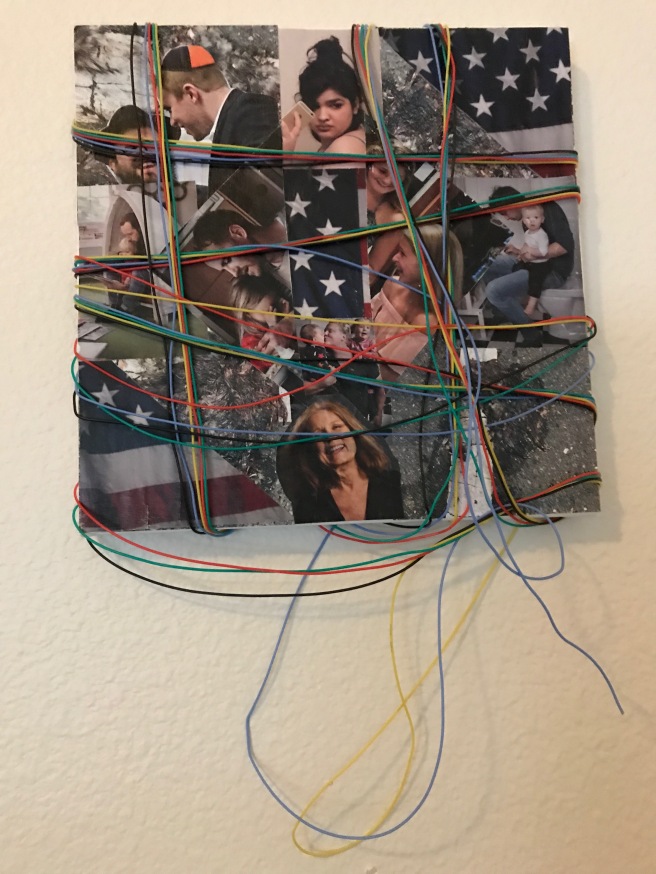
 leader's compass