Leadership Lessons from Chef’s Table

Chef's Table

The original Netflix series Chef’s Table is six delectable leadership lessons. It starts with a profile of Mossimo Bottura, a three Michelin star chef in Modena, Italy. He is so full of life and creative energy. He is also generous and orientates his life around his family. His family includes his restaurant employees. As he shares, “If you live an incredible moment of happiness, the happiness is much more deep and big if you share with others. And you get to the point together—the happiness, the feeling is exploding. It’s doubled.”

As a chef, Bottura transcends mere cookery and creates art. He also demonstrates how an artist’s best work often emerges from mistakes. One day he and his sous chef broke one of the two remaining lemon tarts on the counter and in that moment he began his postmodern departure from traditional Italian presentation. He created “Oops I Dropped the Lemon Tart.” His sous chef Takahiko Kondo said, “That day I learned something. That in life, to move forward you learn from mistakes. Maybe I did something wrong, but you learn from it.” I suspect that this lesson was shared with more laughter than cursing.

Bottura’s restaurant is Osterio Francescano.

Dan Barber, chef of Blue Hill restaurant in New York City, is the focus of the second profile. He is an innovator in the farm to table movement. I appreciate his leadership in reforming our overly industrialized food “system”. His temper was off-putting and I mentally crossed Blue Hill off my list as a result. Even though I completely agree with his belief that taste or flavor is dependent on quality ingredients, which is dependent on healthy soil.

Blue Hill restaurant sources much of its ingredients from Blue Hill Farm in the Berkshires in Massachusetts.

The third profile focuses on the Jeremiah Johnson of cooking. Francis Mallman does wild, open-fire cooking. He lives on an island in Patagonia, but he and his crew fly around the world doing extreme barbeque. Watching his team work together made a big impression. Mallman said, “I love the joy of working with all the team. I need to be happy with them. There has to be a festive feeling about the hard work we are doing.” His team is learning from their leader, as one member said, “Francis has an energy to materialize—a person with ideas that also accomplishes what he dreams.” Mallman owns multiple restaurants and has written multiple books.
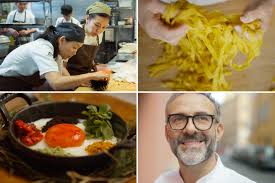
Chef's montage

I was relieved when the fourth profile considered a female chef. Niki Nakayama overcame the sexism in professional kitchens AND the low expectations for women in Japanese culture to become the renowned chef of N/Naka in Los Angeles, California. I loved her description of “flow” when she is creating great food. If I liked Japanese food I would make the effort to eat at her restaurant because I admired Chef Nakayama so much.

After Bottura, my next favorite chef is Ben Shewry, the focus of the fifth profile. He is a Kiwi relocated to Melbourne, Australia. I love the photos of New Zealand and Australia. I will be there in a few weeks and I can hardly wait. Like many of the other chefs, Chef Shewry struggled for a few years before his food was appreciated. He is humble and hard-working and places a high priority on time for his family. At Attica on Tuesday nights you can enjoy Chef’s Table for $140 per person and take your chances on the chef’s experiments. Wednesday through Saturday you can partake in the Tasting Menu for $220 per person plus $145 for wine (or $75 for non-alcoholic beverages).

The final profile is of Swedish chef (no relation to the muppet) Magnus Nilsson. His 12 seat restaurant Faviken in Jarpen, Sweden is in the middle of nowhere. He demonstrates how it is possible to create from nothing. I found the community that has grown up around Faviken to be very appealing. It takes some commitment to make it part of your tour of Sweden. The good news is you can stay over and you can hunt with Nilsson’s colleagues.

I have tried to remember if I have ever eaten at a restaurant with a Michelin star and I do not think I have yet. I am going to be in Melbourne, so I looked up Attica to find out what it costs to eat there. I do not normally budget so much for a meal. I might bust out and spend $50-75 per person (includes wine) once or twice in an adventure. I am not an adventurous eater and I am always concerned that I will fail to appreciate the effort. For me the company makes the meal.

Finding the Courage to Welcome Refugees

Source: aljazeera.com
Why families are fleeing. Source: aljazeera.com

During today’s lunch hour  I watched Global Immersion Project’s webinar, “Confronting the Refugee Myths.” If you missed it, you can watch it here. After catching up on a few tasks I realized that it was after 2 and I scooted over to Plates2Go to get a sandwich.

I mentioned to the woman serving me that I was running late because I listened to a webinar on welcoming refugees. Her response summed up the challenge in a nutshell: overcoming fear. She said she is afraid that by letting in refugees we are letting in terrorists. I replied that I understand it takes courage but that our screening process makes it almost impossible for a terrorist to infiltrate. (I could have mentioned that Jeremy from Preemptive Love Coalition says we should be more worried about homegrown radicals, but I wanted to dial down the fear not amplify it.) Then she told me about a friend in law enforcement that told her about the theft of over $39,000 worth of UPS uniforms. She is concerned that this is the prelude to a terrorist attack. I pointed out that this sounds like a plan for old-fashioned crime at holiday time.

After a little more conversation she said that as a Christian she knows she is supposed to trust in God, and that she is supposed to help others. She said that she will probably do the right thing but she is still afraid. I agreed that it can be hard and that courage is acting especially when we are afraid.

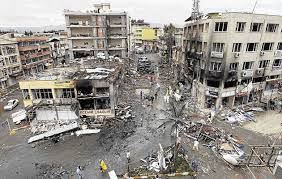
bombed syria
Would you stay here?  Source: timeslive.co.za

Sometimes leadership is having these conversations over and over. Calling people forth to their better selves in spite of the fear. These conversations can be like lights that chase out the darkness. It is easier to be brave when we know other people share our concerns and our resolve. Right now the media is amplifying the fear. So those of us who want the end of the story to be different must step up our courageous actions. Counteract the Governor of Georgia who is trying to discourage churches in Atlanta from sponsoring Syrian refugee families. The Governor is proposing legislation to cut off all benefits to Syrian and Iraqi refugees. One church already responded that they will meet whatever needs a family presents. How do we create a welcoming place for them in the midst of this kind of hostility?

This is the challenge posed by the Global Immersion Project. They invited Global Relief to give an overview of the facts. In the 1970s the United States welcomed over 200,000 refugees a year–mostly from Southeast Asia. Last year we let 85,000 refugees in and only a fraction are from Iraq and only 1,682 from Syria. We can do more.

Our screening process is already extremely thorough. First the applicants have to pass the security vetting, then complete the cultural orientation. Then they are matched with a refugee organization. Refugee organizations depend on their local partners who are mainly churches and other volunteer organizations.

The refugees do not get much aid. They have to pay for their own plane tickets via a loan. Then they receive a stipend for 6 months. Generally the refugees–mostly families–are integrated enough to make it on their own. European governments are much more generous and they begin the screening process once you are in country.

The challenge we face is creating a welcome environment for refugees arriving today. With 30 Governors publicly saying that they are not welcome, it is important that people of faith who believe that God calls us to a different kind of hospitality Write and Go.

Vicki from We Welcome Refugees encourages people to make their voice heard either by using the automated system on their website to write to their elected officials or by calling congressional representatives while they are home for Thanksgiving. The electeds’ staff keep a tally and right now voices of compassion are outnumbered by people calling in fear and anger.

The other call is to go: donate coats and household goods or money to refugee organizations, partner with churches in Europe to help refugees, participate with your place of worship to sponsor a family, or be a friend to a refugee. Remember they have left everything they know for life in the United States. Sometimes they are still overwhelmed with concern for the safety of loved ones left behind. Sometimes they are grieving other losses of career or the life that might have been. Or they are just plain homesick.

bomb in Syria
Source: telegraph.co.uk

As a follower of Christ I welcome refugees as an act of obedience to Jesus’ direction (Matthew 25: 35-39), and because it is the right thing to do. The Golden Rule is not unique to American Christians afterall. And if bombs were turning Sacramento into rubble and I had to flee I would hope that others would welcome me and help me to begin the slow process of rebuilding my life.

I have already sent letters to my Governor, Senators and Congresswoman. I am seeking ways to do more. My congregation is preparing to sponsor families. Wherever they are from I intend to do my utmost to make them feel welcome. Please join me.


Finding Inner Strength Amidst Turmoil

An artist's depiction of Ancient Hebrew Temple in Jerusalem.
An artist’s depiction of Ancient Hebrew Temple in Jerusalem.

My good friend UK Sarah shared the sermon she prepared to preach at St. Phillips Anglican Church in St Heliers, Auckland, New Zealand. I asked if I could share it here. Reading it helped me ground myself amidst the tumultuous emotions in the aftermath of the news of the Paris attacks. I am finding time away from media and spent in meditation instead is helping me get some perspective.

Sermon, Sunday 15.11.15, Reverend Sarah Clare

1 Samuel 1:4-20; Hebrews 10:11-14, 19-25; Mark 13:1-8

‘Will your anchor hold in the storms of life?’

I don’t know about you, but I find these ‘apocalyptic’ passages quite difficult to read.   Mark 13 as a whole chapter talks about some frightening end-of-the-world stuff which can seem pretty off-putting to us. But then the shocking events in Paris yesterday were very much in that vein, weren’t they?

Yet I do think there’s an encouraging message for us in today’s passage.

Jesus and the disciples are leaving the Temple… Not some gigantic version of Holy Trinity cathedral, but a vast construction that covered an area somewhere between 35 and 45 acres – roughly the size of twenty football pitches – big enough to fit a quarter of a million people within it, comfortably. [I’ve read that the smallest stones weighed 2-3 tons; some weighed 50. And there’s one still in existence today in the Wailing Wall, that’s 12 metres long and 3 metres high and weighs 100s of tons…! How on earth they ever built it all is beyond my understanding. It was designed to inspire awe; it spoke of majesty and wealth – and God.]

Another artist's rendering of ancient Hebrew temple.
Another artist’s rendering of ancient Hebrew temple.

Anyway, Jesus and his disciples have spent an eventful morning in this amazing Temple. Jesus has managed to answer several theological challenges from chief priests, scribes and elders who are desperate to trip him up. It must have all felt quite scary for the disciples, given the authority these guys had over ordinary people.

So, it’s as they’re leaving the Temple after all this controversy that one of the disciples turns to look at it in all its glory and says, ‘Wow Jesus, just look at those huge stones and buildings!’

Maybe he was relieved that they’d all survived the morning’s encounters. Maybe he needed the reassurance of something solid and secure… like the Temple. That was rock solid – surely? Something to trust. Something that spoke of the enduring nature of God, of His power and might.

So just imagine their shock when Jesus says – ‘Yes it is huge and wonderful. But do you know what? It’s not going to survive; it’s all going to be destroyed.’   What?? It’s literally unimaginable…

Jesus continues this conversation a bit later, when he’s with his inner circle – Peter, James, John and Andrew. By now they’re up on the Mount of Olives, opposite the Temple. Not surprisingly the disciples return to the subject. ‘The Temple’s going to be destroyed? When, Jesus? And how?’

And Jesus has an interesting response, doesn’t he? Because he sees that behind their question is not so much a fear about when all this might happen, but how they are to survive it. So he warns them not to be distracted; a whole bunch of nasty stuff is going to happen – wars, earthquakes, famines, and people pretending to be their saviour- but they shouldn’t let any of this ‘lead them astray’…

Lots of people have studied this passage over the centuries. Some see it as describing the literal end of life, as we know it, some time in the future. Others give it a more contemporary context.

The fact is that at the time Mark was writing his gospel, things were already pretty difficult for the followers of Jesus. They were seeing and experiencing violence, destruction and persecution aplenty. Tacitus, the Roman historian who wrote Histories, gives a vivid description of all the traumas in the Roman empire, man-made and natural, in the middle of the first century. That tells us that Mark might well have been using the current chaotic situation to give people some perspective and remind them of their anchor in the world…

Fast forward 2000 years. Has there ever been a time when there hasn’t been something scary happening in the world? And the horrific terrorist attacks in Paris yesterday are yet another example. More bloodshed. More grief. More fear. One more appalling man-made trauma to add to the long list in my lifetime alone….

And there have also been massive earthquakes, hurricanes and tsunamis across the globe even in the last decade, which have destroyed the lives and livelihoods of millions…

Our world seems to exist in a state of chaos. Our reason tells us that oceans aren’t meant to flood; the earth isn’t meant to shake; the sky isn’t meant to turn nasty and attack us; and humans aren’t meant to kill each other – and yet all these things do happen, over and over again. And when they happen, they destroy our sense of certainty and security….

Our security and our peace, can also be shaken by traumas that happen closer to home, in our own lives.   The unexpected can rip from us that sense of solid ground beneath our feet. Whether it’s illness, bereavement, or some other tragedy, we can feel buffeted to the ground…. we can lose our sense of direction and perspective.

I think Jesus’ words speak very much to us here today because essentially he’s reminding us that there will be chaos in our lives, there will be trauma; but through it all we need to trust. To have faith.

I heard of a good mnemonic for faith the other day: ‘Feeling Afraid I Trust Him.’ (repeat) ….. Bad stuff will happen, but we are not to let it deter us from following the path he has laid down for us.

And he likens all this to birthpangs. Those of us who have borne children know just how incredibly painful that is! And we have usually had the benefit of modern medicine!!! Imagine just how difficult giving birth must have been in 1st century Palestine. Real pain, real suffering. Jesus isn’t trying to minimise any of this. He knows just how painful all of this can be.

AND YET, in spite of it all, ‘don’t be alarmed’, he says. Don’t be afraid. Don’t be led astray; don’t allow yourself to be paralysed into inaction. Don’t lose sight of what’s really important – who we are, and what we are called to do and be as his followers:-

We are loved by an omniscient God; we’ve been shown how to live lives of faith and grace, loving and forgiving one another, even those we don’t actually like; we’re to be peacemakers, and work for justice for the vulnerable; and we’re to tell others about how Jesus transforms and heals lives. In other words, ‘Remember’, he says, ‘in spite of the chaos, you need to draw strength and hope from these constants in your life.’

Hope, not despair. However challenging the situation we find ourselves in, Jesus reminds us of something that is immeasurably larger than us and this fragile, vulnerable, uncertain, chaotic world we inhabit. Hope in the saving grace of Jesus Christ.

I doubt there’s an adult in this room who hasn’t experienced trauma at some point in their lives. I certainly have. And when trauma hits, it can be hard to see things clearly; everything whirls around our heads, the ground shifts, and it can feel really hard to look up and find our bearings again.

If we allow ourselves to be distracted away from our goal, if we allow fear to get a hold, then it will suck the life out of our veins. But if instead we remember the anchor that holds us – that never-ending faithful and steadfast love that pours out from God – then we can draw on the strength and the courage of Jesus to bring us through….however painful and however difficult it seems.

‘Will your anchor hold in the storms of life? When the clouds unfold their wings of strife? When the strong tides lift, and the cables strain, will your anchor drift or firm remain?

We have an anchor that keeps the soul steadfast and sure while the billows roll, fastened to the Rock which cannot move, grounded firm and deep in the Saviour’s love.’

I pray that the anchor of Jesus Christ holds firm for the Christians in Paris right now, that they might bring strength, healing and hope to a grieving, angry and frightened people.

And may we hold fast to our anchor, as our anchor holds fast to us.

Amen

The Urge to Do Something in Paris Aftermath Misleading

Eyes Wide Open tries to humanize the loss of all life in Iraq War.
Eyes Wide Open exhibit displays shoes from Iraqi civilians and US soldiers killed in the war.

Yesterday I clicked through an email from the Climate Reality Project to watch 24 Hours of Climate Reality and instead read a message that the broadcast was suspended in consideration of the violence in Paris. This was how I learned of the horror that had been unleashed in coordinated terror attacks.  I logged onto the New York Times website and logged off after about 1 minute of watching senseless video of people meandering around the football pitch or police cars speeding down Parisian streets. By now we all know the drill. Lots of senseless interviews with people who know nothing or can say nothing and bad estimates of the extent of the harm. I decided to turn it all off.

What is a leader to do in face of the ongoing violence? Judging by Facebook most people want to DO something. For some it is a primal angry urge to retaliate. Even before information is in about who attacked whom and why. They filled in the blanks by swearing to sign up for military service or in some way extract an eye for an eye.

In this instance, we cannot alleviate our need to DO SOMETHING by donating to Red Cross or Oxfam.  Although I would not be surprised if some craven political candidates did not suggest a donation to them would be a welcome response. They promise to deal with ISIS. As though their force of personality will trump the collective intelligence of the people already assembled in Situation Rooms around the world.

Other people were dropping to their knees to pray, mainly for the victims in Paris including all of the citizens of Paris whom these attacks were intended to terrorize. I am among those who feel “pray first” is a good response for almost any situation. Especially while we are still trying to make sense of a situation.

I have been a student of International Relations since the Cold War. Ah, simpler times. Sure we worried about Mutually Assured Destruction but as one character in Madam Secretary said, at least we knew the people on the other side did not want to push the button anymore than we did.

Are the people in the Middle East really such different human beings than us or the Russians? I do not think so. Casting them all as evil villains seems a dangerously simplistic way of dealing with the world.

I believe in the innate value of every human life. I believe we are all imbued with a little bit of God’s spirit. My way of seeing God is through my cultural understanding of Jesus, but I admit that God is bigger than my limited way of seeing Him/Her. I want to be more like Jesus, which means I have to transcend my own petty view of the world and love humankind the way Jesus did. God transcends gender, tribe, nation and religion.

When I look at recent wars in the Middle East, I see a complete lack of compassion for the innocent victims of our aggression. Over 10 years ago, the American Service Friends Committee and others created the Eyes Wide Open exhibit to illustrate the impact of the war in Iraq on civilians. It came to Sacramento’s Capitol grounds and evoked little response. I was opposed to the Iraq war, as I am to initiating any war and I found the exhibit profounding moving. I could not find a way to translate my values into any coherent action.

The challenge I am facing as a leader is to somehow transcend any angry gut response and expand my capacity to love.  To mourn the mothers and children, fathers and grandpas who were counted as “collateral damage” in Iraq, Libya, and Syria. I must seek ways to make peace.

I want to find ways to connect with people for dialogue to help move beyond a base level  “get ’em” response to something that builds peace. Transformation will not happen in a moment, but we can begin to build a series of moments that will ultimately lead to a shift and then a swerve.

Lack of action on climate change, racial inequality, refuges, gun violence, and the roots of terrorism.–they are all connected to an inability to see the preciousness of every kind of human.

That is as far as my meditation on the Paris attacks have taken me. Will you join me in not taking action today?

5 Ways to Lead: Co-Active Leadership

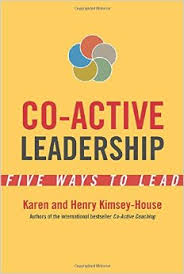
Co-Founders of CTI (Coaches Training Institute) Karen and Henry Kinsey-House have written a slim volume on Co-Active Leadership that introduces one aspect of a much deeper subject. Co-active is all about being active together. Co-active Leadership is also the name of the 10 month program that I participated in over 5 years ago. My main concern with this book is that readers will think that this shallow treatment is as deep as it goes.

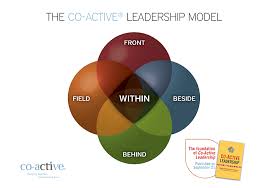
Co-Active LeadershipThe Co-Active Leadership model is a venn diagram with “Leader Within” where the circles intersect. The four circles are:

  • Leader in the Field
  • Leader in the Front
  • Leader Beside
  • Leader from the Back

Co-Active Leadership ModelMost people associate leadership with the classic front of the room leader. The authors help to expand the definition of leadership by explaining the other roles that leaders can play and by asserting that everyone is a leader. The best leaders are flexible.

The book is a quick read at just over 100 pages–I read it on the flight home from Miami.

3 Pillars of Trust

The trust fall is a classic "trust building exercise".
The trust fall is a classic “trust building exercise”. Real trust is built in a 1,000 interactions.

When I read Stephen M.R. Covey’s The Speed of Trust several years ago, I experienced one of those delicious moments when you read something you have experienced but never seen articulated. The basic premise is that when trust is present it is possible to save time and money in business; and the lack of trust results in increased costs and lost opportunity. I have shared it with several teams I work with and we all agreed that one area where the Covey book falls down is in practical advice on how to build trust. There is a long list of behaviors that build trust, but it is difficult to remember 24 or more ideas.

Then I discovered Charles Feltman’s The Thin Book of Trust. It is all about practical advice for building and maintaining trust in the workplace.

 SincerityI mean what I say, say what I mean, and act accordingly.

ReliabilityYou can count on me to deliver what I promise!

CompetenceI know I can do this. I don’t know if I can do that.

CareWe are in this together.

There is an excellent chapter on making more effective requests and responding effectively to requests.

“When you make a request of someone, in addition to making sure you have all of the elements clear in your request, check to be sure you are fully committed to what you ask for. For example, if you ask someone to do something by the next day, when you really don’t need it until next week, or worse yet don’t need it at all, that person is likely to begin to distrust your competence, your sincerity or both.” (p28)

My favorite chapter is 7. Confronting Distrust. Feltman gives you good advice on how to prepare for a more effective conversation when someone has damaged trust and restore the relationship.

The Thin Book of Trust, at less than 70 pages, makes a great homework assignment for a team. There are discussion questions.

As to the behaviors that destroy trust, I rely on a book on marriage. It may seem unlikely to have any transferable application. John Gottman’s book The Seven Principles for Making Marriage Work details the “Four Horseman” that destroy respect and trust: criticism, contempt, defensiveness and stonewalling.

These three books make up the 3 pillars of trust literature.

I Claim My Superpowers! Invisible Woman

Invisible Woman/Sue StormMy CTI Leadership tribe mate and friend, Colleen O’Rourke, wants to fill Facebook with comic book heroes to fight the saturation of negative images and videos. She said, “Give me a like and I’ll assign you a character.”

I am not familiar with many super heroes. For example, I never heard of Ant Man until the recent movie came out, and even then I suspected it was a spoof (not). So when Colleen assigned Invisible Woman/Sue Storm to me I wondered why.

Invisible WomanColleen explained: “I have finally decided on Invisible Woman for a couple of reasons, but the most is that her power is not one of aggression or injury. She doesn’t strike down, she protects. She uses her powers to work with what is in the environment to influence the outcomes, and does so without causing injury. This, along with her intelligence, is why I picked her for you. Here is the description I liked: Invisible Woman uses her powers for both offense and defense, and is the heart of the team, guiding them through hardship and being the voice of reason when arguments get heated.”

Wow. It resonates with me, especially because I do not like being in the front of the room. I claim my superpowers. Thank you Colleen.

Colleen O’Rourke is an executive leadership coach.

Rising Strong Should Come With Warning Label

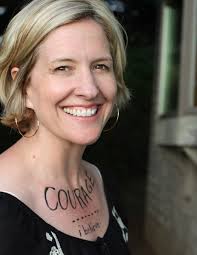
Brene Brown is the author of a trilogy of "Self Help" books that will rock your world.
Brene Brown is the author of a trilogy of “Self Help” books that will rock your world.

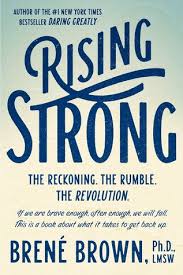
Brene Brown’s Rising Strong completes her trilogy of books on overcoming shame and living wholeheartedly. Each book builds on the next and is grounded in her research. Rising Strong is a powerful book; however, it should come with a warning label. “Shit storm will inevitably ensue as you read this book.”

If you read the book in any kind of earnest you will reaffirm your commitment to living wholeheartedly and as a result you will better define your boundaries and stay in touch with your emotions. Ultimately this will clash with someone else’s expectations or values in variance with yours. Someone you care about. Let me explain with my own story.

Rising StrongI received Rising Strong as a gift from my dear friend Mara V. Connolly who is an executive coach trained in the Daring Way. She knows I am a Brene Brown enthusiast and it was a delightful surprise to open an unexpected Amazon package and see her note. I was heading to Los Angeles so I tucked the book in my bag and began reading it almost immediately.

I was only a few chapters in when I found myself triggered and face down in the dirt. While still in the whirlpool of embarrassment and hurt, I sent an angry, hurt-you-back text to the person in my “Rumble” in the cab rushing from to the airport. I risked airsickness while I wrote what I called my “first story” in my journal on my Southwest flight home. The next morning I realized that I needed help and I reached out to Mara to process.

Over the next few days I figured out what triggered such a strong emotional reaction and the values that were stepped on. This helped me get clear about what new boundaries I needed to set with the friend in the Rumble. I wish I could report that my friend and I were able to be curious about each other’s triggers and clear. It did not go down that way and I have been processing the heartache that comes when a relationship is not what we hoped.

As I read the rest of the book I kept referencing my Rumble. It was such a powerful learning opportunity. I especially struggle with the question, “Are people in general doing the best they can?” This cracks open my own harsh self-judgement for the times when I stumbled and did not live up to my own standards. Was I doing the best I could in that moment when I sent the angry text? I do not think so.

The key to the question is “in general”. I am not asking: are people infallible? Instead I am choosing a more compassionate life philosophy. If I assume that people are in general doing the best they can in this moment, then I can extend grace and live life more wholeheartedly, that is a life defined by courage, engagement and clear sense of purpose.

This assumption that people are doing their best first came up when I was coaching with Marj Plumb. The CTI Co-Active Coaching curriculum says every client is creative, resourceful and whole. I remember really challenging this with Marj. What about the people who are mentally ill? And Marj encouraged me to continue to start from the assumption that people are doing their best. Like forgiveness, starting from this place of grace and compassion is as much for my own benefit as the other person’s.

If I assume that I am doing my best, I can be curious about my own triggers and extend grace to myself. This does not mean I never need to repair with someone for something I said thoughtlessly. It does mean I can lay down that incident as a lesson learned instead of continually using it as a lash to whip myself for my inadequacy. And get on with the business of leadership.

Celebrity Poison

I wish our society was not so celebrity obsessed. It has some obvious negative consequences (Exhibit A: Donald Trump for President). It also chews up and spits out individuals. The movie Amy about the late soul singer Amy Winehouse was hard to watch as a beautiful and talented young woman was chewed up and spit out by the celebrity entertainment machine. The people surrounding her, including her husband and father, were more interested in exploiting her than in protecting her.

Amy Winehouse
Amy Winehouse

We think of celebrity as a modern phenomenon intensified by social media and 24 hour news cycles. Recently I read two biographies—one about the Wright Brothers and one about Charles and Anne Morrow Lindburgh. All were famous for achieving something brave that captured the public’s attention. And as a result, all were subject to an intense amount of public and press attention.

For the Lindburghs, it was often suffocating and tragically resulted in the kidnapping and death of their first child. Journalists did not let up in spite of the tremendous impact of their collective actions. The kidnapping was in the early 1930s—well before television. Yet the willingness of journalists to trample on their privacy for a story or a photo was relentless.

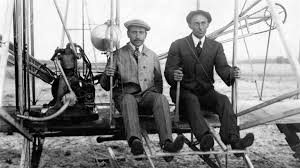
Wilbur and Oroville Wright

Even earlier in history, Oroville and Wilbur Wright invented flight in 1904. They toiled away at Kitty Hawk, North Carolina in obscurity for several years and then caught the public’s imagination with their aerial demonstrations. People in Europe and America could not get enough of the Wright brothers. According to biographer David McCullough, they handled the pressure and attention extremely well without letting it change them.

This can be attributed to the wisdom of their father, Bishop Milton Wright.

He was a steadying influence on his 5 children including Wilbur and Oroville. The Bishop liked to preach the futility of craving fame. “Enjoy fame ere its decadence, for I have realized the emptiness of its trumpet blasts.” He had written Wilbur, and quoted favorite lines from the Irish poet Thomas Moore:

And false the light on glory’s plume

           As fading lines of even.

David McCullough, The Wright Brothers New York: Simon and Schuster, 2015, p. 188.

Once upon a time people did not seek out fame as an end in of itself. Celebrity used to be connected to achievement. David Brooks in his book, The Road to Character, decries the change from the culture of humility to the culture of the Big Me.

It wasn’t hard to find such data. For example, in 1950, the Gallup Organization asked high school seniors if they considered themselves to be a very important person. At that point, 12 percent said yes. The same question was asked in 2005, and this time it wasn’t 12 percent who considered themselves very important, it was 80 percent.

David Brooks, The Road to Character, New York: Random House: 2015, page 6.

I remember when I was managing and employee in the advent of reality television. At the time there was only MTV shows and Survivor. I asked him about his career goals and my mouth dropped open when he said that one of his goals was to be a reality tv star. I think I may have even said, “That is not a career goal.” My statement was very out of touch to the new realities, but like my grandparents with their “I remember when bread was a nickel.” I remember when fame was connected to some real achievement.

Are we at the apex of the Big Me? How will we recover? This is one of David Brooks’ motivations for writing The Road to Character. He wanted to provide profiles of what he sees as real leadership in the same way a chef wants to give us real homemade food to put the instant processed food in context.

How else can we raise the flag of leadership in service of others?