Why Black Lives Matter to this White Chick

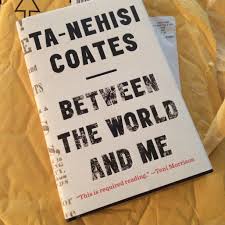
Between the World

Recently finished reading Between the World and Me by Ta-Nehisi Coates and pondering his perspective of reality and what it means to me. The beauty of reading a book is, if you let it, it can expand your view of the world and your experience. I can travel to Antarctica and vicariously experience the long dark cold winter with the scientists living on isolated outposts. In Between the World and Me Coates takes us on an inward journey to live as a person with dark-hued skin in America.

I have often thought that moving through life as a woman was an approximation of what it is like to be a person of color. It may be on the same spectrum of fear and lack of control or power in society. As a woman, people project all sorts of judgements and assumptions based on my sex, regardless of what I do, say or wear. After reading Coates I realize that being a woman is a 2 or 3 on the spectrum, being gay is probably a 5 or 6 and being black is an 8.

This need to have an group to scapegoat or villify is a chronic problem for humankind. At different times Irish people, Italian people, or Japanese people have been others in our “American Dream”–the one we tell ourselves about who we are as a nation and as a society. Today Mexicans or Muslims fill that role in the story. Unfortunately for black people and for our nation as a whole, they have been a constant “them” in the us vs. them since our country began: first as slaves, then as expendable workers and disenfranchised citizens and now as convicts.
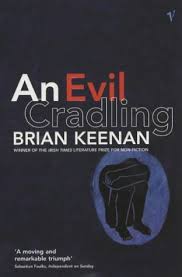
Cradling

I thought of Brian Keenan‘s brilliant book An Evil Cradling. He chronicled his long captivity as a hostage of the conflict in Lebanon. He observed so much about what it means to be human and wisely observed that his jailors were really the captives–captured by an ideology and a false reality. By knowing this he experienced freedom in spite of his chains. I read this book in 1999 after it was recommended in a Dublin pub crawl and it has impacted me profoundly. I thought about it again after reading Between the World and Me and realized that in this drama none of us is free.

By believing in a false reality about the American Dream–one that increasingly does not match the facts or people’s experience and that requires that a large swath of the population be made Other or as Trump likes to say, losers–I am actually a captive too. But I want true freedom. I want to be myself and for every other person to be the person God created them to be regardless of constructs like race or sex or national or religious identity.

I do not think this a Dream: American or Martin Luther King Junior’s or any other kind. What it requires is to awaken. “Perhaps that was, is, the hope of the movement to awaken the Dreamers, to rouse them to the facts of what their need to be white, to talk like they are white, to think that they are white, which is to think that they are beyond the design flaws of humanity, has done to the world.” (Coates, p 7)

The world you and I live in will not know peace or ecological healing until we find a way to face reality, to accept some sacrifice and suffering, and to feel pain without numbing agents, and to know that we are not special and yet, that each of us is a reflection of the divine.



Finding the Courage to Welcome Refugees

Source: aljazeera.com
Why families are fleeing. Source: aljazeera.com

During today’s lunch hour  I watched Global Immersion Project’s webinar, “Confronting the Refugee Myths.” If you missed it, you can watch it here. After catching up on a few tasks I realized that it was after 2 and I scooted over to Plates2Go to get a sandwich.

I mentioned to the woman serving me that I was running late because I listened to a webinar on welcoming refugees. Her response summed up the challenge in a nutshell: overcoming fear. She said she is afraid that by letting in refugees we are letting in terrorists. I replied that I understand it takes courage but that our screening process makes it almost impossible for a terrorist to infiltrate. (I could have mentioned that Jeremy from Preemptive Love Coalition says we should be more worried about homegrown radicals, but I wanted to dial down the fear not amplify it.) Then she told me about a friend in law enforcement that told her about the theft of over $39,000 worth of UPS uniforms. She is concerned that this is the prelude to a terrorist attack. I pointed out that this sounds like a plan for old-fashioned crime at holiday time.

After a little more conversation she said that as a Christian she knows she is supposed to trust in God, and that she is supposed to help others. She said that she will probably do the right thing but she is still afraid. I agreed that it can be hard and that courage is acting especially when we are afraid.

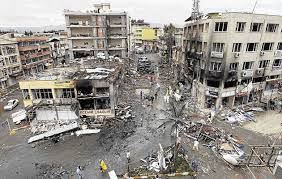
bombed syria
Would you stay here?  Source: timeslive.co.za

Sometimes leadership is having these conversations over and over. Calling people forth to their better selves in spite of the fear. These conversations can be like lights that chase out the darkness. It is easier to be brave when we know other people share our concerns and our resolve. Right now the media is amplifying the fear. So those of us who want the end of the story to be different must step up our courageous actions. Counteract the Governor of Georgia who is trying to discourage churches in Atlanta from sponsoring Syrian refugee families. The Governor is proposing legislation to cut off all benefits to Syrian and Iraqi refugees. One church already responded that they will meet whatever needs a family presents. How do we create a welcoming place for them in the midst of this kind of hostility?

This is the challenge posed by the Global Immersion Project. They invited Global Relief to give an overview of the facts. In the 1970s the United States welcomed over 200,000 refugees a year–mostly from Southeast Asia. Last year we let 85,000 refugees in and only a fraction are from Iraq and only 1,682 from Syria. We can do more.

Our screening process is already extremely thorough. First the applicants have to pass the security vetting, then complete the cultural orientation. Then they are matched with a refugee organization. Refugee organizations depend on their local partners who are mainly churches and other volunteer organizations.

The refugees do not get much aid. They have to pay for their own plane tickets via a loan. Then they receive a stipend for 6 months. Generally the refugees–mostly families–are integrated enough to make it on their own. European governments are much more generous and they begin the screening process once you are in country.

The challenge we face is creating a welcome environment for refugees arriving today. With 30 Governors publicly saying that they are not welcome, it is important that people of faith who believe that God calls us to a different kind of hospitality Write and Go.

Vicki from We Welcome Refugees encourages people to make their voice heard either by using the automated system on their website to write to their elected officials or by calling congressional representatives while they are home for Thanksgiving. The electeds’ staff keep a tally and right now voices of compassion are outnumbered by people calling in fear and anger.

The other call is to go: donate coats and household goods or money to refugee organizations, partner with churches in Europe to help refugees, participate with your place of worship to sponsor a family, or be a friend to a refugee. Remember they have left everything they know for life in the United States. Sometimes they are still overwhelmed with concern for the safety of loved ones left behind. Sometimes they are grieving other losses of career or the life that might have been. Or they are just plain homesick.

bomb in Syria
Source: telegraph.co.uk

As a follower of Christ I welcome refugees as an act of obedience to Jesus’ direction (Matthew 25: 35-39), and because it is the right thing to do. The Golden Rule is not unique to American Christians afterall. And if bombs were turning Sacramento into rubble and I had to flee I would hope that others would welcome me and help me to begin the slow process of rebuilding my life.

I have already sent letters to my Governor, Senators and Congresswoman. I am seeking ways to do more. My congregation is preparing to sponsor families. Wherever they are from I intend to do my utmost to make them feel welcome. Please join me.


Profile in Courage: Malala

Malala and her papaSarah Harriet and I watched the movie He Named Me Malala at lunchtime and I have been emotionally fragile ever since. I boo-hooed through the movie, especially when Malala met with Nigerian parents of kidnapped schoolgirls and whenever they showed girls around the world eager to learn in school.

He Named Me Malala is a powerful film because it so beautifully shows the special bond between Malala and her father Ziauddin. It raises the question of whether Malala would have spoken out if not for her father. Malala answers that question for me: she would not be who she is without her special parents and she made her own choices to speak out. She is also being who God created her to be. Girls in school featured in He Named Me Malala

I appreciated the opportunity to see film clips of Malala publicly advocating for girls’ education before the Taliban attack. She elected to be a spokesperson even before she became world famous.

Malala embodies courage and her story is hugely inspiring. The film also gives a non-stereotyped view into Muslim life in Pakistan. Davis Guggenheim made great directorial choices including illustrating some of the foundational stories in pastel animation. They matched the narrative tone.

Overall, his greatest gift is in gaining Malala’s family’s confidence, thereby giving us a more intimate profile in courage.

Malala’s dedication to the 63 million girls who are out of school is remarkable. It is also a cause we should all support. So much good comes from girls’ education. Worried about over population? There is a strong correlation between girls’ education and falling birth rates. Worried about poverty? There is a strong correlation between girls’ education and family well being.

You can support international girls’ education through The Malala Fund.  Or through a number of other organizations working toward the same cause: Camfed, CARE, and World Vision.

P.S. There was a powerful trailer for the movie Suffragette shown before the feature. It looked like it is going to be great and I am not sure I will be able to watch: INTENSE!

3 Pillars of Trust

The trust fall is a classic "trust building exercise".
The trust fall is a classic “trust building exercise”. Real trust is built in a 1,000 interactions.

When I read Stephen M.R. Covey’s The Speed of Trust several years ago, I experienced one of those delicious moments when you read something you have experienced but never seen articulated. The basic premise is that when trust is present it is possible to save time and money in business; and the lack of trust results in increased costs and lost opportunity. I have shared it with several teams I work with and we all agreed that one area where the Covey book falls down is in practical advice on how to build trust. There is a long list of behaviors that build trust, but it is difficult to remember 24 or more ideas.

Then I discovered Charles Feltman’s The Thin Book of Trust. It is all about practical advice for building and maintaining trust in the workplace.

 SincerityI mean what I say, say what I mean, and act accordingly.

ReliabilityYou can count on me to deliver what I promise!

CompetenceI know I can do this. I don’t know if I can do that.

CareWe are in this together.

There is an excellent chapter on making more effective requests and responding effectively to requests.

“When you make a request of someone, in addition to making sure you have all of the elements clear in your request, check to be sure you are fully committed to what you ask for. For example, if you ask someone to do something by the next day, when you really don’t need it until next week, or worse yet don’t need it at all, that person is likely to begin to distrust your competence, your sincerity or both.” (p28)

My favorite chapter is 7. Confronting Distrust. Feltman gives you good advice on how to prepare for a more effective conversation when someone has damaged trust and restore the relationship.

The Thin Book of Trust, at less than 70 pages, makes a great homework assignment for a team. There are discussion questions.

As to the behaviors that destroy trust, I rely on a book on marriage. It may seem unlikely to have any transferable application. John Gottman’s book The Seven Principles for Making Marriage Work details the “Four Horseman” that destroy respect and trust: criticism, contempt, defensiveness and stonewalling.

These three books make up the 3 pillars of trust literature.

Rising Strong Should Come With Warning Label

Brene Brown is the author of a trilogy of "Self Help" books that will rock your world.
Brene Brown is the author of a trilogy of “Self Help” books that will rock your world.

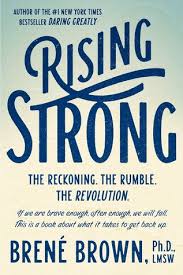
Brene Brown’s Rising Strong completes her trilogy of books on overcoming shame and living wholeheartedly. Each book builds on the next and is grounded in her research. Rising Strong is a powerful book; however, it should come with a warning label. “Shit storm will inevitably ensue as you read this book.”

If you read the book in any kind of earnest you will reaffirm your commitment to living wholeheartedly and as a result you will better define your boundaries and stay in touch with your emotions. Ultimately this will clash with someone else’s expectations or values in variance with yours. Someone you care about. Let me explain with my own story.

Rising StrongI received Rising Strong as a gift from my dear friend Mara V. Connolly who is an executive coach trained in the Daring Way. She knows I am a Brene Brown enthusiast and it was a delightful surprise to open an unexpected Amazon package and see her note. I was heading to Los Angeles so I tucked the book in my bag and began reading it almost immediately.

I was only a few chapters in when I found myself triggered and face down in the dirt. While still in the whirlpool of embarrassment and hurt, I sent an angry, hurt-you-back text to the person in my “Rumble” in the cab rushing from to the airport. I risked airsickness while I wrote what I called my “first story” in my journal on my Southwest flight home. The next morning I realized that I needed help and I reached out to Mara to process.

Over the next few days I figured out what triggered such a strong emotional reaction and the values that were stepped on. This helped me get clear about what new boundaries I needed to set with the friend in the Rumble. I wish I could report that my friend and I were able to be curious about each other’s triggers and clear. It did not go down that way and I have been processing the heartache that comes when a relationship is not what we hoped.

As I read the rest of the book I kept referencing my Rumble. It was such a powerful learning opportunity. I especially struggle with the question, “Are people in general doing the best they can?” This cracks open my own harsh self-judgement for the times when I stumbled and did not live up to my own standards. Was I doing the best I could in that moment when I sent the angry text? I do not think so.

The key to the question is “in general”. I am not asking: are people infallible? Instead I am choosing a more compassionate life philosophy. If I assume that people are in general doing the best they can in this moment, then I can extend grace and live life more wholeheartedly, that is a life defined by courage, engagement and clear sense of purpose.

This assumption that people are doing their best first came up when I was coaching with Marj Plumb. The CTI Co-Active Coaching curriculum says every client is creative, resourceful and whole. I remember really challenging this with Marj. What about the people who are mentally ill? And Marj encouraged me to continue to start from the assumption that people are doing their best. Like forgiveness, starting from this place of grace and compassion is as much for my own benefit as the other person’s.

If I assume that I am doing my best, I can be curious about my own triggers and extend grace to myself. This does not mean I never need to repair with someone for something I said thoughtlessly. It does mean I can lay down that incident as a lesson learned instead of continually using it as a lash to whip myself for my inadequacy. And get on with the business of leadership.

Celebrity Poison

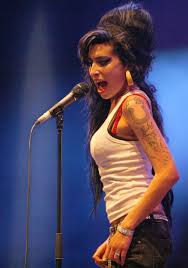
I wish our society was not so celebrity obsessed. It has some obvious negative consequences (Exhibit A: Donald Trump for President). It also chews up and spits out individuals. The movie Amy about the late soul singer Amy Winehouse was hard to watch as a beautiful and talented young woman was chewed up and spit out by the celebrity entertainment machine. The people surrounding her, including her husband and father, were more interested in exploiting her than in protecting her.

Amy Winehouse
Amy Winehouse

We think of celebrity as a modern phenomenon intensified by social media and 24 hour news cycles. Recently I read two biographies—one about the Wright Brothers and one about Charles and Anne Morrow Lindburgh. All were famous for achieving something brave that captured the public’s attention. And as a result, all were subject to an intense amount of public and press attention.

For the Lindburghs, it was often suffocating and tragically resulted in the kidnapping and death of their first child. Journalists did not let up in spite of the tremendous impact of their collective actions. The kidnapping was in the early 1930s—well before television. Yet the willingness of journalists to trample on their privacy for a story or a photo was relentless.

Wilbur and Oroville Wright

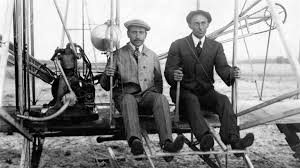
Even earlier in history, Oroville and Wilbur Wright invented flight in 1904. They toiled away at Kitty Hawk, North Carolina in obscurity for several years and then caught the public’s imagination with their aerial demonstrations. People in Europe and America could not get enough of the Wright brothers. According to biographer David McCullough, they handled the pressure and attention extremely well without letting it change them.

This can be attributed to the wisdom of their father, Bishop Milton Wright.

He was a steadying influence on his 5 children including Wilbur and Oroville. The Bishop liked to preach the futility of craving fame. “Enjoy fame ere its decadence, for I have realized the emptiness of its trumpet blasts.” He had written Wilbur, and quoted favorite lines from the Irish poet Thomas Moore:

And false the light on glory’s plume

           As fading lines of even.

David McCullough, The Wright Brothers New York: Simon and Schuster, 2015, p. 188.

Once upon a time people did not seek out fame as an end in of itself. Celebrity used to be connected to achievement. David Brooks in his book, The Road to Character, decries the change from the culture of humility to the culture of the Big Me.

It wasn’t hard to find such data. For example, in 1950, the Gallup Organization asked high school seniors if they considered themselves to be a very important person. At that point, 12 percent said yes. The same question was asked in 2005, and this time it wasn’t 12 percent who considered themselves very important, it was 80 percent.

David Brooks, The Road to Character, New York: Random House: 2015, page 6.

I remember when I was managing and employee in the advent of reality television. At the time there was only MTV shows and Survivor. I asked him about his career goals and my mouth dropped open when he said that one of his goals was to be a reality tv star. I think I may have even said, “That is not a career goal.” My statement was very out of touch to the new realities, but like my grandparents with their “I remember when bread was a nickel.” I remember when fame was connected to some real achievement.

Are we at the apex of the Big Me? How will we recover? This is one of David Brooks’ motivations for writing The Road to Character. He wanted to provide profiles of what he sees as real leadership in the same way a chef wants to give us real homemade food to put the instant processed food in context.

How else can we raise the flag of leadership in service of others?